
 Europe warns of Russia’s hybrid attacks but struggles to counter them
  Former chief election commissioner calls SIR scheme illegal.
  A Corruption Scandal Is Reshaping Brazil’s Presidential Election
  US citizen injured in Illinois after ICE agents mistook him for fugitive, tried to arrest him
  At 10 years old, Smithsonian’s Black museum is undaunted amid pressure from Trump administration
 Bengal Polls: BJP-TMC Accusations Intensify Before Second Phase Election
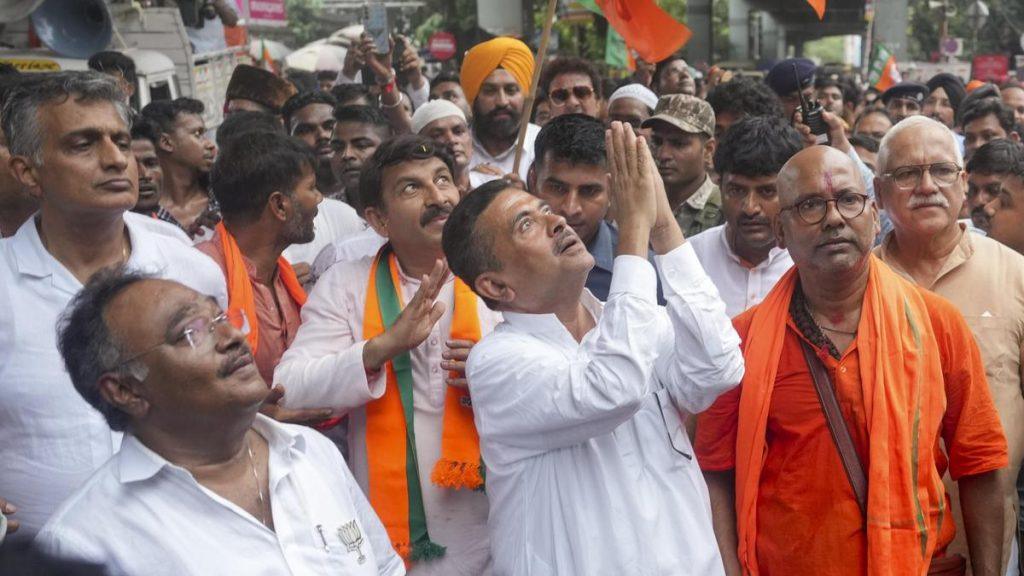
bengal polls bjptmc accusations:
West Bengal Polls: High-Stakes Campaign Ends Amid Rival Accusations
In a heated and intense poll campaign, West Bengal’s second phase of state assembly elections came to a close on April 26, 2026, with both the Bharatiya Janata Party (BJP) and the ruling Trinamool Congress (TMC) trading barbs over a range of issues.
The BJP, led by Prime Minister Narendra Modi and Union Home Minister Amit Shah, made a concerted effort to capitalize on alleged weaknesses in the ruling TMC’s performance, while the TMC sought to counter these charges with its own campaign.
Updated: April 27, 2026
West Bengal Polls: High-Stakes Campaign Ends Amid Rival Accusations
In a heated and intense poll campaign, West Bengal’s second phase of state assembly elections came to a close on April 26, 2026, with both the Bharatiya Janata Party (BJP) and the ruling Trinamool Congress (TMC) trading barbs over a range of issues. The BJP, led by Prime Minister Narendra Modi and Union Home Minister Amit Shah, made a concerted effort to capitalize on alleged weaknesses in the ruling TMC’s performance, while the TMC sought to counter these charges with its own campaign.
What Happened
The high-octane campaign, which spanned several days, saw the BJP’s top brass touring key districts in West Bengal, including Kolkata, Bardhaman, and Howrah. The party sought to drive home its message that the TMC’s governance has led to a deterioration in law and order, rising crimes against women, and unchecked corruption. Prime Minister Modi and Amit Shah addressed large crowds, accusing the TMC of being inefficient and ineffective in providing basic amenities to citizens.
In response, the TMC, led by Chief Minister Mamata Banerjee, accused the BJP of spreading misinformation and using divisive tactics to gain an edge in the polls. The party claimed that the BJP’s allegations were baseless and an attempt to divert public attention from its own failures in governance.
Background
The West Bengal state assembly elections, which started on March 27, 2026, have been highly anticipated, given the state’s strategic importance and the ongoing power struggle between the two main parties. The TMC has been in power in West Bengal since 2011, with Mamata Banerjee at the helm. The BJP, which has been gaining ground in the state in recent years, has been eyeing a major upset in the polls.
Here’s a brief timeline of key events leading up to the poll campaign:
2020: BJP makes significant inroads in West Bengal, winning 18 seats in the Lok Sabha elections.
2021: TMC loses several key leaders, including its state leader Suvendu Adhikari, who joins the BJP.
March 2026: West Bengal state assembly elections begin, with the BJP and TMC vying for control.
Key Concerns
The poll campaign has highlighted several key issues that are likely to influence the outcome of the elections. These include:
Law and order situation: The BJP has accused the TMC of failing to maintain law and order, citing rising crimes and violence in the state.
Corruption: The BJP has accused the TMC of corruption and misusing state resources for personal gain.
Development: The TMC has claimed that it has implemented several development projects, including infrastructure development and social welfare schemes.
Women’s safety: The BJP has highlighted the rising crimes against women in the state, while the TMC has accused the BJP of politicizing the issue.
What Next
The second phase of the elections is scheduled to take place on May 2, 2026. With the campaign now over, the focus will shift to voter turnout and the outcome of the polls. The TMC is likely to face stiff competition from the BJP, which has made significant gains in recent years. The outcome of the elections will have significant implications for both parties, with the BJP seeking to expand its reach in eastern India and the TMC vying to maintain its grip on power in West Bengal. As the country waits with bated breath, one thing is certain: the winner will shape the future of West Bengal for years to come.
The high-stakes campaign in West Bengal has exposed a worrying trend in Indian politics – the increasing reliance on personal attacks over policy discussions. This shift not only reflects a decline in civil discourse but also highlights the growing challenge for opposition parties to effectively critique the ruling party's performance.




