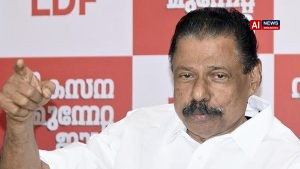
 How is Kerala planning to prevent child deaths linked to malnutrition and neglect? Explained
  Odisha moves Supreme Court against Andhra Pradesh over rural poll notice in Kotia area
  NASA outlines Artemis III test flight plan
 Finance Minister Nirmala Sitharaman promotes asset creation through State borrowing.
** Indian Finance Minister Nirmala Sitharaman has stressed the need for state borrowings to focus on asset creation, rather than just revenue expenditure, to drive economic growth, foster employment, and improve public infrastructure, amid concerns over the country’s rising fiscal deficit and credit rating.

Sitharaman pitches India investment opportunities to global investors in Singapore - AI News Breaking
State borrowings must focus on asset creation, not just revenue expenditure: FM Nirmala Sitharaman Indian Finance Minister Nirmala Sitharaman has stressed the importance of channeling state borrowings towards the creation of public infrastructure, arguing that this approach yields positive long-term economic benefits and fosters employment. In a series of speeches, Ms. Sitharaman underlined that the current fiscal policy should not solely be driven by revenue expenditure but should prioritize investment in public assets..
These remarks were made in the context of the country’s rising fiscal deficit, with Ms. Sitharaman urging state governments to reassess their borrowing strategies amid concerns over the sustainability of the current fiscal trajectory. Critics have argued that the growing reliance on debt could compromise India’s economic stability and threaten its credit rating..
The idea of focusing state borrowings on asset creation is not novel in the world of economics, where the concept of productive government borrowing has been gaining traction in recent years. This approach involves using borrowed funds to invest in infrastructure, education, and healthcare, rather than solely financing current expenditure. Sitharaman cited the example of the Indian Railways, which she claimed had generated significant returns on investment through the construction of new rail lines and upgrading existing infrastructure..
This, she argued, had not only improved connectivity and economic growth in rural areas but also provided a lasting impact on the nation’s infrastructure landscape. Moreover, investing in public infrastructure is said to have a multiplier effect on the economy, with the knock-on effects felt across industries. Improved infrastructure, such as roads, bridges, and ports, can enhance the efficiency of transportation and logistics, thereby promoting trade and commerce..
In addition to the economic benefits, Ms. Sitharaman also highlighted the employment-generating potential of infrastructure projects. She estimated that for every rupee spent on public infrastructure, the economy could create employment opportunities for up to 50-60 years..
Infrastructure development not only drives economic growth but also has a lasting impact on the environment. Green infrastructure, such as parks and green spaces, can mitigate the impact of climate change by providing natural habitats and carbon sinks. In contrast, inefficient or outdated infrastructure can exacerbate the problems of pollution, congestion, and environmental degradation..
Critics of the current fiscal policy argue that the excessive focus on revenue expenditure has led to underinvestment in public infrastructure and a widening infrastructure gap. India’s rapidly growing population and economy require significant investment in modernizing infrastructure, including transportation, energy, and housing. Sitharaman argued that the focus on asset creation would not only generate economic returns but also improve the quality of life for citizens..
By investing in public services such as education, healthcare, and social welfare, governments can reduce inequality and promote social cohesion. Sitharaman’s emphasis on prioritizing asset creation through state borrowings reflects the need for a shift in fiscal policy. While the short-term focus on revenue expenditure may provide temporary relief, it is the long-term benefits of investment in public infrastructure that will ultimately drive economic growth and employment..
The Indian government’s current policy push towards digital infrastructure is an example of the positive outcomes that can be achieved by investing in asset creation. By promoting digital payments, e-governance, and digital infrastructure, the government aims to create a more efficient, transparent, and responsive public administration. Experts warn that the success of the asset creation strategy will depend on the effectiveness of project implementation, the quality of public-private partnerships, and the transparency of borrowing and expenditure..
If executed successfully, this approach could help India build a more sustainable and equitable economy, reducing the burden of debt and promoting inclusive growth. In the face of a rapidly changing global economic landscape, India’s policymakers will need to carefully balance the competing demands of economic growth, employment, and fiscal sustainability. The Finance Minister’s emphasis on asset creation through state borrowings offers a valuable roadmap for navigating this challenge and securing a strong, resilient economy for the next generation..
As India continues to grow and develop, its policymakers will face increasingly complex choices about how to allocate resources and manage fiscal policy. By prioritizing asset creation and investing in public infrastructure, the government can generate significant economic benefits, create employment opportunities, and promote social welfare, ultimately strengthening the nation’s economic foundation for years to come..
Updated: June 25, 2026
Finance Minister Nirmala Sitharaman has urged state governments to prioritize asset creation through state borrowings, arguing that this approach yields long-term economic benefits and fosters employment. By focusing on infrastructure development, governments can generate significant returns on investment, improve the quality of life for citizens, and create a sustainable economy.
Insight: The emphasis on asset creation through state borrowings underscores a pivotal shift in fiscal strategy, one that could redefine the nation’s economic trajectory by harnessing the potential of public infrastructure to drive sustainable growth. By redirecting borrowings towards investments that yield long-term returns, policymakers can mitigate the risks associated with rising debt, while fostering a more equitable and resilient economy.