 CSD urges govt to drop Gram Sabha consent rule for projects
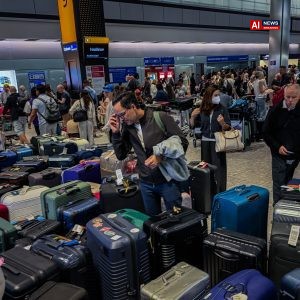
  NATS glitch causes major Heathrow flight delays and cancellations
  Yemen Tilts Toward Full-Scale War as Saudi-Houthi Clashes Escalate
  Syrian weapons depot explosion kills 14 in Idlib
 US Supreme Court Birthright Citizenship Ruling Deals Major Blow to Trump’s Immigration Agenda
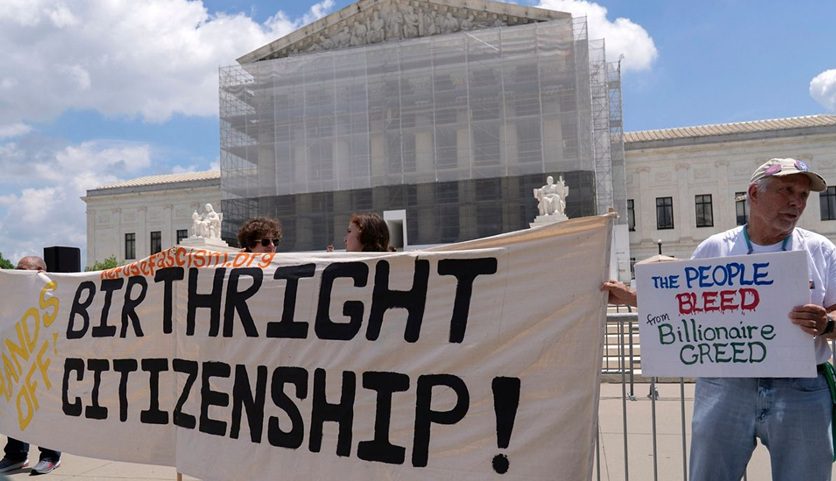
The US Supreme Court has delivered a landmark ruling on birthright citizenship that represents a significant legal setback for President Donald Trump’s immigration agenda. While the decision leaves room for further litigation over executive authority, it reinforces constitutional protections for citizenship under the 14th Amendment and is expected to have far-reaching implications for immigration policy, federal court powers and future constitutional challenges.
Major Blow to Trump’s Immigration Agenda: In a landmark decision that could reshape the future of immigration policy in the United States, the US Supreme Court has handed President Donald Trump a significant legal setback in his effort to restrict birthright citizenship through executive action. The ruling, one of the most closely watched constitutional cases of the year, reaffirms the central role of the 14th Amendment while highlighting the limits of presidential authority over citizenship rights.
The decision arrives amid an increasingly polarized national debate over immigration, border security and the interpretation of the US Constitution. Although the Court addressed important procedural questions concerning the implementation of nationwide injunctions issued by lower federal courts, it did not provide a final ruling on whether President Trump’s executive order ending birthright citizenship is constitutional. As a result, the legal battle is expected to continue in lower courts.
Background of the Case
Soon after returning to office, President Trump signed an executive order seeking to deny automatic US citizenship to certain children born on American soil if their parents were in the country unlawfully or were present on temporary visas.
The administration argued that the Constitution had been interpreted too broadly for decades and claimed that the phrase “subject to the jurisdiction thereof” in the 14th Amendment did not apply to every child born in the United States.
The executive order immediately sparked multiple lawsuits from states, immigrant advocacy organizations and civil rights groups. Several federal judges temporarily blocked the policy, arguing that it likely violated long-established constitutional precedent.
The cases eventually reached the Supreme Court after conflicting legal arguments over the authority of federal courts to issue nationwide injunctions.
What the Supreme Court Decided
The Supreme Court’s ruling focused primarily on the scope of nationwide injunctions rather than directly deciding the constitutionality of the executive order itself.
The Court held that lower federal courts should generally provide relief only to the parties directly involved in a case unless broader action is legally justified. This means that judges may face greater limits when issuing nationwide orders that automatically block federal policies across the entire country.
However, the ruling does not immediately allow the administration’s birthright citizenship policy to take full effect nationwide. Instead, lower courts must now reconsider the scope of their orders while continuing to examine the constitutional questions surrounding the executive order.
Legal experts say the constitutional issue—whether a president can restrict birthright citizenship without a constitutional amendment—remains unresolved and will likely return to the Supreme Court in the future.
Why Birthright Citizenship Matters
Birthright citizenship has been a cornerstone of American constitutional law for more than 150 years.
The principle is based on the Citizenship Clause of the 14th Amendment, adopted in 1868 following the Civil War. It states that all persons born or naturalized in the United States and subject to its jurisdiction are citizens of the United States.
For decades, courts have interpreted this provision to grant citizenship to nearly everyone born on US soil regardless of their parents’ immigration status, with limited exceptions such as children of foreign diplomats.
Supporters argue that birthright citizenship prevents discrimination, guarantees equal protection under the law and provides legal certainty for millions of Americans.
Critics contend that the current interpretation encourages illegal immigration and “birth tourism,” arguing that the Constitution should be interpreted more narrowly.
Impact on Trump’s Immigration Agenda
The ruling represents an important setback for one of President Trump’s signature immigration initiatives.
Although the administration secured a partial victory regarding limits on nationwide injunctions, it failed to obtain immediate approval for its birthright citizenship policy.
The legal uncertainty means the executive order cannot automatically be enforced across the country while constitutional challenges remain pending.
Immigration advocates welcomed the decision, saying it preserves long-established constitutional protections while preventing sudden changes that could affect thousands of families.
Meanwhile, administration officials indicated they would continue defending the executive order in lower courts and remain confident that the policy ultimately will be upheld.
Political Reactions: The ruling has generated strong reactions across the political spectrum.
Democratic leaders described the decision as an important safeguard for constitutional rights and warned against attempts to alter citizenship through executive action rather than legislation or constitutional amendment.
Republican leaders offered mixed responses. Some praised the Court’s decision to limit nationwide injunctions, arguing that individual district judges should not possess the authority to halt presidential policies nationwide.
Others expressed disappointment that the administration’s birthright citizenship initiative did not receive immediate judicial approval.
Civil rights organizations hailed the ruling as a victory for constitutional protections while emphasizing that further legal challenges remain necessary.
Legal Experts Weigh In: Constitutional scholars say the decision may prove just as significant for federal court authority as it is for immigration policy.
By limiting the use of nationwide injunctions, the Court could reshape how future administrations implement executive actions across a wide range of issues, including healthcare, environmental regulation, education and immigration.
Experts also note that the Court deliberately avoided resolving the central constitutional question surrounding birthright citizenship, suggesting that an even more consequential decision could arrive in the coming years.
International Attention: Governments and legal experts around the world are closely monitoring developments because birthright citizenship policies differ significantly among countries.
The United States remains one of the few major developed nations that broadly grants citizenship based on birthplace alone.
Any change to that principle could influence global debates over immigration, nationality laws and constitutional rights.
What Happens Next? : The legal process is far from over.
Lower federal courts will continue hearing constitutional challenges against President Trump’s executive order while reconsidering the scope of their injunctions in light of the Supreme Court’s ruling.
Additional appeals are widely expected, making it likely that the Supreme Court will eventually revisit the constitutional question directly.
Until then, birthright citizenship remains protected under existing constitutional precedent for most individuals born in the United States.
The outcome of future litigation could become one of the defining constitutional battles of President Trump’s second term and may shape American immigration law for generations.
The Supreme Court’s decision highlights an evolving balance between executive authority and judicial oversight rather than definitively resolving the constitutional debate over birthright citizenship. While the ruling narrows the ability of lower courts to issue nationwide injunctions, it leaves the core constitutional question unanswered. The eventual resolution will not only determine the future of birthright citizenship but could also redefine the limits of presidential power and federal judicial authority in the United States, making this one of the most significant constitutional cases in modern American history.