
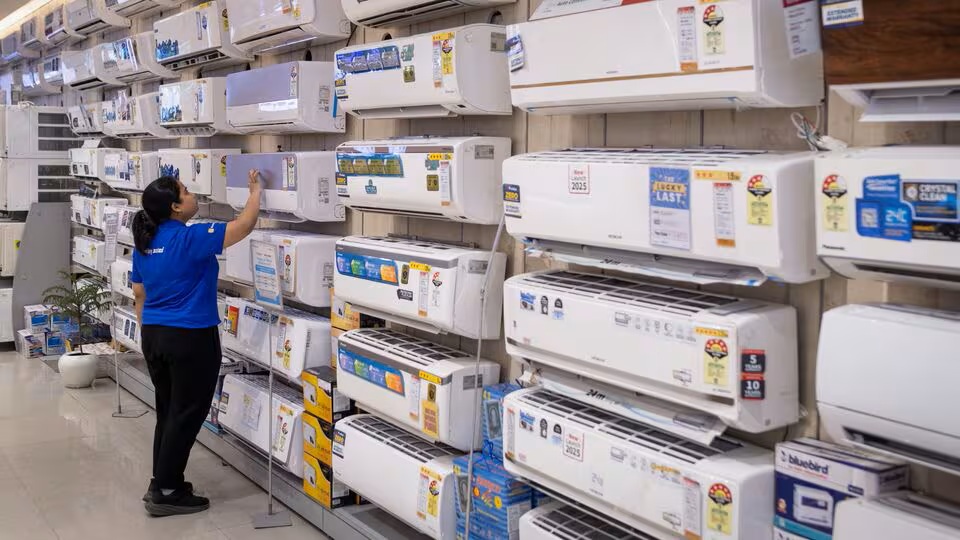
AC Prices to Rise 5–15% on Costlier Copper, Weak Rupee and New Energy Efficiency Rules
Consumers planning to buy air conditioners this summer may have to pay significantly more, as manufacturers are preparing to increase AC prices by 5–15% in the coming months. The price hike is being driven by a combination of rising copper prices, depreciation of the Indian rupee, and the implementation of new energy efficiency regulations.
Industry players say the increase could begin ahead of the peak summer demand season, when air conditioner sales typically surge across India.
Major manufacturers such as Voltas, Blue Star Limited, LG Electronics, Samsung Electronics, and Daikin Industries are expected to revise prices due to rising input costs and regulatory changes.
Why Air Conditioner Prices Are Increasing
Several factors are contributing to the anticipated increase in AC prices in India. Industry experts say the cost pressures have been building for months and manufacturers now have limited room to absorb them.
1. Rising Copper Prices
Copper is a crucial raw material used in air conditioners for compressors, condensers, and connecting pipes. Global copper prices have risen significantly in recent months, increasing manufacturing costs.
Since copper is widely used in the cooling systems of AC units, even small price increases can significantly impact the overall production cost of the appliance.
Manufacturers say the rising cost of copper is one of the primary reasons behind the planned price hike.
2. Weakening Indian Rupee
The depreciation of the Indian rupee against the US dollar has also made imported components more expensive.
Air conditioners rely heavily on imported parts such as:
- Compressors
- Electronic components
- Refrigerant materials
When the rupee weakens, manufacturers have to spend more to import these components, increasing production costs.
3. New Energy Efficiency Regulations
Another major factor behind the price increase is the new energy efficiency norms introduced by the Bureau of Energy Efficiency (BEE).
India periodically updates its energy rating system to encourage manufacturers to produce more energy-efficient appliances.
The new standards require companies to redesign and upgrade their AC models to meet stricter power consumption requirements.
While these changes benefit consumers in the long run by reducing electricity bills, they increase manufacturing costs because companies must invest in:
- Improved compressors
- Advanced inverter technology
- Better insulation and cooling components
Impact on Consumers Before Summer
The timing of the price increase could affect millions of Indian households, as demand for air conditioners typically peaks between March and June.
Many buyers rush to purchase AC units before the hottest months arrive, which is why manufacturers often adjust prices just before the summer season.
Industry estimates suggest that AC demand in India could grow by 20–25% this year, driven by rising temperatures and increasing urbanization.
However, higher prices may influence purchasing decisions, particularly for budget-conscious consumers.
AC Market in India: Rapid Growth
India’s air conditioner market has been expanding rapidly over the past decade due to several factors:
- Rising incomes
- Increasing urbanization
- Longer and hotter summers
- Expanding middle-class population
According to industry estimates, the Indian AC market is expected to grow significantly over the next few years as penetration remains relatively low compared to developed countries.
Despite the expected price increase, companies remain optimistic about demand because cooling appliances are becoming increasingly essential in many parts of the country.
How Much More Consumers May Pay
The price increase is expected to vary depending on the brand, model, and technology used.
Industry experts estimate:
- Entry-level AC models: 5–8% price increase
- Mid-range models: 8–12% increase
- Premium inverter ACs: up to 15% increase
For example, an air conditioner currently priced at ₹40,000 could become ₹42,000–₹46,000 after the price revision.
Companies Preparing for Summer Demand
Major appliance brands are already preparing their production and supply chains for the upcoming summer season.
Companies such as Voltas and Blue Star Limited have expanded manufacturing capacity in India to meet growing demand.
International brands including LG Electronics, Samsung Electronics, and Daikin Industries are also investing in local manufacturing to reduce dependence on imports.
These investments are part of India’s broader push toward domestic production under government initiatives encouraging local manufacturing.
Energy Efficiency Rules: Long-Term Benefits
Although the new efficiency regulations may increase AC prices in the short term, experts say they will deliver long-term benefits.
Energy-efficient appliances can significantly reduce electricity consumption, which helps consumers save money on power bills.
More efficient air conditioners also support environmental goals by reducing energy demand and lowering carbon emissions.
The updated star rating standards introduced by the Bureau of Energy Efficiency aim to encourage manufacturers to innovate and improve product performance.
Rising Temperatures Boost AC Demand
Another major driver of air conditioner sales is the increasing frequency of heatwaves across India.
Climate scientists warn that rising global temperatures are leading to longer and more intense summers, increasing demand for cooling appliances.
In many cities, air conditioners are no longer seen as luxury products but essential household appliances for comfort and health.
Should Consumers Buy Now?
With prices expected to rise soon, some retailers are advising customers to purchase air conditioners earlier in the season.
Buying before the price hike could help consumers save thousands of rupees, especially on premium models.
However, experts recommend comparing models carefully and focusing on energy efficiency ratings, as higher-rated AC units may offer long-term savings through lower electricity consumption
This article may be prepared with the assistance of artificial intelligence (AI) and is reviewed before publication. While we aim for accuracy and timeliness, readers should verify important facts from official or primary sources. If you believe any information is inaccurate or that any content infringes your rights, please contact ainewsbreaking.com for review and appropriate action.