Al-Aqsa Mosque Closure Sparks Outrage Among Muslim Worshippers in Jerusalem
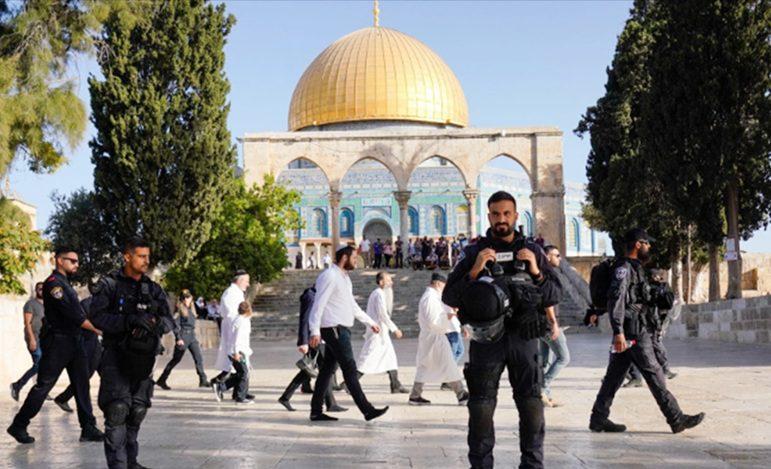
In a move that has sparked widespread outrage, the al-Aqsa mosque in Jerusalem was closed to worshippers on the final day of Ramadan, a first since 1967. The closure, which occurred on Friday, has been seen by many Palestinians as part of a broader Israeli strategy to impose stricter restrictions under the guise of security concerns. As a result, hundreds of Muslim worshippers were forced to hold their Eid prayers outside the Old City, as Israeli police blocked the entrances to the holy site.
The al-Aqsa mosque is considered one of the most sensitive holy sites in Jerusalem, and its closure has significant implications for the city’s Muslim population. The site has been a focal point of tensions between Israelis and Palestinians for decades, and the latest development has only served to exacerbate the situation. Palestinian officials have condemned the closure, arguing that it is a deliberate attempt to restrict the rights of Muslim worshippers and tighten Israel’s grip on the city.
The decision to close the mosque was taken by Israeli authorities, who cited security concerns as the reason for the move. However, Palestinians argue that the closure is unjustified and is part of a wider strategy to limit their access to the site. The fact that the closure occurred on the final day of Ramadan, a significant date in the Islamic calendar, has only added to the sense of outrage and frustration among Muslim worshippers.
As the situation continues to unfold, there are concerns about the potential for further escalation. The closure of the al-Aqsa mosque has already sparked protests and condemnation from Palestinian leaders, and there are fears that the situation could deteriorate further in the coming days. With tensions already running high, the international community will be watching the situation closely, calling for calm and restraint from all parties involved.
The closure of the al-Aqsa mosque has also highlighted the deeper issues at play in the Israeli-Palestinian conflict. The dispute over access to the site is just one aspect of a broader struggle for control and sovereignty in the city. As the situation continues to evolve, it remains to be seen how the Israeli and Palestinian authorities will navigate the complex web of interests and competing claims that surround this highly sensitive site.
For now, the focus is on finding a resolution to the immediate crisis, and allowing Muslim worshippers to access the al-Aqsa mosque without restriction. However, the longer-term implications of the closure will likely be far-reaching, and will require a more sustained effort to address the underlying issues that have led to this point. As the Muslim community in Jerusalem looks to the future, they will be hoping for a swift and peaceful resolution to the current crisis, and an end to the restrictions that have prevented them from worshipping at one of their most sacred sites.
This article may be prepared with the assistance of artificial intelligence (AI) and is reviewed before publication. While we aim for accuracy and timeliness, readers should verify important facts from official or primary sources. If you believe any information is inaccurate or that any content infringes your rights, please contact ainewsbreaking.com for review and appropriate action.