Amit Shah Vows Crackdown on Illegal Immigrants in Assam, Says ‘Infiltrators Will Be Found and Removed’
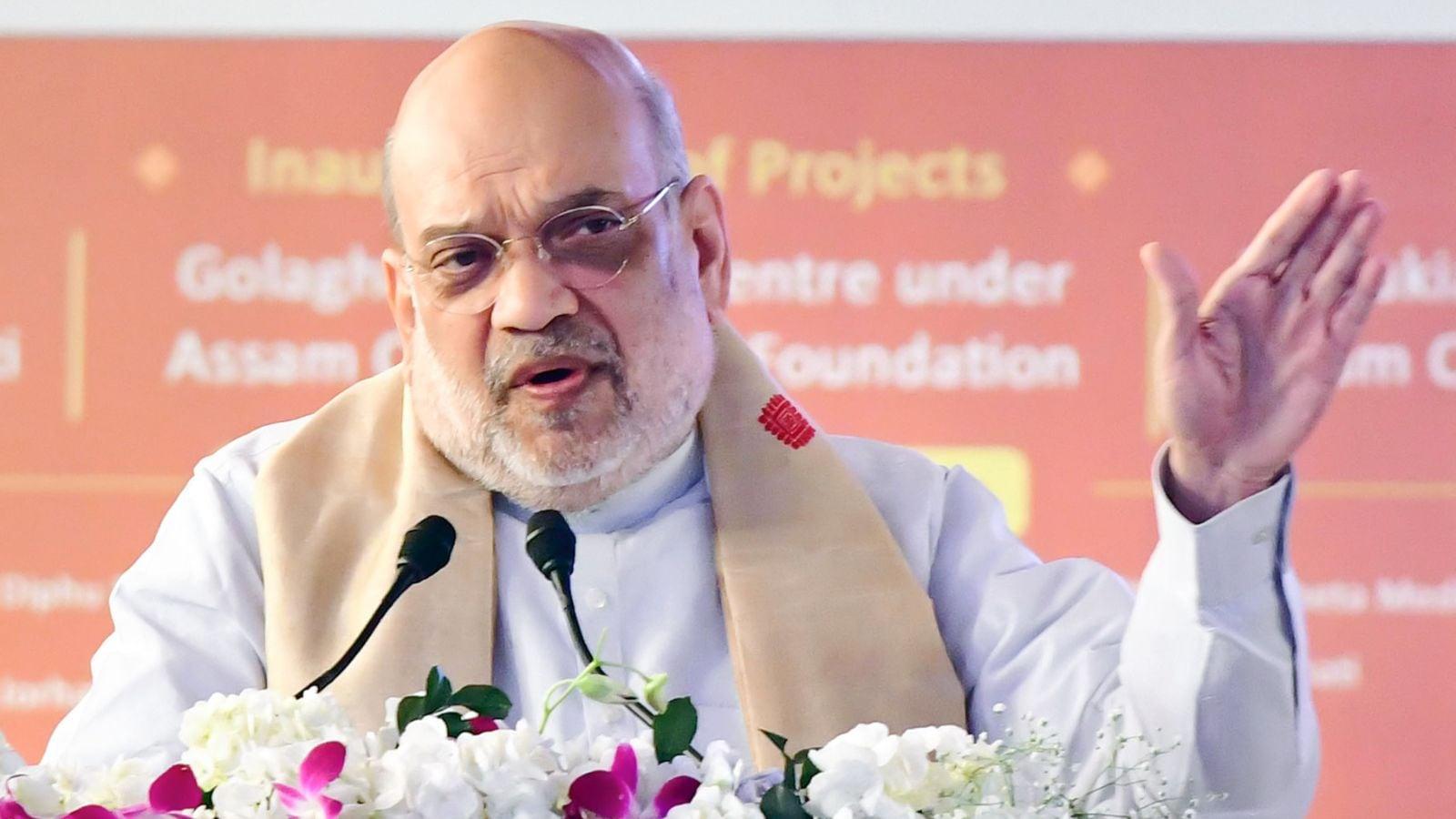
Union Home Minister Amit Shah on Sunday reiterated the central government’s firm stance against illegal immigration, declaring that authorities would “search out and remove infiltrators” from the northeastern state of Assam. His remarks came during a political event where he emphasized that the fight against illegal immigration remains a key priority for the ruling Bharatiya Janata Party (BJP) and the government led by Prime Minister Narendra Modi.
The statement reflects the BJP’s continued focus on immigration-related issues in Assam, a politically sensitive topic that has shaped the state’s electoral discourse for decades. Shah’s comments also revive debates around border security, citizenship verification, and demographic concerns in the region.
Amit Shah’s Strong Message on Illegal Immigration
Addressing party workers and supporters, Amit Shah stated that the government would intensify efforts to identify and expel individuals who have entered Assam illegally. According to him, illegal immigration not only threatens the state’s demographic balance but also poses risks to national security and local livelihoods.
Shah asserted that the government remains committed to protecting the cultural and political identity of Assam’s indigenous communities. He stressed that the BJP had made a promise to the people of Assam to curb infiltration and that the government is determined to fulfill that commitment.
The Home Minister said authorities would use administrative mechanisms and legal frameworks to detect undocumented migrants and ensure that they are removed from the country according to law. He emphasized that the crackdown would be conducted systematically and in accordance with constitutional provisions.
Historical Context of Immigration in Assam
Immigration has been one of the most contentious political issues in Assam for several decades. Concerns over large-scale migration—particularly from neighboring Bangladesh—have fueled political movements and social tensions in the state.
The issue first gained nationwide attention during the late 1970s and early 1980s with the mass protests known as the Assam Movement. Led primarily by student organizations such as the All Assam Students’ Union (AASU), the movement demanded the identification and deportation of undocumented immigrants.
The agitation eventually culminated in the signing of the Assam Accord in 1985 between the central government and leaders of the protest movement. The accord established March 24, 1971, as the cut-off date for determining citizenship in Assam.
According to the agreement, individuals who entered the state after this date would be considered illegal immigrants and could be deported after due legal processes.
Role of NRC in Identifying Citizens
In recent years, the debate over illegal immigration intensified with the updating of the National Register of Citizens (NRC) in Assam. The NRC exercise aimed to identify genuine Indian citizens and separate them from undocumented migrants.
The final NRC list, published in 2019, excluded nearly 1.9 million residents from the register, sparking widespread debate and concern across the country. Critics argued that the process left many genuine citizens out due to documentation issues, while supporters claimed it was a necessary step to address illegal immigration.
Amit Shah has consistently supported the NRC exercise and has called it a crucial tool in tackling the issue of undocumented migrants. During previous speeches, he also reiterated the BJP’s commitment to implementing citizenship-related policies to address humanitarian and political concerns.
Citizenship Amendment Act and Political Debate
Another major policy connected to the immigration debate is the Citizenship Amendment Act (CAA), passed in 2019. The law provides a pathway to Indian citizenship for certain religious minorities from Pakistan, Bangladesh, and Afghanistan who entered India before December 31, 2014.
Supporters of the law argue that it offers protection to persecuted minorities from neighboring countries. However, critics claim it undermines the secular framework of the Constitution and could complicate the situation in Assam.
Opposition parties and several civil society groups in the state have expressed concerns that the CAA may conflict with the principles of the Assam Accord, which sought to identify all illegal immigrants regardless of religion.
Despite these criticisms, Amit Shah and the BJP leadership have defended the legislation, stating that it addresses humanitarian needs without compromising the country’s security.
Political Significance Ahead of Elections
The issue of illegal immigration often becomes a central theme in Assam’s electoral campaigns. Political analysts say the BJP has consistently used the issue to mobilize support among voters who fear cultural and economic displacement.
Shah’s latest remarks are widely viewed as a continuation of that strategy. By reiterating the government’s tough stance, the BJP leadership appears determined to reinforce its political narrative ahead of future elections in the state.
Opposition parties, including the Indian National Congress, have criticized the rhetoric, accusing the BJP of using immigration as a political tool to polarize voters. They argue that the focus should instead be on economic development, employment generation, and infrastructure improvements in Assam.
Border Security and Surveillance Measures
India shares a long and porous border with Bangladesh, stretching more than 4,000 kilometers across several states, including Assam. Over the years, the government has implemented various measures to strengthen border security.
These efforts include fencing along the border, increased deployment of border guards, and the use of advanced surveillance technologies. The responsibility for guarding the India-Bangladesh border largely falls on the Border Security Force (BSF).
Government officials say enhanced border management has significantly reduced illegal crossings in recent years, although sporadic incidents continue to occur.
Amit Shah has previously highlighted the role of modern technology—such as drones, sensors, and smart fencing—in improving border security and preventing infiltration.
Impact on Local Communities
The immigration debate in Assam is closely tied to concerns about cultural identity, land ownership, and economic opportunities. Many indigenous communities fear that large-scale migration could dilute their cultural heritage and strain local resources.
Farmers and local residents often raise concerns about land encroachment and competition for jobs. These anxieties have played a major role in shaping political narratives in the state.
At the same time, human rights organizations argue that the issue must be handled with sensitivity to avoid targeting vulnerable communities. They stress the importance of ensuring due process and preventing discrimination during citizenship verification processes.
Opposition Response
Opposition leaders responded quickly to Amit Shah’s remarks, accusing the BJP of reviving divisive rhetoric. They argued that the government’s policies have already created uncertainty among many residents in Assam.
Critics also pointed out that the NRC process itself remains incomplete, with several legal challenges and administrative questions still unresolved. Some opposition figures demanded greater clarity from the government on how it plans to address the status of those excluded from the NRC list.
Despite these criticisms, the BJP leadership has maintained that tackling illegal immigration is essential for maintaining law and order as well as protecting national security.
BJP’s Broader Strategy in the Northeast
Over the past decade, the BJP has significantly expanded its political presence across northeastern India. States that were once dominated by regional parties or the Congress have increasingly seen the BJP gaining influence.
Assam, in particular, has become a key stronghold for the party in the region. The BJP first came to power in the state in 2016 and retained it in the 2021 assembly elections.
Political analysts say the party’s focus on issues such as immigration, development, and infrastructure has helped it consolidate support among diverse voter groups.
This article may be prepared with the assistance of artificial intelligence (AI) and is reviewed before publication. While we aim for accuracy and timeliness, readers should verify important facts from official or primary sources. If you believe any information is inaccurate or that any content infringes your rights, please contact ainewsbreaking.com for review and appropriate action.