
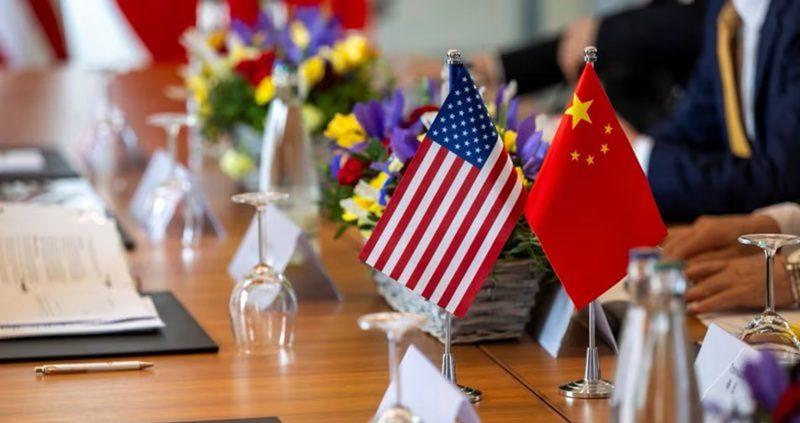
China Urges US to Settle Trade Disputes Through Dialogue as New American Investigations Target Chinese Industries
Tensions between the world’s two largest economies have once again resurfaced after China called on the United States to address trade disagreements through dialogue and cooperation, following a series of new investigations launched by American authorities targeting Chinese industries. The appeal from Beijing highlights growing concerns that the economic rivalry between the two nations could intensify further, potentially disrupting global trade and economic stability.
Officials in China have urged Washington to avoid escalating trade tensions and instead pursue constructive negotiations that would help resolve disputes in a fair and balanced manner. The call comes as the United States has initiated new probes into certain Chinese sectors over concerns related to unfair trade practices, national security risks, and supply chain vulnerabilities.
The developments underscore the fragile state of economic relations between the two superpowers, whose policies significantly influence global markets, manufacturing networks, and international supply chains.
Rising Trade Tensions Between Washington and Beijing
Relations between China and the United States have experienced repeated periods of friction in recent years. Trade disagreements, technology restrictions, and geopolitical rivalry have all contributed to a complex and often tense economic relationship.
The latest round of tensions emerged after the United States launched new trade investigations aimed at examining whether certain Chinese industries benefit from unfair government subsidies or engage in practices that harm American companies.
These probes are part of a broader effort by Washington to protect domestic industries and reduce dependence on foreign supply chains, particularly in sectors considered strategically important such as advanced technology, manufacturing, and energy infrastructure.
In response, Chinese officials warned that such investigations risk undermining cooperation and could lead to retaliatory measures if the disputes are not handled through dialogue.
China Calls for Dialogue and Cooperation
Chinese authorities emphasized that constructive engagement is the best path forward for resolving trade disputes. According to officials in Beijing, economic disagreements between the two countries should be managed through established diplomatic and trade mechanisms rather than unilateral investigations or punitive actions.
China’s commerce authorities have repeatedly stated that the country remains committed to open trade and international cooperation. However, they have also cautioned that continued pressure from the United States could force Beijing to take steps to protect its own economic interests.
Officials argue that stable economic relations between the United States and China are essential not only for the two nations but also for the global economy.
Because of the enormous size of their economies and their central role in international trade, even small shifts in policy between the two countries can have far-reaching consequences.
Impact on Global Trade and Supply Chains
Trade disputes between the United States and China can ripple across global markets, affecting businesses and consumers around the world.
The two countries together account for a significant share of global economic activity. Many multinational corporations rely on supply chains that span both economies, sourcing raw materials, components, and finished goods from factories across Asia and North America.
If tensions escalate further, industries ranging from electronics and automotive manufacturing to agriculture and pharmaceuticals could experience disruptions.
Companies may be forced to adjust supply chains, seek alternative suppliers, or absorb higher costs caused by tariffs or regulatory restrictions.
Such changes can ultimately lead to higher prices for consumers and slower economic growth in multiple regions.
The Strategic Competition Behind Trade Disputes
While trade disagreements often revolve around tariffs and market access, they also reflect a broader strategic competition between China and the United States.
Both countries are seeking leadership in critical industries such as artificial intelligence, semiconductor manufacturing, electric vehicles, and renewable energy technology.
American policymakers have increasingly expressed concerns that Chinese industrial policies — including government subsidies and state-backed investment programs — give Chinese companies an unfair advantage in global markets.
Meanwhile, Chinese officials argue that U.S. restrictions on technology exports and investment represent an attempt to contain China’s economic development.
This underlying strategic rivalry means that trade disputes are often intertwined with national security considerations.
Concerns From Global Businesses
Businesses across the world are closely monitoring the latest developments between the United States and China.
Many companies fear that escalating tensions could lead to new tariffs, sanctions, or export restrictions that complicate international trade.
During previous rounds of trade conflict, businesses were forced to navigate rapidly changing regulations and shifting supply chains.
For multinational corporations, uncertainty itself can be costly. Companies must plan production schedules, investment strategies, and long-term supply agreements, all of which become more difficult when political tensions threaten to disrupt trade flows.
Industry groups in several countries have called on both governments to avoid measures that could destabilize global commerce.
Lessons From the Previous Trade War
The current situation inevitably draws comparisons with the trade war that erupted between the United States and China during the late 2010s.
During that period, both sides imposed tariffs on hundreds of billions of dollars’ worth of goods. The conflict caused volatility in global markets and forced many companies to rethink their manufacturing and sourcing strategies.
Although partial agreements were reached to ease tensions, many of the underlying issues remained unresolved.
The latest probes by U.S. authorities suggest that trade disagreements between the two countries are far from over.
Analysts say that while the tone of diplomacy may fluctuate, economic competition between the United States and China is likely to remain a defining feature of global politics for years to come.
Potential Areas for Negotiation
Despite the tensions, experts believe there are still opportunities for constructive engagement between Washington and Beijing.
Trade negotiations could focus on several key areas, including:
- Greater transparency in industrial subsidies
- Improved intellectual property protections
- Expanded market access for foreign companies
- Cooperation on global economic challenges
Achieving progress in these areas would require both sides to make concessions and rebuild trust that has eroded over years of conflict.
While such negotiations are often complex and time-consuming, they remain one of the most effective ways to prevent trade disputes from escalating into broader economic confrontations.
Global Economic Stakes
The outcome of the current trade tensions will have implications far beyond the borders of the United States and China.
Countries across Asia, Europe, and other regions are deeply integrated into supply chains that depend on trade between the two economic giants.
Any major disruption could affect global manufacturing, shipping routes, and commodity markets.
For developing economies in particular, stability in global trade is crucial for economic growth and job creation.
Governments around the world are therefore watching closely to see whether the United States and China can manage their disagreements without triggering another large-scale trade conflict.
A Critical Moment for Economic Diplomacy
China’s call for dialogue reflects the recognition that prolonged trade disputes carry risks for both sides.
While economic competition between major powers is inevitable, many analysts argue that cooperative frameworks are necessary to prevent tensions from spiraling out of control.
Diplomatic engagement, transparent negotiations, and adherence to international trade rules may offer the best path toward maintaining stability in the global economy.
As new investigations unfold and discussions continue, the coming months could prove critical in determining whether the United States and China move toward confrontation or cooperation in their evolving economic relationship.
This article may be prepared with the assistance of artificial intelligence (AI) and is reviewed before publication. While we aim for accuracy and timeliness, readers should verify important facts from official or primary sources. If you believe any information is inaccurate or that any content infringes your rights, please contact ainewsbreaking.com for review and appropriate action.