Massive Saharan Dust Cloud Reaches Europe, NASA Warns of Air Quality and Climate Impacts
Massive Saharan Dust Outbreak Reaches Europe, Says NASA
A massive cloud of dust originating from the Sahara Desert has traveled thousands of kilometers across the atmosphere and reached parts of Europe, according to scientists at the National Aeronautics and Space Administration (NASA). The phenomenon, known as a Saharan dust outbreak, is a natural event that occurs when powerful winds lift large quantities of desert dust high into the atmosphere and carry it across continents.
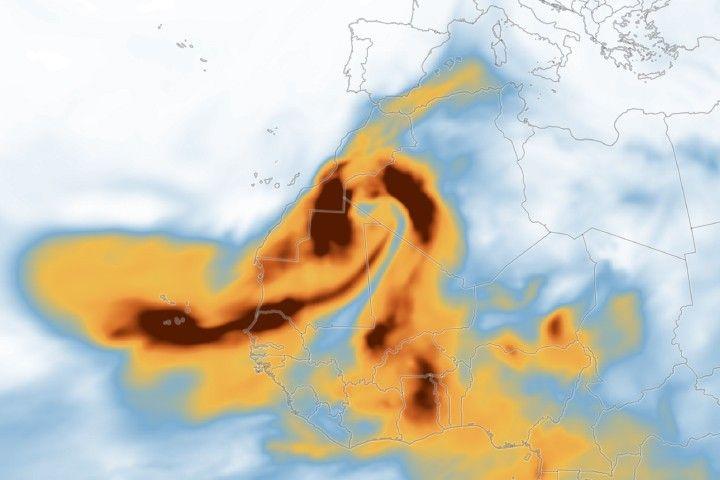
Researchers monitoring the event say the dust plume moved northward from Africa and spread across several regions of southern and western Europe. Satellite imagery captured by NASA’s Earth-observing satellites has revealed the enormous scale of the dust cloud, which stretches across large portions of the Mediterranean region.
While Saharan dust events are relatively common, the current outbreak has drawn attention because of its intensity and the vast distance the dust has traveled.
What Is a Saharan Dust Outbreak?
A Saharan dust outbreak occurs when strong winds over the Sahara Desert lift massive quantities of fine sand and mineral particles into the atmosphere. Once airborne, these particles can travel long distances due to atmospheric circulation patterns.
Dust plumes can move across the Atlantic Ocean toward the Americas or drift northward toward Europe and the Mediterranean.
The Sahara Desert is the largest hot desert in the world and the planet’s most significant source of airborne dust. Scientists estimate that hundreds of millions of tons of dust are lifted into the atmosphere from the Sahara every year.
These dust particles play a surprisingly important role in Earth’s climate system, ecosystems, and atmospheric processes.
Satellite Observations Reveal Massive Dust Plume
NASA scientists detected the current dust outbreak using satellite instruments designed to monitor aerosols and atmospheric particles.
Images captured from space show the thick dust cloud moving across North Africa and spreading into southern Europe. The dust plume appeared as a hazy layer covering parts of the Mediterranean Sea and nearby regions.
Satellite observations help researchers track the movement, density, and composition of airborne dust particles. This data allows scientists to predict where the dust will travel and assess its potential impacts on air quality, weather, and climate.
Such monitoring is critical for providing early warnings to countries that may be affected by the incoming dust.
Impact on Air Quality Across Europe
One of the most immediate consequences of Saharan dust reaching Europe is the deterioration of air quality.
Fine dust particles suspended in the atmosphere can increase concentrations of particulate matter, commonly referred to as PM10 and PM2.5. These particles can penetrate deep into the respiratory system and pose health risks, particularly for people with asthma, allergies, or other respiratory conditions.
Cities across southern Europe often experience hazy skies during these events as the dust particles scatter sunlight and create a noticeable yellow or orange tint in the atmosphere.
Environmental agencies typically issue air quality warnings when dust levels rise significantly.
Visible Effects: Red Skies and Dusty Rain
Saharan dust outbreaks often produce dramatic visual effects in affected regions.
One of the most striking phenomena is the appearance of reddish or orange-colored skies. This occurs because the mineral particles in desert dust scatter sunlight differently than typical atmospheric particles.
In some cases, the dust mixes with rain clouds and falls to the ground as “mud rain.” This unusual type of rainfall leaves thin layers of reddish dust on cars, buildings, and streets.
Such events are not uncommon in Mediterranean countries like Spain, Italy, Greece, and France during major dust outbreaks.
Climate and Weather Effects
Beyond visible effects and air quality concerns, Saharan dust can also influence climate and weather patterns.
Dust particles interact with sunlight and clouds in complex ways. They can reflect solar radiation back into space or absorb heat within the atmosphere.
These interactions can influence temperature patterns, cloud formation, and precipitation.
Some studies suggest that large dust plumes may temporarily cool the Earth’s surface by blocking sunlight. In other cases, dust particles can warm the atmosphere by absorbing heat.
Understanding these interactions is an important area of research for climate scientists.
Fertilizing Oceans and Ecosystems
Although Saharan dust can create challenges for air quality, it also plays an important ecological role.
Dust from the Sahara contains minerals such as iron and phosphorus that act as natural fertilizers for ecosystems far from the desert.
When dust settles over the Atlantic Ocean, it provides nutrients that support the growth of phytoplankton—microscopic marine plants that form the foundation of ocean food chains.
Similarly, dust transported to the Amazon rainforest supplies vital nutrients to soils that are otherwise relatively poor in minerals.
Scientists believe that Saharan dust is essential for maintaining the ecological balance of some of the world’s most important ecosystems.
Transportation and Aviation Concerns
Dust outbreaks can also affect transportation, particularly aviation.
High concentrations of airborne dust can reduce visibility and potentially impact aircraft operations. Pilots and aviation authorities closely monitor dust conditions to ensure safe flight operations.
In extreme cases, dust storms may lead to temporary flight delays or changes in flight routes.
Ground transportation can also be affected if dust levels reduce visibility on roads or contribute to slippery surfaces when combined with rain.
Monitoring Dust Events With Satellites
Modern satellite technology has significantly improved scientists’ ability to monitor dust outbreaks.
NASA uses multiple satellites equipped with specialized sensors that detect aerosol particles in the atmosphere. These sensors measure how dust interacts with sunlight and determine the density and distribution of airborne particles.
By combining satellite data with atmospheric models, researchers can forecast the movement of dust plumes days in advance.
This information helps governments prepare for potential air quality impacts and issue public health advisories when necessary.
Why Dust Events Are Important for Climate Research
Saharan dust plays a crucial role in the Earth’s climate system, making it an important focus for climate research.
Dust particles influence the planet’s radiation balance, cloud formation, and atmospheric chemistry. They also interact with greenhouse gases and other atmospheric components.
Understanding how dust behaves in the atmosphere helps scientists improve climate models and make more accurate predictions about future climate patterns.
Changes in dust activity may also be linked to shifts in rainfall patterns, desert expansion, and land use changes in North Africa.
Are Dust Outbreaks Becoming More Frequent?
Scientists are still studying whether climate change is affecting the frequency or intensity of Saharan dust outbreaks.
Some research suggests that variations in rainfall, vegetation cover, and wind patterns across the Sahara could influence how much dust is lifted into the atmosphere.
Periods of drought in the Sahel region, which lies south of the Sahara, can increase dust production because dry soil is more easily lifted by strong winds.
However, long-term trends remain uncertain, and researchers continue to analyze satellite records to better understand these patterns.
How Authorities Respond to Dust Events
When a major dust plume approaches populated areas, environmental and health authorities often issue public advisories.
These warnings typically recommend precautions such as:
- Limiting outdoor activities during high dust concentrations
- Wearing protective masks if necessary
- Keeping windows closed to reduce indoor dust exposure
- Monitoring air quality updates from local authorities
Sensitive groups—including children, elderly individuals, and people with respiratory illnesses—are often advised to take extra precautions.
Public Awareness and Scientific Collaboration
Saharan dust events have become more widely recognized thanks to improved satellite monitoring and increased public awareness.
International scientific collaboration plays a key role in studying these events. Researchers from multiple countries share satellite data, atmospheric models, and ground observations to better understand how dust travels and affects different regions.
Such collaboration helps improve early warning systems and provides valuable insights into global climate processes.
This article may be prepared with the assistance of artificial intelligence (AI) and is reviewed before publication. While we aim for accuracy and timeliness, readers should verify important facts from official or primary sources. If you believe any information is inaccurate or that any content infringes your rights, please contact ainewsbreaking.com for review and appropriate action.