
Earth Hour 2023: Iconic Landmarks Go Dark to Raise Climate Awareness
As millions of people around the world marked Earth Hour 2023, some of the world’s most famous landmarks plunged into darkness for a single hour on Saturday night. The symbolic gesture was meant to raise awareness about the urgent need to combat climate change and transition to renewable energy sources. This annual event, now in its 16th year, has been celebrated on the third Saturday of March since its inception in Sydney in 2007.
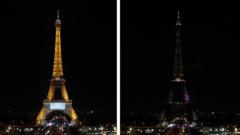
In Paris, the Eiffel Tower, an iconic symbol of French culture, was among the structures that participated in the global initiative. Standing at an impressive 324 meters tall, the iron lattice tower was engulfed in darkness, its beacon-like presence muted for a brief moment. At the same time, the Sagrada Família Basilica in Barcelona, a UNESCO World Heritage Site and the magnum opus of renowned architect Antoni Gaudí, went dark, its intricate stone facade and soaring spires losing their usual radiance.
In New York City’s Times Square, the bright billboards and giant electronic displays that normally illuminate the bustling area were switched off for an hour. Similarly, in Rome, the Colosseum, one of the world’s most recognizable ancient structures, was plunged into darkness, serving as a poignant reminder of the impact of human activities on the environment.
Earth Hour 2023 was not merely a symbolic gesture, but an expression of the collective determination to reduce carbon emissions and transition to cleaner, more sustainable energy sources. In an era where environmental issues have moved to the forefront of global conversations, the participation of high-profile landmarks serves as a stark reminder of the urgent need to protect our planet.
The Earth Hour initiative, now a global phenomenon, has grown in both participation and scope over the years. What began as a small event in Sydney in 2007 has today become a massive, collaborative effort to raise awareness about climate change and the importance of sustainability.
Earth Hour has already had an impact on the global energy landscape. According to World Wildlife Fund (WWF) reports, there has been a significant increase in the adoption of renewable energy sources worldwide, with solar and wind power leading the charge.
The participation of iconic landmarks during Earth Hour has not only raised public awareness but also serves as a visual reminder of the importance of taking collective action against climate change. As we continue to navigate the complexities of a changing world, events like Earth Hour
This article may be prepared with the assistance of artificial intelligence (AI) and is reviewed before publication. While we aim for accuracy and timeliness, readers should verify important facts from official or primary sources. If you believe any information is inaccurate or that any content infringes your rights, please contact ainewsbreaking.com for review and appropriate action.