“Ex-US National Security Advisor John Bolton Assesses Trump’s Diplomatic Approach Amid Iran Tensions”
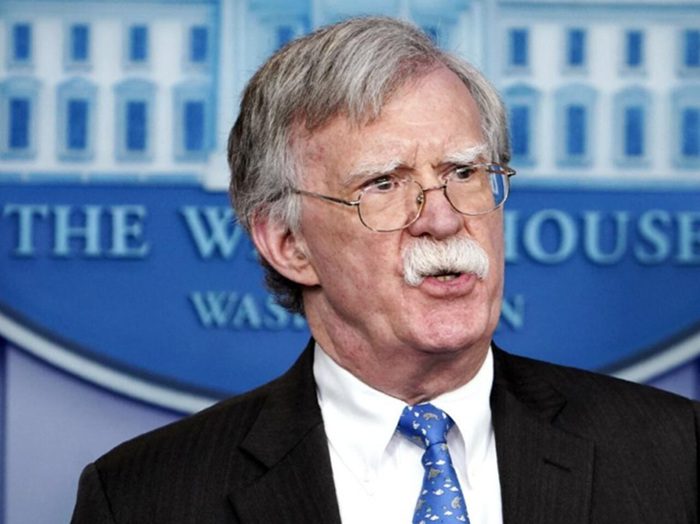
As tensions between the United States and Iran continue to escalate into a broader regional crisis, former US National Security Advisor John Bolton has emerged as one of the most vocal critics of Donald Trump’s diplomatic and military approach. Known for his hawkish stance on Iran and long-standing advocacy for regime change, Bolton’s recent assessments provide a sharp, often critical perspective on how Washington is handling one of the most dangerous geopolitical confrontations in recent history.
While the Trump administration has projected a mix of military strength and diplomatic outreach—ranging from troop deployments to claims of possible nuclear agreements—Bolton argues that the overall strategy lacks coherence, long-term planning, and clarity of objectives.
Bolton’s Core Criticism: Lack of Clear Strategy
At the heart of Bolton’s critique lies a fundamental concern: that Trump’s Iran policy is not guided by a consistent or well-defined strategy. Instead, Bolton describes the approach as “transactional, ad hoc, and episodic,” suggesting that decisions are made reactively rather than as part of a broader geopolitical framework.
According to Bolton, this absence of a structured plan has led to confusion both within the US administration and among its allies. He argues that Trump’s shifting rhetoric—ranging from calls for regime change to statements suggesting a quick end to hostilities—has created uncertainty about America’s true objectives in the region.
This inconsistency, Bolton warns, risks undermining US credibility at a time when clarity and decisiveness are essential.
Misjudging Iran: A Strategic Error
Bolton has also accused Trump of fundamentally misreading the nature of the Iranian regime and the likely trajectory of the conflict. He claims that the US president appeared to believe that Iran could be destabilized quickly, similar to scenarios previously considered in countries like Venezuela.
However, Bolton argues that this assumption was deeply flawed. Unlike weaker or more fragmented states, Iran possesses a resilient political structure, a powerful military apparatus, and a network of regional allies and proxy groups.
Despite suffering damage from US and allied strikes, the Iranian regime remains intact and continues to project power across the Middle East.
Bolton suggests that underestimating Iran’s resilience has prolonged the conflict and increased the risk of unintended escalation.
Confusion Over War Objectives
One of the most striking aspects of the current crisis, according to Bolton, is the apparent lack of clarity regarding US war aims.
In various public statements, Trump and his administration have outlined multiple, sometimes conflicting objectives, including:
- Eliminating Iran’s nuclear program
- Destroying its missile capabilities
- Curtailing support for militant groups
- Encouraging regime change
- Installing a new leadership in Tehran
Bolton notes that such a wide array of goals, without a clear prioritization, creates strategic ambiguity.
This ambiguity, he argues, makes it difficult to measure success or determine when the conflict has achieved its objectives.
Bolton’s Position: Regime Change as the Only Solution
Despite his criticism of Trump’s methods, Bolton remains consistent in his own hardline stance on Iran. He has repeatedly argued that regime change is essential for achieving long-term stability in the Middle East.
In his view, the current Iranian government represents a persistent threat—not only because of its nuclear ambitions but also due to its support for militant groups and its broader regional influence.
Bolton believes that the regime is currently vulnerable, describing it as being at one of its weakest points since the 1979 Islamic Revolution.
He argues that decisive military action, combined with support for internal opposition movements, could potentially lead to a transformation of Iran’s political landscape.
However, this position is controversial and carries significant risks, including the possibility of prolonged instability or unintended consequences similar to past regime-change efforts in the region.
Criticism of Trump’s Diplomacy
Bolton has also taken aim at Trump’s diplomatic approach, particularly his tendency to make bold public statements that may not be backed by concrete agreements.
For instance, Trump’s recent claim that Iran has agreed to “never” develop nuclear weapons has not been independently verified and has not been confirmed by Iranian officials.
Bolton warns that such statements could be misleading and may reflect an attempt to shape public perception rather than a genuine breakthrough in negotiations.
In some cases, he has even suggested that optimistic rhetoric about the conflict ending soon could be aimed at influencing markets or domestic political sentiment.
Failure to Build International Consensus
Another key aspect of Bolton’s critique is the Trump administration’s handling of alliances.
He argues that the US has not done enough to coordinate with its traditional allies in Europe and the Middle East, leading to a fragmented international response.
This lack of coordination, Bolton says, weakens the effectiveness of US actions and reduces the pressure on Iran to make concessions.
He contrasts this with the importance of building a unified front, emphasizing that cooperation with allies is crucial for both diplomatic and military success.
Military Action Without Political Preparation
Bolton has also criticized what he sees as a lack of preparation in communicating the rationale for military action to the American public and Congress.
He suggests that the administration did not adequately explain the stakes of the conflict or the objectives it hoped to achieve, leading to confusion and skepticism.
This, he argues, is a significant political mistake, as public support is often critical for sustaining long-term military engagements.
Contradictions in Trump’s Messaging
One of the recurring themes in Bolton’s assessment is the contradiction between Trump’s statements and actions.
On one hand, Trump has expressed confidence that the conflict could end soon and that Iran may be willing to negotiate. On the other hand, the US continues to expand its military presence in the region and issue warnings of further strikes.
Bolton sees this as evidence of a broader inconsistency in US policy, which could lead to miscalculations by both sides.
Risks of Escalation
Bolton warns that the current approach increases the risk of escalation, particularly in a region already marked by complex alliances and ongoing conflicts.
He notes that Iran has the capability to retaliate through both conventional means and asymmetric tactics, including attacks on infrastructure and the use of proxy groups.
Without a clear strategy and coordinated international support, Bolton argues, the situation could spiral into a broader regional war.
A Hawk Criticising a Hawk
Interestingly, Bolton’s criticism carries particular weight because of his own reputation as a foreign policy hawk.
He has long advocated for aggressive action against Iran and has been a strong supporter of regime change. His critique of Trump, therefore, is not rooted in opposition to military action itself but rather in concerns about how that action is being executed.
This distinction highlights a key debate within US foreign policy circles: not whether to confront Iran, but how to do so effectively.
Global Context and Ongoing Conflict
The crisis between the US and Iran is part of a broader pattern of instability in the Middle East, involving multiple actors and overlapping conflicts.
Recent developments have included:
- Military strikes across several countries
- Rising tensions involving Israel and regional militias
- Disruptions to global energy supplies
- Increased risk of attacks on critical infrastructure
These factors contribute to a highly volatile environment in which miscalculations could have far-reaching consequences.
Bolton’s Warning: Strategic Drift
Ultimately, Bolton’s assessment can be summarized as a warning against strategic drift—a situation in which actions are taken without a clear sense of direction or purpose.
He argues that without a coherent strategy, the US risks becoming entangled in a prolonged conflict with uncertain outcomes.
This warning is particularly significant given the stakes involved, including regional stability, global energy markets, and the potential for wider international involvement.
This article may be prepared with the assistance of artificial intelligence (AI) and is reviewed before publication. While we aim for accuracy and timeliness, readers should verify important facts from official or primary sources. If you believe any information is inaccurate or that any content infringes your rights, please contact ainewsbreaking.com for review and appropriate action.