
Five Ships Attacked in Gulf as Suspected Iranian Drone Boats and Sea Mines Target Oil Tankers
At least five commercial vessels were attacked in the Persian Gulf and nearby waters in a dramatic escalation of maritime tensions linked to the ongoing conflict involving Iran, the United States, and Israel. The attacks targeted oil tankers and cargo ships using explosive-laden boats, projectiles, and possibly sea mines, raising serious concerns about the safety of one of the world’s most important energy shipping routes.
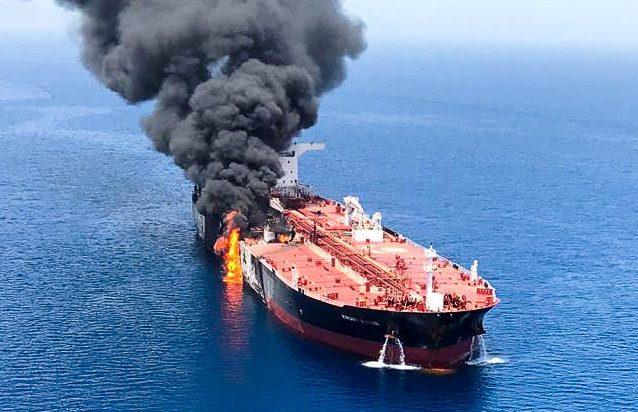
According to maritime security sources and port officials, two oil tankers were struck by explosive-filled boats in Iraqi territorial waters, triggering fires and leaving at least one crew member dead. Several other vessels were damaged in separate incidents in the Gulf and near the strategic Strait of Hormuz. (@onmanorama)
The incidents mark one of the most significant attacks on commercial shipping since the latest round of regional hostilities began.
Oil Tankers Set Ablaze in Iraqi Waters
Two fuel tankers carrying Iraqi oil were hit by explosive-laden boats believed to be operated remotely or controlled as unmanned surface vessels.
The ships targeted included:
- Zefyros – a Malta-flagged oil tanker
- Safesea Vishnu – a Marshall Islands-flagged tanker chartered by an Iraqi company
Both vessels were attacked while operating near Iraq’s southern oil ports. The explosions caused large fires on board and resulted in the death of at least one crew member. Rescue teams later evacuated dozens of crew members from the burning vessels. (The Economic Times)
Footage circulating from the area showed thick black smoke rising from the ships as flames spread across the water’s surface.
Additional Ships Hit in the Strait of Hormuz
Apart from the two tankers, at least three additional vessels were struck by projectiles or damaged during attacks in Gulf waters.
One of the ships hit was the Thai-flagged bulk carrier Mayuree Naree, which suffered a fire after being struck while passing through the Strait of Hormuz. The attack damaged the ship’s engine room and left several crew members missing. (@onmanorama)
Other ships, including container vessels and cargo carriers, reported damage during the wave of attacks.
The incidents highlight the increasing risks faced by merchant ships navigating through the narrow maritime corridor.
Suspected Use of Iranian Drone Boats
Security analysts believe that the attacks may involve unmanned surface vessels (USVs)—commonly referred to as drone boats.
These remotely operated boats can carry large explosive payloads and are capable of striking ships with precision. They have emerged as a relatively inexpensive yet highly effective naval weapon.
Maritime intelligence sources say the boats used in the attacks were packed with explosives and detonated upon impact with the tankers.
If confirmed, this would represent one of the most significant uses of naval drone technology against commercial shipping in the Middle East.
Strategic Importance of the Strait of Hormuz
Many of the attacks occurred near the Strait of Hormuz, one of the most critical maritime chokepoints in the world.
Approximately 20% of global oil supplies pass through this narrow waterway connecting the Persian Gulf with the Arabian Sea.
Any disruption to shipping in the region has immediate consequences for global energy markets.
Following the attacks, several shipping companies reportedly halted operations or delayed vessels traveling through the strait due to security concerns.
Shipping Disruptions and Oil Market Impact
The attacks have significantly disrupted maritime traffic in the Gulf.
Shipping companies are now reassessing the safety of their vessels, while insurers are reviewing risk levels associated with operations in the region.
Energy markets reacted quickly to the news, with crude oil prices rising amid fears that prolonged disruptions could limit global supply.
Analysts warn that if shipping through the Strait of Hormuz is severely restricted, the global energy market could face major supply shocks.
Link to Escalating Middle East Conflict
The maritime attacks come amid escalating military tensions involving Iran and Western forces.
The conflict intensified after airstrikes were launched against Iranian targets in late February, prompting warnings from Iranian officials that energy infrastructure and shipping could become targets.
Iran has repeatedly stated that it may block or disrupt oil exports from the Persian Gulf if the conflict continues.
Security experts believe the latest attacks may be intended as a demonstration of Iran’s ability to threaten maritime trade routes.
Global Security Concerns
The attacks have raised alarms among international security officials and naval forces operating in the region.
Several countries maintain naval patrols in the Gulf to protect shipping lanes, but the use of drone boats and sea mines complicates defense efforts.
Unlike traditional naval attacks, unmanned explosive boats are difficult to detect and intercept.
Military analysts warn that the use of such tactics could transform maritime warfare in the region.
Iraq Expresses Concern
Iraq’s government has expressed concern about the attacks occurring in its territorial waters.
Officials emphasized the need to protect international shipping routes and energy infrastructure from becoming targets in regional conflicts.
The Iraqi oil ministry stated that safe navigation in major energy corridors must be maintained to prevent disruptions to global oil supply.
Authorities are now investigating how the attacks were carried out and who was responsible.
Growing Risk to Commercial Shipping
Commercial ships in the Persian Gulf are increasingly finding themselves caught in geopolitical tensions.
The region has experienced similar threats in the past, particularly during the “Tanker War” of the 1980s when ships were frequently targeted during the Iran-Iraq conflict.
However, the use of modern technologies such as naval drones introduces a new dimension to maritime warfare.
Shipping companies, insurers, and governments are now working to evaluate how to mitigate these emerging threats.
Possible Military Response
Naval forces from several countries operate in the Gulf to protect shipping lanes and monitor security threats.
If attacks continue, there could be calls for increased military escorts for commercial vessels traveling through the Strait of Hormuz.
In past conflicts, international coalitions have deployed warships to safeguard oil tankers passing through the region.
However, escort operations are complex and costly, especially when facing unconventional threats such as drone boats and sea mines.
Broader Implications for Global Trade
The Gulf region is not only vital for oil shipments but also for global trade more broadly.
Thousands of cargo vessels pass through the Strait of Hormuz each year transporting energy, raw materials, and manufactured goods.
Any prolonged disruption could affect supply chains worldwide, leading to higher energy prices and increased shipping costs.
For energy-importing countries—including India, China, and many European nations—the stability of Gulf shipping routes is particularly important.
This article may be prepared with the assistance of artificial intelligence (AI) and is reviewed before publication. While we aim for accuracy and timeliness, readers should verify important facts from official or primary sources. If you believe any information is inaccurate or that any content infringes your rights, please contact ainewsbreaking.com for review and appropriate action.