Global Tensions Escalate: Trump’s Profanity-Laced Warning to Iran Sparks Fears of Military Strikes
The already volatile geopolitical situation in the Middle East took a dramatic and potentially dangerous turn on April 5, 2026, when former U.S. President Donald Trump issued an unusually aggressive and profanity-laced warning to Iran. In a social media post that quickly drew global attention, Trump threatened to launch direct military strikes targeting Iran’s critical infrastructure—including power plants and bridges—if Tehran failed to reopen the strategically vital Strait of Hormuz.
The message, described by analysts as one of the most inflammatory public statements of the ongoing conflict, marks a significant escalation in rhetoric amid an already intensifying war involving the United States, Iran, Israel, and several regional actors.
Trump’s Explosive Social Media Warning
In his post, shared on Truth Social, Trump used explicit language to demand immediate action from Iran. He warned that if the Strait of Hormuz was not reopened to global shipping, the United States would respond with devastating force within days.
According to multiple reports, Trump declared that “Tuesday will be Power Plant Day and Bridge Day,” a phrase widely interpreted as a direct threat to target Iran’s energy grid and transportation infrastructure.
The tone of the message shocked observers due to its use of profanity—something rarely seen in official communications from a U.S. president—and its explicit call for military action.
The statement underscores the seriousness of the current crisis and highlights how rapidly tensions are escalating between Washington and Tehran.
Why the Strait of Hormuz Matters
At the center of the crisis lies the Strait of Hormuz, one of the most critical maritime chokepoints in the world. This narrow waterway connects the Persian Gulf to the Arabian Sea and is responsible for transporting roughly 20% of the world’s oil supply.
Any disruption in this region has immediate and far-reaching consequences for global energy markets, trade routes, and economic stability.
Iran’s effective closure of the strait—following weeks of military escalation—has already caused shipping traffic to plummet and triggered fears of a global energy crisis.
Oil prices have surged, insurers have raised premiums for vessels entering the region, and many shipping companies have halted operations entirely.
Background: How the Crisis Escalated
The current standoff did not emerge overnight. It is part of a broader conflict that began in late February 2026, when the United States and Israel launched coordinated strikes against Iranian targets.
In response, Iran escalated its military actions, including:
- Attacks on oil tankers in the Strait of Hormuz
- Deployment of naval mines
- Missile and drone strikes targeting Gulf nations
- Downing of a U.S. F-15 fighter jet
These developments triggered a cycle of retaliation, with each side intensifying its military posture.
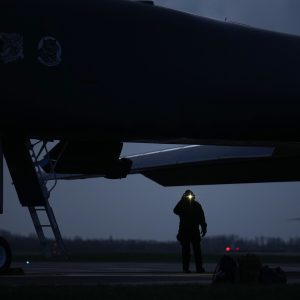
The United States initiated an aerial campaign aimed at reopening the strait, targeting Iranian naval assets and infrastructure believed to be obstructing shipping routes.
Despite these efforts, Iran has maintained significant control over the waterway, effectively limiting access and challenging U.S. naval operations.
The Downed Jet and Rescue Operation
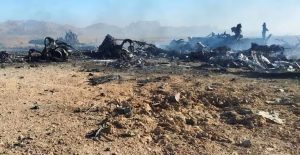
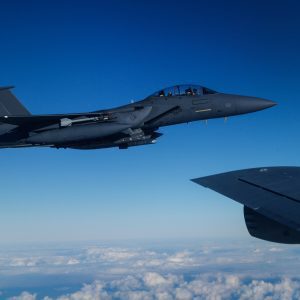
One of the most dramatic incidents in the conflict involved the downing of a U.S. F-15E Strike Eagle over Iranian territory.
The aircraft was shot down during combat operations, marking a significant escalation and one of the most serious direct confrontations between U.S. and Iranian forces in recent years.
Trump later confirmed that both crew members had been successfully rescued, describing the mission as complex and high-risk.
Reports suggest that the rescue operation involved coordinated military and intelligence efforts, including deceptive tactics to evade Iranian defenses.
The incident has further fueled tensions, with both sides using it as justification for continued escalation.
Iran’s Response: Defiance and Warnings
Iran has firmly rejected Trump’s ultimatum, dismissing it as reckless and provocative.
Officials in Tehran warned that any attack on Iranian infrastructure would trigger severe retaliation, with one senior figure stating that such actions would “open the gates of hell.”
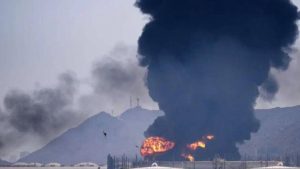
Iran has also continued its military operations across the region, targeting infrastructure in Gulf countries such as Kuwait and the United Arab Emirates.
These attacks, while causing significant material damage, have so far resulted in limited casualties.
Tehran maintains that it is acting in self-defense and has accused the United States and its allies of initiating the conflict through earlier airstrikes.
Regional Fallout: A Widening War
The conflict has expanded beyond a bilateral confrontation between the U.S. and Iran.
Key developments include:
- Israeli airstrikes in Gaza and Lebanon
- Hezbollah missile attacks on Israeli territory
- Iranian drone strikes on Gulf infrastructure
- Rising civilian casualties across multiple countries
The situation has created a complex, multi-front conflict that threatens to destabilize the entire Middle East.
Humanitarian concerns are also mounting, with thousands reported dead and over a million people displaced due to ongoing violence.
Global Impact: Energy, Trade, and Markets
The closure of the Strait of Hormuz has had immediate global repercussions.
Energy Markets
Oil prices have surged due to fears of supply disruptions. The strait is a critical route for major oil-producing nations, including Saudi Arabia, Iraq, and the UAE.
Shipping and Trade
Commercial shipping has been severely affected, with many vessels avoiding the region altogether.
Economic Uncertainty
Global markets have reacted with volatility, as investors weigh the risks of prolonged conflict.
Countries heavily dependent on imported energy—such as India, China, and Japan—are particularly vulnerable to disruptions in the strait.
Diplomatic Efforts and Mediation
Despite the escalating rhetoric and military activity, several countries have attempted to mediate the conflict.
Nations including:
- Pakistan
- Turkey
- Egypt
have reportedly engaged in diplomatic efforts aimed at de-escalation.
However, these efforts have so far failed to produce a breakthrough, with both the U.S. and Iran maintaining hardline positions.
Trump’s Strategy: Pressure and Deterrence
Trump’s approach appears to rely heavily on maximum pressure tactics, combining military threats with economic and diplomatic pressure.
His ultimatum to Iran is not the first such warning. Over the past several weeks, he has repeatedly threatened to target Iranian energy infrastructure if the strait remains closed.
Earlier deadlines were extended, suggesting that negotiations may have been attempted behind the scenes. However, the latest statement indicates a shift toward a more aggressive posture.
The Risks of Escalation
Experts warn that the situation is extremely fragile and could spiral into a full-scale regional war.
Key risks include:
- Direct U.S.-Iran military confrontation
- Expansion of conflict to additional countries
- Disruption of global energy supplies
- Increased civilian casualties
The use of explicit and confrontational language by a major world leader further raises concerns about miscalculation and unintended escalation.
This article may be prepared with the assistance of artificial intelligence (AI) and is reviewed before publication. While we aim for accuracy and timeliness, readers should verify important facts from official or primary sources. If you believe any information is inaccurate or that any content infringes your rights, please contact ainewsbreaking.com for review and appropriate action.