
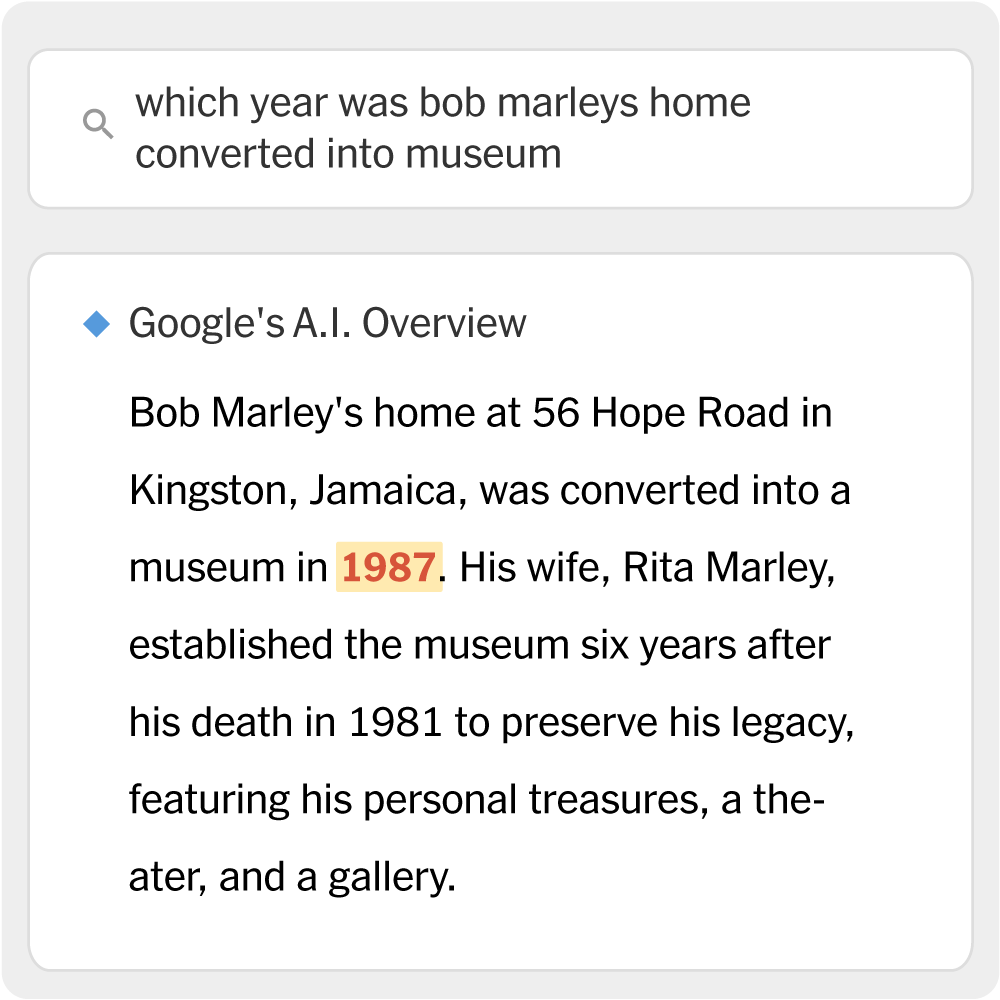
Google’s AI-Generated Overviews Face Accuracy Concerns: Unpacking the Sources Behind the Answers
Google’s artificially intelligent (A.I.) generated answers have revolutionized the way users seek information online, offering comprehensive overviews on a wide range of topics. However, concerns have been raised about the accuracy of these A.I.-powered summaries, specifically regarding the sources they draw from. An investigation has uncovered that while some sources of Google’s A.I. generated answers appear trustworthy, others come from unverified social media platforms like Facebook.
The issue raises questions about the reliability of these A.I.-generated answers, particularly when it comes to matters of importance, such as politics, health, and finance. As users increasingly rely on Google for information, the tech giant’s accountability in ensuring the accuracy of these summaries is under scrutiny. According to Google’s own policies, the algorithm uses a vast array of sources to generate these overviews, aiming to deliver the most comprehensive and up-to-date information possible.
Despite Google’s efforts to provide authoritative results, the A.I. algorithm’s reliance on a broad spectrum of sources, including user-generated content on social media, poses a challenge to its accuracy. This approach may be beneficial in broadening the scope of available information, but it also increases the risk of spreading misinformation or inaccuracies.
The integration of social media sources has led to concerns that A.I.-generated answers might perpetuate misleading information or echo the biases present in these online platforms. This has sparked calls for greater transparency and oversight in the way Google’s A.I. algorithm sources and weighs its information. Critics argue that the company must take a more active role in verifying the credibility of these sources and addressing concerns about the reliability of its generated answers.
Google has maintained that its A.I. algorithm is designed to prioritize trustworthy sources, such as government and academic websites, but the issue of social media sources contributing to A.I. generated answers remains a contentious issue. As the reliance on A.I. generated content continues to grow, understanding the sources behind these answers is crucial for maintaining trust in online information.
The ongoing debate highlights the importance of accountability and responsible information dissemination. By shedding light on the complexities surrounding Google’s A.I. generated answers, users can make informed decisions about the sources they rely on and encourage tech giants to prioritize transparency and accuracy.
Ultimately, the accuracy and reliability of Google’s A.I. generated answers will depend on the effectiveness of the algorithm and its ability to distinguish between trustworthy and unverified sources.
This article may be prepared with the assistance of artificial intelligence (AI) and is reviewed before publication. While we aim for accuracy and timeliness, readers should verify important facts from official or primary sources. If you believe any information is inaccurate or that any content infringes your rights, please contact ainewsbreaking.com for review and appropriate action.