Hezbollah Fires 120 Rockets from Tyre Neighborhoods, Israel Accuses Group of Using Civilians as Human Shields
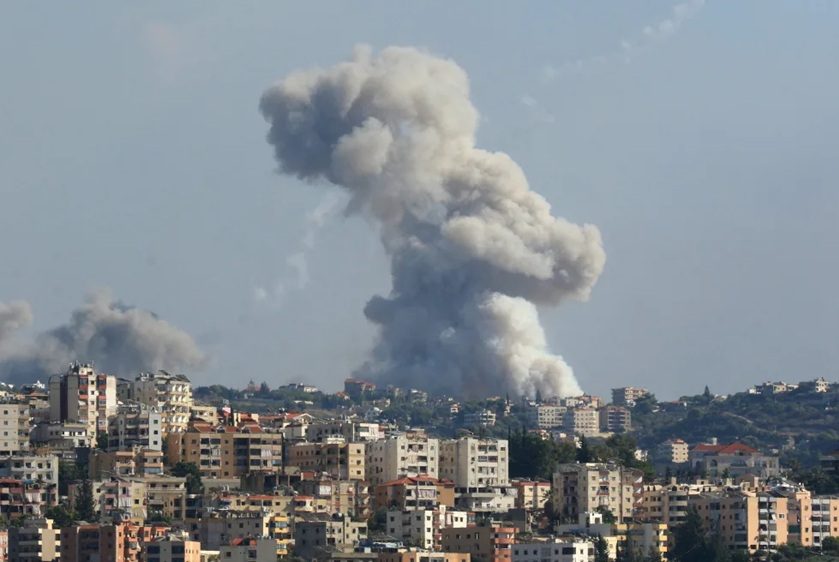
The already volatile situation in the Middle East has intensified further after the Israel Defense Forces (IDF) accused Hezbollah of launching a massive rocket barrage from civilian neighborhoods in the southern Lebanese city of Tyre. According to Israeli military sources, approximately 120 rockets were fired toward Israeli territory, with launch sites allegedly embedded within densely populated residential areas.
The IDF has claimed that Hezbollah deliberately used civilians as human shields, a charge that, if verified, raises serious concerns under international humanitarian law. The incident marks a dangerous escalation in hostilities between Israel and Hezbollah, increasing fears of a broader regional conflict.
Massive Rocket Barrage from Tyre
Israeli officials reported that around 120 rockets were launched from Tyre and surrounding neighborhoods within a short span of time. Sirens were triggered across northern Israel as air defense systems, including the Iron Dome, were activated to intercept incoming projectiles.
While Israeli authorities stated that many rockets were successfully intercepted, several managed to land in populated areas, causing damage to infrastructure and raising concerns about civilian safety. Emergency services were deployed immediately to assess damage and provide assistance to affected communities.
The scale of the attack highlights Hezbollah’s growing operational capacity and its ability to coordinate large-scale strikes within a short timeframe.
IDF Accuses Hezbollah of Using Civilians as Shields
A central claim made by the IDF is that Hezbollah launched these rockets from within civilian neighborhoods in Tyre. According to Israeli military spokespersons, rocket launchers were positioned near homes, schools, and other civilian infrastructure.
Israel alleges that this tactic is a deliberate strategy aimed at deterring retaliation, as any counterstrike risks civilian casualties. The IDF described this as the use of “human shields,” a term that carries serious legal and moral implications.
Under international humanitarian law, using civilians to shield military operations is considered a violation. However, such claims are often difficult to independently verify, especially in active conflict zones where access is limited.
Hezbollah’s Strategy and Silence
As of now, Hezbollah has not officially confirmed the details of the rocket launches or responded directly to the allegations of using civilian areas for military operations. Historically, the group has denied accusations of deliberately placing military assets in civilian zones, instead arguing that it operates within a densely populated region where separation between civilian and military infrastructure is inherently complex.
Hezbollah, which is backed by Iran, has long positioned itself as a resistance movement against Israel. Its military strategy has often relied on asymmetric warfare, including rocket attacks and guerrilla tactics.
The latest barrage suggests a willingness to escalate tensions significantly, possibly in response to Israeli strikes in Lebanon or elsewhere in the region.
Escalation in Southern Lebanon
The city of Tyre, located in southern Lebanon, has become a focal point in the latest round of hostilities. Known for its dense population and historical significance, Tyre has seen increasing military activity in recent days.
Residents have reported heightened tensions, with frequent sounds of explosions and aircraft overhead. The presence of military activity in civilian areas has raised concerns among humanitarian organizations about the safety of non-combatants.
The situation on the ground remains fluid, with both sides exchanging fire and preparing for potential escalation.
Israel’s Response
Following the rocket barrage, the IDF announced that it had begun targeting what it described as Hezbollah infrastructure in southern Lebanon. These strikes reportedly included rocket launch sites, storage facilities, and command centers.
Israeli officials have emphasized that their operations are aimed at minimizing civilian casualties, but they argue that Hezbollah’s alleged use of civilian areas complicates this objective.
The Israeli government has also warned that it will continue to take necessary measures to protect its citizens, signaling that further military action is likely if attacks persist.
Civilian Impact and Humanitarian Concerns
The use of civilian areas for military operations, whether confirmed or alleged, significantly increases the risk to non-combatants. In Tyre, thousands of residents live in close proximity to potential military targets, making them vulnerable to both outgoing and incoming fire.
Humanitarian organizations have called for restraint on all sides, urging adherence to international law and the protection of civilians. The escalation has also led to displacement, with some residents fleeing affected areas in search of safety.
In northern Israel, communities near the border have also been affected, with residents taking shelter during rocket alerts and facing ongoing uncertainty.
Regional Implications
The latest escalation between Israel and Hezbollah has broader implications for the Middle East. The conflict is not isolated but is part of a complex web of regional tensions involving multiple actors.
Iran’s support for Hezbollah adds another layer of complexity, as does Israel’s ongoing conflict with Iranian-backed groups in the region. The possibility of a wider war involving multiple countries remains a significant concern.
International observers are closely monitoring the situation, with fears that continued escalation could destabilize the region further.
International Reactions
Global reactions to the incident have been mixed, with calls for restraint coming from various governments and international organizations. While some countries have expressed support for Israel’s right to defend itself, others have emphasized the need to protect civilians and avoid disproportionate use of force.
The United Nations has reiterated its call for de-escalation and respect for international humanitarian law. However, diplomatic efforts to mediate the situation have so far shown limited progress.
The Challenge of Verification
One of the key challenges in conflicts like this is verifying claims made by both sides. The IDF’s allegations regarding the use of civilian areas by Hezbollah are serious, but independent verification is often difficult due to restricted access and ongoing hostilities.
Media reports, satellite imagery, and statements from international organizations may eventually shed more light on the situation. Until then, much of the information remains contested.
Historical Context
This is not the first time that Israel has accused Hezbollah of using civilian infrastructure for military purposes. Similar claims have been made in past conflicts, including the 2006 Lebanon War.
Hezbollah, for its part, has consistently denied such accusations, arguing that Israel uses them to justify attacks on civilian areas.
The recurring nature of these allegations highlights the complexity of the conflict and the challenges in distinguishing between military and civilian targets in densely populated regions.
This article may be prepared with the assistance of artificial intelligence (AI) and is reviewed before publication. While we aim for accuracy and timeliness, readers should verify important facts from official or primary sources. If you believe any information is inaccurate or that any content infringes your rights, please contact ainewsbreaking.com for review and appropriate action.