I-5 Bridge Replacement Cost Jumps to $14.4 Billion as Oregon and Washington Target 2028 Construction Start
The long-delayed effort to replace the aging Interstate 5 bridge between Oregon and Washington has become dramatically more expensive, with project leaders now estimating the full Interstate Bridge Replacement corridor will cost about $14.4 billion, far above earlier projections, even as both states continue pushing to begin major construction in 2028. The updated estimate released this week puts the likely cost in a range of $13.5 billion to $15.2 billion, reflecting inflation, higher construction prices and a broader reassessment of project risks.
The revised figure marks a sharp jump from prior public estimates and is likely to intensify scrutiny of one of the Pacific Northwest’s most ambitious transportation projects. Oregon Public Broadcasting reported that administrators announced the new estimate on March 17, with officials describing the increase as a product of national construction inflation and changing market conditions. The official project website likewise says the updated cost reflects rising bid prices and other market pressures affecting major infrastructure work across the country.
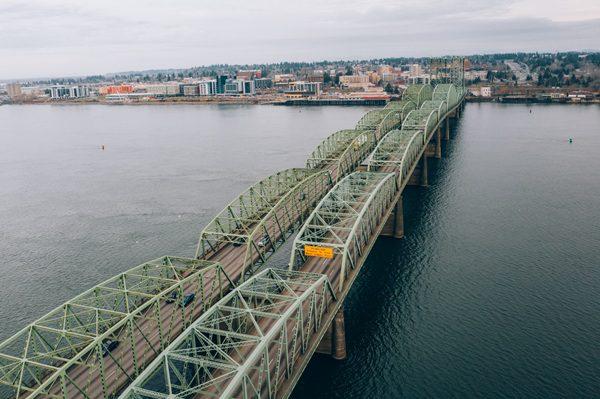
The Interstate Bridge Replacement Program is far larger than a simple bridge swap. It includes replacing the century-old I-5 crossing over the Columbia River between Portland and Vancouver and upgrading a roughly five-mile corridor tied to the crossing. Officials have argued for years that the current bridge is outdated, vulnerable in a major earthquake and ill-suited to modern traffic demand. Local coverage says more than 140,000 vehicles use the structure every day, underscoring why leaders in both states insist the replacement cannot be delayed indefinitely.
Despite the sticker shock, Washington and Oregon officials are still aiming for a 2028 construction start. Local reporting on the newly released estimate says that while the price has soared, project leaders continue to target that timetable, with the bridge expected to open roughly six to seven years after construction begins. That means the new crossing may not become operational until the mid-2030s, assuming funding, permitting and procurement all stay on track.
The rising cost is politically significant because the project already depends on a complicated patchwork of funding. Washington and Oregon have each previously committed major state support, and the project has also secured federal money. But the updated estimate means the financing gap is now far larger than many backers had hoped. An earlier Associated Press report on the project noted that federal grants and state commitments had been central to getting the replacement effort off the ground, but those earlier funding assumptions were tied to much lower cost expectations.
That leaves officials with a familiar challenge: how to keep momentum on a project widely seen as necessary while persuading lawmakers, taxpayers and regional stakeholders to accept a much bigger bill. The official cost page says the $14.4 billion figure is being used for planning because project leaders believe there is a 70% chance the final cost will come in at or below that number, though the stated range runs as high as $15.2 billion.
The bridge itself has long been considered a weak link in a vital regional corridor. The current Interstate Bridge, originally opened more than a century ago, connects Portland, Oregon, with Vancouver, Washington, and serves as a key freight, commuter and passenger route on the West Coast. Previous reporting from AP described it as seismically vulnerable and essential to both regional mobility and the broader U.S. economy, helping explain why replacement has remained a top transportation priority despite repeated political and financial setbacks over the years.
Supporters of the project argue that the rising cost does not erase the core case for replacement. In their view, the real question is not whether the bridge needs to be rebuilt, but how long the region can afford to wait. A major earthquake could cripple the existing crossing, and even absent a disaster, congestion and maintenance problems continue to burden one of the Northwest’s busiest interstate connections. Those arguments have become central to the push by officials in both states to keep the 2028 target alive, even as the financial assumptions behind the project are being rewritten.
Critics, however, are likely to seize on the latest cost revision as evidence that the project remains too expensive and too uncertain. Some outside observers had already warned months ago that the bridge replacement could end up far above prior estimates. Now that the official figure has moved into the $14 billion range, the debate is likely to intensify over whether planners have fully accounted for future inflation, design complexity and long construction timelines.
For now, project backers are trying to present the updated number as a realistic reset rather than a derailment. Their message is that major infrastructure across the United States has become more expensive, and that a larger price tag, while painful, is preferable to advancing the project on outdated assumptions. That framing may help politically, but it does not solve the core problem: the bridge replacement now stands as an even bigger test of whether Oregon, Washington and federal partners can sustain support for a multibillion-dollar megaproject over many years.
In practical terms, the coming phase will likely center on funding strategy, environmental and permitting work, and efforts to keep public support from eroding as costs climb. With construction still targeted for 2028, officials have little room for major additional delays if they want to preserve credibility. But the higher estimate means every next step, from procurement to public messaging, will now unfold under sharper scrutiny.
What remains unchanged is the project’s strategic importance. The I-5 crossing is one of the most critical transportation links in the Pacific Northwest, and its replacement has been debated for decades. What changed this week is the scale of the investment required. At $14.4 billion, the project is no longer just a bridge story — it is a major test of interstate coordination, infrastructure finance and political will in an era of soaring construction costs.
This article may be prepared with the assistance of artificial intelligence (AI) and is reviewed before publication. While we aim for accuracy and timeliness, readers should verify important facts from official or primary sources. If you believe any information is inaccurate or that any content infringes your rights, please contact ainewsbreaking.com for review and appropriate action.