
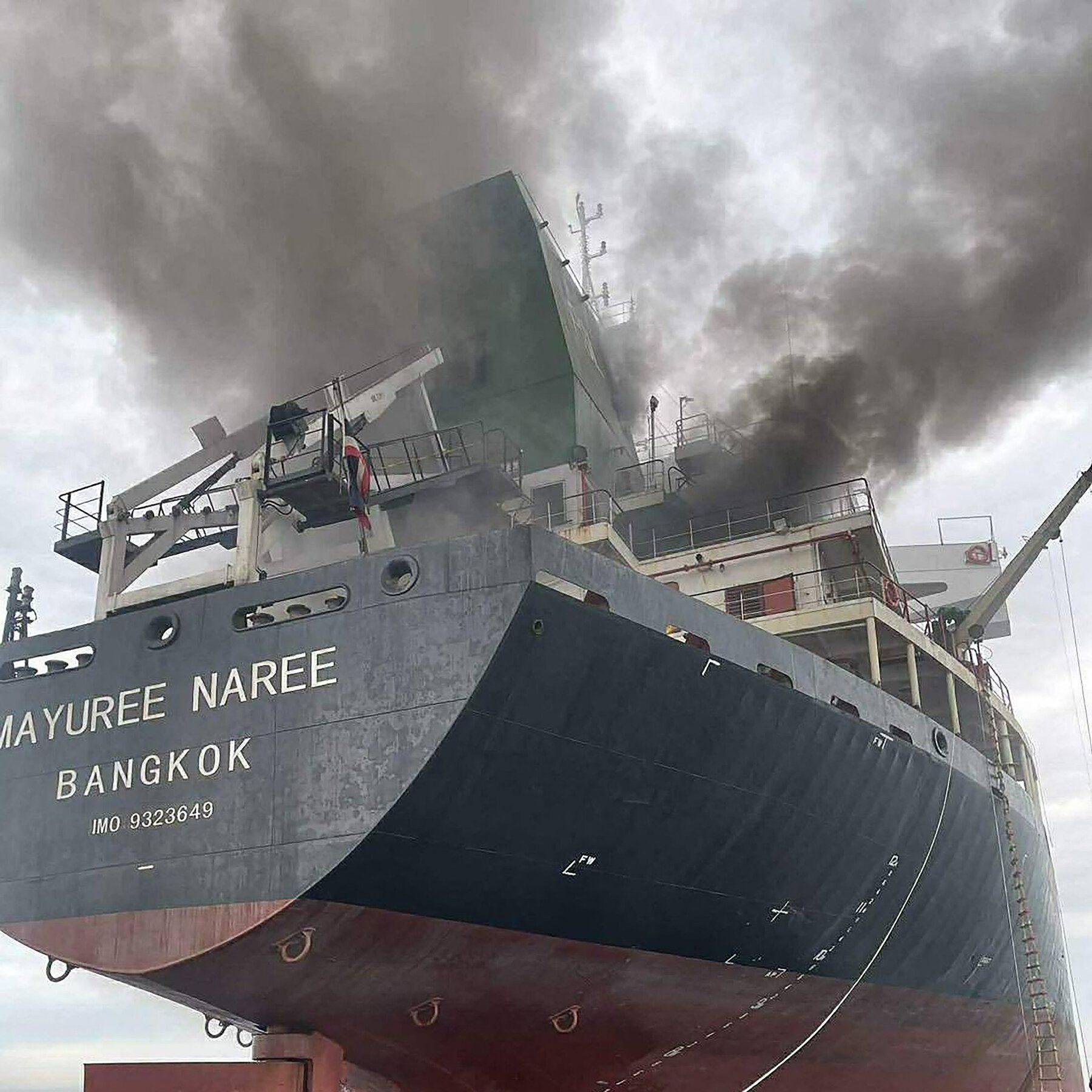
India Condemns Attack on India-Bound Thai Ship Amid Middle East Crisis, Says Loss of Innocent Lives Unacceptable
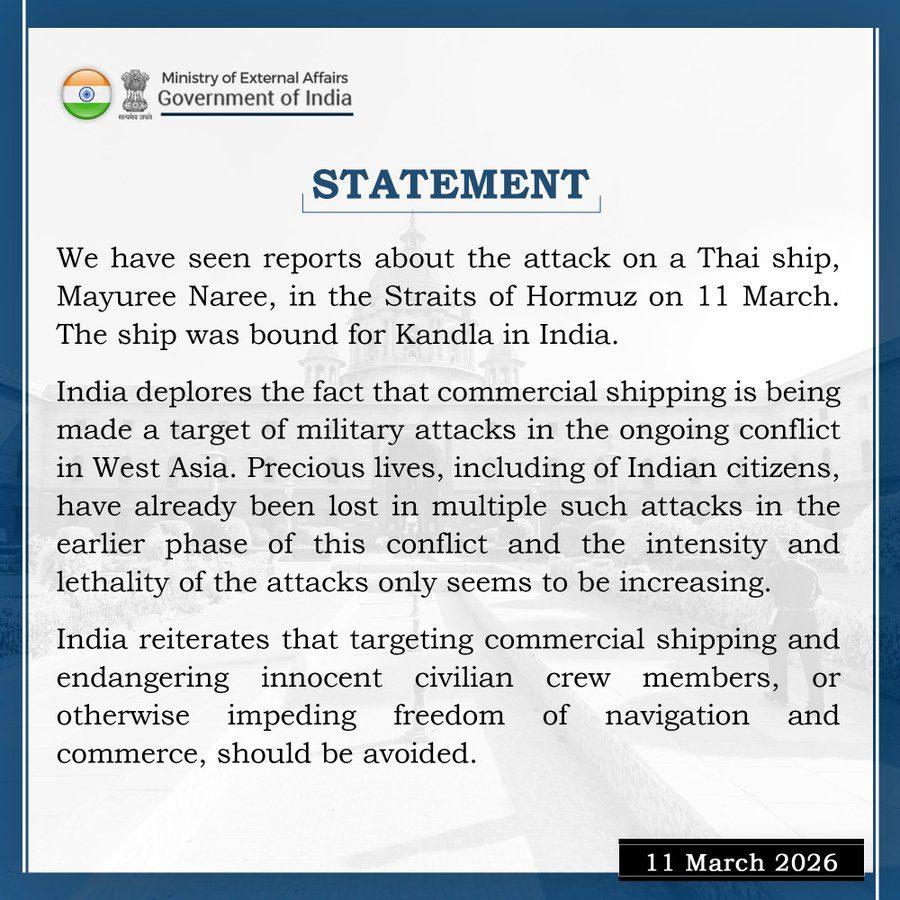
India has strongly condemned an attack on a Thailand-flagged commercial vessel that was reportedly heading towards Indian ports, calling the loss of innocent lives during the ongoing Middle East conflict unacceptable. The Ministry of External Affairs (MEA) issued a statement expressing concern over the incident and urging all sides involved in the regional conflict to exercise restraint.
According to Indian officials, the ship came under attack amid the escalating tensions linked to the ongoing confrontation involving Iran, Israel, and the United States in the Middle East.
The incident has raised serious concerns in New Delhi about the safety of international maritime routes, especially those used for trade and energy shipments that are vital to India’s economy.
MEA Calls Loss of Innocent Lives ‘Unacceptable’
In its official statement, the Ministry of External Affairs condemned the attack and emphasized that civilian vessels should not become victims of military conflicts.
The ministry said that any loss of innocent lives in such circumstances is deeply troubling and unacceptable. It urged all parties involved in the regional hostilities to respect international maritime laws and ensure the safety of commercial shipping.
India also reiterated its longstanding position that disputes in the region must be resolved through dialogue and diplomacy rather than military escalation.
Vessel Was Heading Towards India
Reports indicate that the attacked vessel was a Thailand-registered commercial ship that was travelling toward India when it came under fire in waters linked to the ongoing Middle East conflict.
While details about the exact location of the attack remain limited, maritime tracking data suggests the ship was passing through a strategic shipping route used by vessels transporting goods and energy supplies to South Asia.
Authorities are still investigating the circumstances surrounding the attack, including whether it was directly linked to the ongoing military confrontation in the region.
Concerns Over Safety of Global Shipping Routes
The attack has once again highlighted the risks faced by commercial shipping as tensions in the Middle East continue to rise.
Key maritime routes in the region, including areas near the Strait of Hormuz, are among the busiest shipping corridors in the world. A significant portion of global oil and trade shipments pass through these waters every day.
Any disruption to these routes could have serious consequences for global supply chains and energy markets.
For India, which imports a large share of its crude oil from the Middle East, maintaining the security of maritime trade routes is a strategic priority.
India Urges De-Escalation in Middle East
India has repeatedly called for restraint from all sides amid the growing confrontation between Iran and Israel, which has drawn in several regional and international actors.
New Delhi has emphasized the importance of diplomatic engagement and has warned that further escalation could destabilize the entire region.
Officials have also stressed that conflicts in the Middle East have far-reaching consequences, not only for regional security but also for global economic stability.
Impact on Indian Interests
The attack on the India-bound vessel comes at a time when India is closely monitoring developments in the Middle East due to the large number of Indian citizens working in the region and the country’s strong trade links with Gulf nations.
The Indian government has been coordinating with regional authorities to ensure the safety of Indian nationals and commercial assets operating in the area.
Security agencies are also reviewing maritime safety protocols and monitoring shipping routes that connect the Middle East with Indian ports.
Growing International Concern
The broader conflict in the Middle East has triggered concern among governments worldwide. International organizations and several countries have called for immediate steps to prevent further escalation.
Experts warn that attacks on civilian shipping could mark a dangerous new phase of the conflict, potentially drawing more countries into the crisis.
If maritime routes become increasingly unsafe, the situation could disrupt global trade flows and lead to higher transportation and energy costs.
This article may be prepared with the assistance of artificial intelligence (AI) and is reviewed before publication. While we aim for accuracy and timeliness, readers should verify important facts from official or primary sources. If you believe any information is inaccurate or that any content infringes your rights, please contact ainewsbreaking.com for review and appropriate action.