
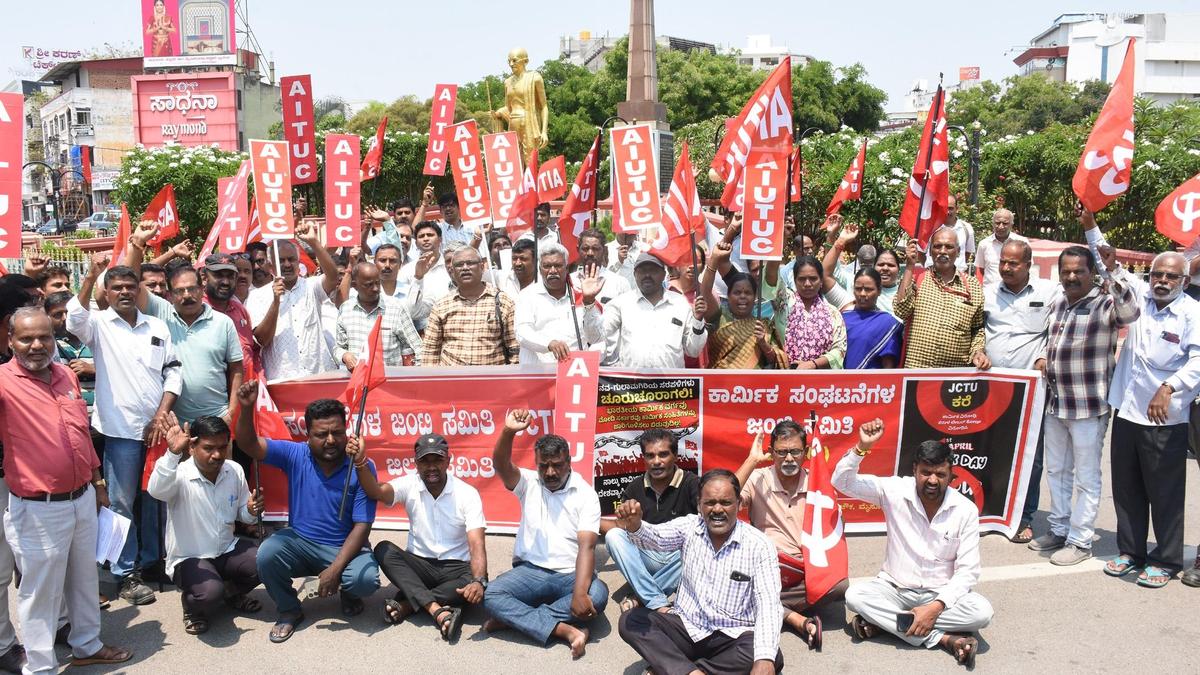
India’s Small-Scale Industrial Sector on Brink of Collapse: Trade Unions Warn of 75% Closure Threat Under Labour Codes
India’s small-scale industrial sector is staring at a potential crisis, with trade unions warning that nearly 75% of small industries could face closure due to the implementation of the country’s new labour codes. The Joint Committee of Trade Unions (JCTU) has raised alarm over what it describes as “anti-worker and anti-small business reforms,” sparking fresh debate over the future of employment, labour rights, and industrial growth in India.
The warning comes at a time when micro, small, and medium enterprises (MSMEs)—often called the backbone of India’s economy—are already grappling with rising costs, weak demand, and global uncertainties.
What Are the New Labour Codes?
India has consolidated 29 existing labour laws into four comprehensive labour codes, aimed at simplifying compliance and improving ease of doing business:
- Code on Wages, 2019
- Industrial Relations Code, 2020
- Occupational Safety, Health and Working Conditions Code, 2020
- Code on Social Security, 2020
The government has argued that these reforms will modernize India’s labour ecosystem, reduce regulatory complexity, and attract investment.
However, trade unions and several industry groups—especially small-scale operators—have expressed serious concerns about their real-world impact.
Why Small Industries Are Worried
According to the JCTU, the new labour codes could impose additional financial and administrative burdens on small businesses, making survival difficult for many.
1. Increased Compliance Costs
Small industries often operate with limited resources. The new codes introduce:
- Expanded documentation requirements
- Digital compliance systems
- Stricter reporting obligations
For many MSMEs, adapting to these changes could mean higher operational costs.
2. Wage and Social Security Pressures
The codes mandate:
- Standardized wage definitions
- Expanded social security benefits
While these measures aim to improve worker welfare, small employers argue they significantly increase salary expenses and statutory contributions.
3. Hiring and Retrenchment Rules
The Industrial Relations Code raises the threshold for government approval for layoffs and closures from 100 to 300 workers.
While this is seen as a relief for larger firms, unions argue that:
- It may encourage informalization
- Smaller firms may still struggle with rigid compliance norms
4. Fear of Penal Action
Stricter penalties for non-compliance have created anxiety among small business owners, many of whom lack legal and administrative expertise.
JCTU’s Warning: ‘Closure Wave Imminent’
The Joint Committee of Trade Unions has issued a stark warning:
- Up to 75% of small industries may be forced to shut down
- Millions of jobs could be at risk
- Informal sector workers may be hit the hardest
Union leaders argue that the reforms disproportionately favor large corporations while placing excessive strain on smaller enterprises.
“These labour codes will not only weaken workers’ rights but also destroy small industries that cannot bear the additional burden,” JCTU representatives said.
Impact on Employment: A Major Concern
The potential closure of small industries could have severe implications for employment.
MSMEs: India’s Job Engine
- MSMEs employ over 110 million people in India
- They contribute nearly 30% to GDP
- A large portion of the workforce is informal or semi-skilled
If a significant percentage of these units shut down, the ripple effects could include:
- Massive job losses
- Increased rural-to-urban migration
- Rising income inequality
Industry Divided: Reform vs Reality
The labour codes have created a divide between different sections of industry.
Supporters Say:
- Simplified laws reduce red tape
- Flexibility boosts investment
- Standardization improves transparency
Critics Argue:
- One-size-fits-all approach ignores MSME realities
- Compliance burden outweighs benefits
- Workers’ protections are diluted
This divergence highlights the complexity of balancing economic growth with social protection.
Government’s Stand: Reform for Growth
The government maintains that the labour codes are essential for:
- Improving ease of doing business
- Attracting foreign investment
- Formalizing the workforce
- Ensuring uniform labour standards
Officials have also stated that:
- Implementation will be phased
- States can adapt rules based on local needs
- Digital platforms will simplify compliance over time
However, critics say more consultation with small industry stakeholders is needed.
Ground Reality: MSMEs Already Under Pressure
Even before the labour codes, small industries were facing multiple challenges:
- Rising raw material costs
- High interest rates
- Supply chain disruptions
- Competition from large corporations and imports
The addition of new regulatory requirements could further strain already fragile businesses.
Call for Policy Revisions
Trade unions and MSME associations have put forward several demands:
- Delay in implementation of labour codes
- Exemptions or relaxations for small industries
- Simplified compliance mechanisms
- Financial support or subsidies to offset increased costs
They argue that without these measures, the reforms could backfire, leading to economic contraction rather than growth.
Economic Implications: Beyond Small Industries
The potential shutdown of MSMEs could have far-reaching consequences:
1. Supply Chain Disruptions
Small industries form critical links in manufacturing and supply chains.
2. Export Impact
Many MSMEs contribute to India’s export sector, especially in textiles, handicrafts, and engineering goods.
3. Financial Sector Stress
Bank loans to MSMEs could turn into non-performing assets (NPAs) if businesses fail.
Labour Rights vs Business Sustainability
At the heart of the debate is a fundamental question:
How can India protect workers’ rights while ensuring business sustainability?
The labour codes attempt to strike this balance, but critics argue that the current framework tilts too heavily in favor of regulatory compliance without addressing ground-level challenges.
This article may be prepared with the assistance of artificial intelligence (AI) and is reviewed before publication. While we aim for accuracy and timeliness, readers should verify important facts from official or primary sources. If you believe any information is inaccurate or that any content infringes your rights, please contact ainewsbreaking.com for review and appropriate action.