Iran War Escalation Threatens Global Energy, Water Security and Critical Infrastructure Across the Middle East
The intensifying conflict involving Iran, the United States, and Israel is rapidly transforming into one of the most dangerous geopolitical crises of the decade. What began as a series of military strikes and retaliatory attacks has now expanded into a broader confrontation that threatens oil infrastructure, water systems, shipping routes, and civilian facilities throughout the Middle East.
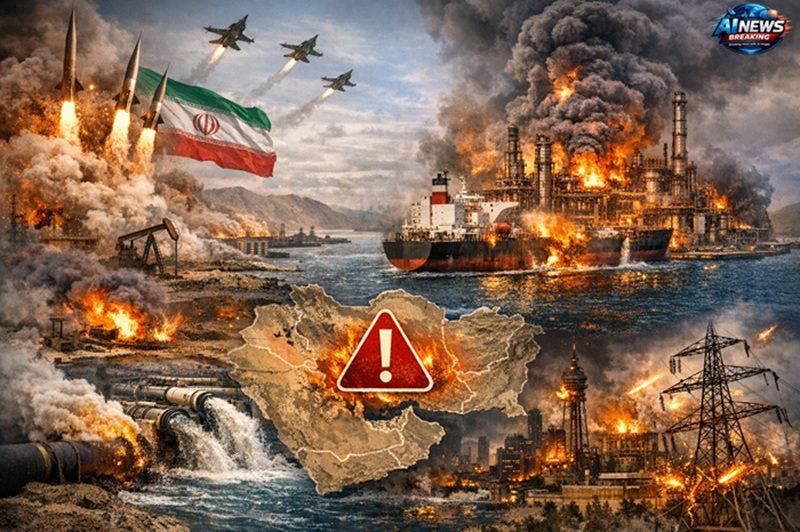
As the war enters a more volatile phase, experts warn that the damage could extend far beyond the battlefield. The region’s energy networks, desalination plants, pipelines, and maritime trade corridors are increasingly becoming potential targets in the conflict. Because these systems are deeply connected to the global economy, any major disruption could send shockwaves across international markets.
With global oil supplies, shipping routes, and water security now at risk, the consequences of the escalating conflict could affect not only the Middle East but economies and populations around the world.
A War Expanding Beyond Military Targets
In the early days of the conflict, most attacks were directed at military facilities such as air bases, missile launch sites, and command centers. However, as tensions have escalated, strategic infrastructure has become a growing focus.
Military planners often consider infrastructure such as oil terminals, shipping ports, electricity grids, and water treatment plants as “high-value targets.” These systems are essential to a country’s economic stability and civilian life. Disrupting them can weaken an adversary without directly targeting population centers.
The widening scope of targets in the Iran war reflects this strategic reality. Infrastructure that once operated far from the front lines is now increasingly exposed to missile strikes, drone attacks, and cyber operations.
Experts say this shift significantly raises the stakes of the conflict. Damage to critical infrastructure can trigger cascading effects, disrupting industries, economies, and daily life for millions of people.
Oil Infrastructure at the Center of the Conflict
One of the most immediate concerns in the escalating war is the vulnerability of oil infrastructure across the Persian Gulf region.
The Middle East produces a large share of the world’s oil supply, and several countries in the region—including Saudi Arabia, Iran, Iraq, and the United Arab Emirates—depend heavily on oil exports to sustain their economies.
Energy infrastructure in these countries includes offshore drilling platforms, refineries, pipelines, storage facilities, and export terminals. Many of these installations are located along coastlines or in open desert areas, making them vulnerable to long-range missile or drone attacks.
In recent weeks, several incidents have raised concerns about the security of these facilities. Energy analysts warn that a coordinated series of strikes on oil infrastructure could drastically reduce global oil supplies.
Such disruptions could quickly send crude prices surging, triggering inflation and economic instability worldwide.
Kharg Island: A Strategic Energy Lifeline
One of the most sensitive energy sites in the region is Kharg Island, which serves as the primary oil export terminal for Iran.
Located in the Persian Gulf, the island handles the vast majority of Iran’s crude oil exports. Massive storage tanks, pipelines, and loading terminals allow supertankers to transport millions of barrels of oil to international markets.
Because of its importance to Iran’s economy, Kharg Island has long been considered one of the most strategically significant energy facilities in the Middle East.
Recent military strikes targeting defensive installations on the island have highlighted its vulnerability. Although the oil facilities themselves were reportedly spared, analysts warn that any direct attack on the island’s export infrastructure could cripple Iran’s energy revenues.
Such an event would also have global consequences, potentially pushing oil prices to levels not seen in years.
The Strait of Hormuz: A Global Energy Chokepoint
Another major concern in the conflict is the security of the Strait of Hormuz, one of the most important maritime chokepoints in the world.
This narrow waterway connects the Persian Gulf with the Gulf of Oman and the Arabian Sea. Nearly one-fifth of the world’s oil supply passes through this route every day, making it vital to global energy markets.
Any disruption to shipping in the Strait of Hormuz could immediately affect oil prices and global trade flows.
The ongoing conflict has already increased military activity in the area. Naval patrols, missile defenses, and surveillance operations have intensified as both sides attempt to secure the vital corridor.
Shipping companies have begun taking additional precautions, and some vessels have altered their routes to avoid potential danger zones.
If the strait were closed or heavily disrupted for an extended period, it could lead to one of the largest energy supply shocks in modern history.
Water Infrastructure Under Growing Threat
While oil infrastructure has received most of the attention, another critical system is quietly becoming a major concern: water infrastructure.
Many countries in the Gulf region depend heavily on desalination plants that convert seawater into fresh drinking water. These facilities are essential for supporting urban populations in desert environments where natural freshwater is scarce.
Countries such as Bahrain, Kuwait, and the United Arab Emirates rely on desalination plants for the majority of their water supply.
Unlike oil facilities, which can sometimes be bypassed or replaced through alternative supply routes, desalination plants are far more difficult to substitute if damaged.
Even a short disruption to water infrastructure could affect millions of residents and lead to severe humanitarian consequences.
Security experts warn that water systems could become strategic targets if the conflict continues to escalate.
Cyber Threats to Infrastructure
Modern warfare increasingly involves cyber operations targeting digital systems that control critical infrastructure.
Oil pipelines, power grids, water treatment facilities, and shipping logistics networks are all managed through complex computer systems. Cyberattacks on these systems can disrupt operations without the need for physical strikes.
Iran has developed advanced cyber capabilities over the past decade, and cyber warfare has become an important element of regional conflicts.
Experts warn that attacks on digital infrastructure could disrupt shipping schedules, disable energy pipelines, or interfere with water treatment plants.
Because these systems are interconnected, cyber disruptions could quickly spread across multiple sectors.
Impact on Global Energy Markets
The escalating conflict has already begun affecting global energy markets.
Oil prices tend to react quickly to geopolitical risks in the Middle East because of the region’s central role in global energy supply. Even the possibility of disruptions can trigger price increases.
If attacks on infrastructure intensify, several major outcomes are possible:
- Global oil prices could surge sharply
- Fuel costs could rise in many countries
- Inflation could increase due to higher energy costs
- Economic growth could slow in energy-importing nations
Countries that rely heavily on imported energy—such as India, China, and several European economies—would likely be among the most affected.
Shipping and Trade Routes at Risk
The Persian Gulf region is not only a major energy hub but also a crucial corridor for global trade.
Thousands of cargo ships pass through nearby waters each year, transporting goods ranging from electronics and machinery to food supplies and industrial materials.
The expansion of military operations in the region has increased risks for commercial shipping.
Missile attacks, drone strikes, and naval confrontations could threaten merchant vessels, insurance rates, and shipping schedules.
If the conflict disrupts maritime trade routes, supply chains across multiple industries could be affected.
This would compound the economic impact of energy disruptions.
Civilian Infrastructure and Humanitarian Risks
As wars escalate, civilian infrastructure often becomes increasingly vulnerable.
Electric power plants, telecommunications networks, hospitals, and transportation systems are all essential for maintaining basic services.
Damage to these systems can create widespread humanitarian problems. Power outages can disrupt hospitals and water treatment facilities. Damaged transportation networks can delay the delivery of food and medical supplies.
Humanitarian organizations warn that the destruction of infrastructure can have long-lasting consequences for civilian populations.
The risk is particularly severe in densely populated urban areas where millions of people depend on centralized infrastructure systems.
Diplomatic Efforts and International Pressure
As the conflict intensifies, diplomatic pressure is growing to prevent further escalation.
Several global powers and international organizations have urged restraint and called for negotiations to avoid attacks on civilian infrastructure.
Protecting energy facilities, water systems, and shipping routes has become a key concern in diplomatic discussions.
However, achieving de-escalation may be difficult given the complex political and military dynamics driving the conflict.
What the Future Could Hold
The coming weeks will be critical in determining whether the conflict expands further or stabilizes.
Several possible scenarios could unfold:
- Limited conflict continues – Military strikes remain focused on strategic targets without major infrastructure damage.
- Energy war – Oil facilities across the region become primary targets, triggering global market disruptions.
- Maritime escalation – Naval clashes and shipping attacks intensify in the Persian Gulf.
- Regional expansion – Additional countries become directly involved in the conflict.
Each scenario carries significant risks for regional stability and global economic security.
This article may be prepared with the assistance of artificial intelligence (AI) and is reviewed before publication. While we aim for accuracy and timeliness, readers should verify important facts from official or primary sources. If you believe any information is inaccurate or that any content infringes your rights, please contact ainewsbreaking.com for review and appropriate action.