
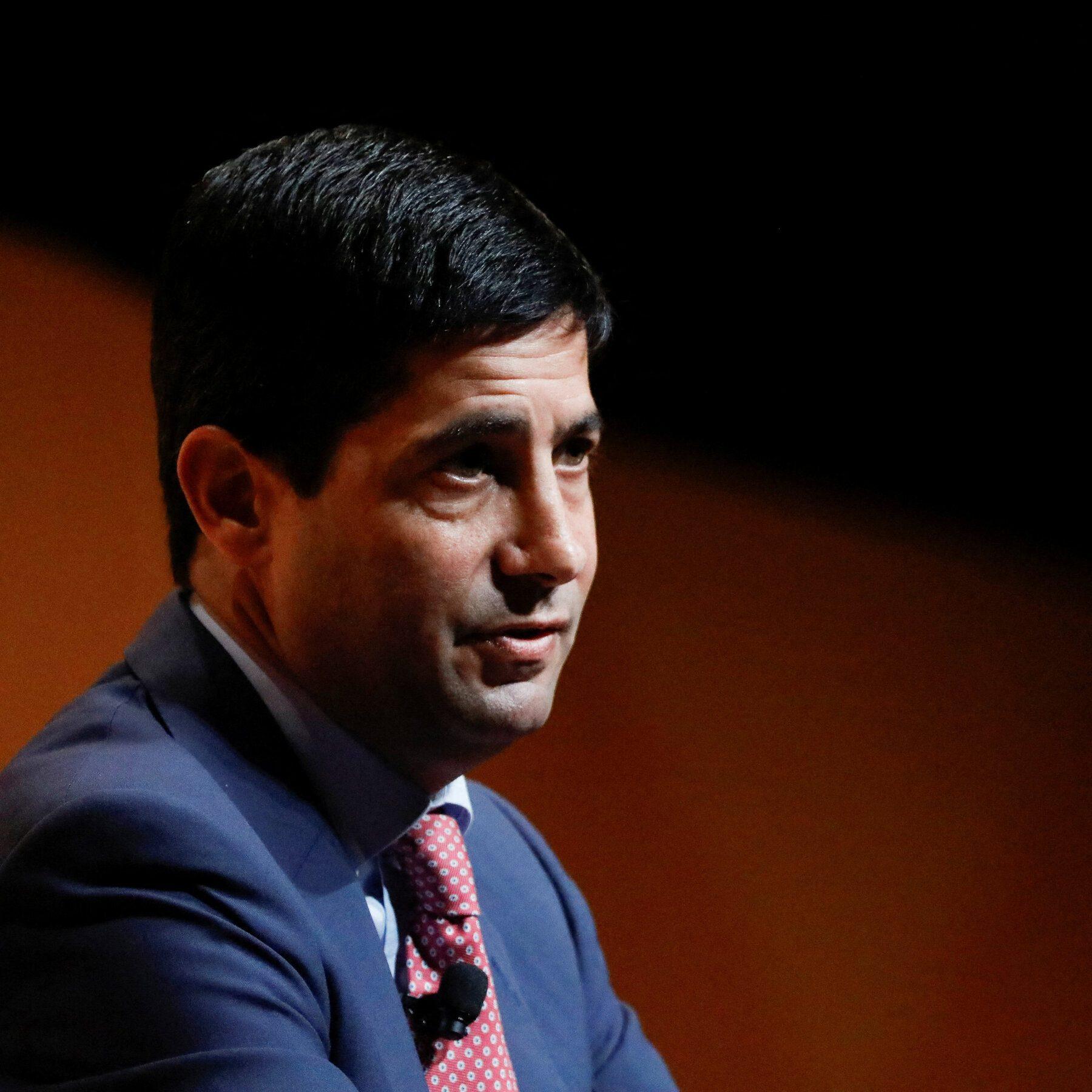
Justice Department Probe Into Jerome Powell Complicates Trump’s Plan to Install Kevin Warsh as Next Federal Reserve Chair
A major political and legal clash in Washington is casting uncertainty over the leadership of the United States’ most powerful economic institution—the Federal Reserve. A dispute involving the U.S. Department of Justice, the White House, and the current Fed chair has unexpectedly complicated President Donald Trump’s effort to install a new central bank leader.
At the center of the controversy is an investigation targeting Jerome Powell, which critics say could undermine the independence of the Federal Reserve and delay the confirmation of Trump’s preferred successor. Meanwhile, Trump’s nominee, Kevin Warsh, now faces growing political obstacles as lawmakers debate whether the Justice Department’s actions are appropriate or politically motivated.
A federal judge recently stepped into the dispute by blocking subpoenas issued in the investigation, calling them unsupported by evidence and potentially politically driven. The ruling has intensified an already bitter conflict between the administration and the central bank—one that could have far-reaching consequences for U.S. monetary policy, financial markets, and the global economy.
A Legal Battle Erupts Over the Federal Reserve
The controversy began when federal prosecutors opened a criminal investigation into Powell related to the renovation of the Federal Reserve’s historic headquarters in Washington. The investigation sought records and testimony regarding the cost and planning of the multibillion-dollar construction project.
Prosecutors questioned whether Powell may have made misleading statements to Congress about the renovation’s design features and cost overruns. According to investigators, discrepancies between internal documents and Powell’s testimony raised concerns that the central bank leader might have misrepresented details about the project.
However, Powell and his supporters have rejected the accusations, arguing that the investigation is merely a pretext to exert political pressure on the Federal Reserve.
The dispute escalated dramatically when the Justice Department issued grand jury subpoenas demanding documents and testimony from Powell and other Federal Reserve officials.
That move triggered immediate backlash—not only from Democrats but also from some Republicans who feared the probe could undermine the Fed’s independence.
Federal Judge Blocks DOJ Subpoenas
The legal confrontation reached a turning point when Chief Judge James Boasberg of the U.S. District Court in Washington blocked the subpoenas issued by federal prosecutors.
In his ruling, Boasberg concluded that the Justice Department had presented no credible evidence of criminal wrongdoing by Powell. The judge wrote that the subpoenas appeared to be a politically motivated attempt to pressure the central bank leader.
According to the court decision, the investigation looked less like a legitimate criminal inquiry and more like an effort to force Powell to resign or alter monetary policy.
The ruling was unusually blunt for a federal court reviewing prosecutorial actions. In his opinion, Boasberg said the Justice Department’s evidence was essentially nonexistent and suggested that the investigation had been launched with an improper purpose.
Despite the setback, federal prosecutors signaled that they plan to appeal the decision and continue pursuing the case.
The Investigation and the Fed’s Independence
The legal fight has triggered widespread concerns about the independence of the Federal Reserve.
The Fed plays a crucial role in the U.S. economy by setting interest rates, regulating banks, and managing monetary policy. For decades, both political parties have largely respected the central bank’s autonomy, believing that economic decisions should be insulated from political pressure.
Critics of the investigation argue that targeting the Fed chair with criminal threats risks eroding that tradition.
Powell himself has suggested that the probe is connected to disagreements over interest rates. The Federal Reserve has resisted pressure from the White House to cut rates more aggressively—a policy move Trump has repeatedly demanded.
Powell warned that the threat of criminal charges could be interpreted as retaliation for the Fed’s independent policy decisions.
Analysts say such tensions could damage investor confidence and create uncertainty in global financial markets.
Trump’s Longstanding Frustration With the Fed
President Trump’s clashes with Powell date back several years.
Trump originally appointed Powell as Federal Reserve chair in 2018, but their relationship deteriorated as the central bank maintained higher interest rates than the president preferred.
Trump frequently criticized Powell publicly, accusing him of harming economic growth and failing to support the administration’s policies.
In recent months, Trump has renewed those criticisms, arguing that lower interest rates would stimulate economic expansion and reduce borrowing costs for businesses and consumers.
Some economists, however, warn that political pressure on the Fed could lead to higher inflation and financial instability.
The Nomination of Kevin Warsh
Amid the growing conflict, Trump announced his intention to nominate Kevin Warsh as the next Federal Reserve chair.
Warsh previously served as a Fed governor during the global financial crisis and later became an economic adviser in Republican policy circles.
Supporters say Warsh is a respected economist with deep experience in financial markets. Critics, however, worry that he could be more politically aligned with the administration than previous Fed leaders.
Warsh’s nomination was expected to move through the Senate Banking Committee relatively quickly.
But the legal dispute surrounding Powell has complicated that timeline.
Senator Thom Tillis Blocks Confirmation
A key obstacle emerged when Republican Senator Thom Tillis announced he would block Warsh’s confirmation until the investigation into Powell is resolved.
Tillis, who sits on the Senate Banking Committee, holds significant leverage because Republicans maintain only a narrow majority on the panel.
Without his support, the committee cannot easily advance Warsh’s nomination to the full Senate.
The senator argued that continuing the investigation undermines the credibility of both the Justice Department and the Federal Reserve.
He said that confirming a new Fed chair while Powell remains under legal threat would set a dangerous precedent for political interference in monetary policy.
As a result, the nomination process has effectively stalled.
Financial Markets React
Despite the dramatic political conflict, financial markets have so far remained relatively stable.
Investors appear to believe that the dispute will not immediately affect the Federal Reserve’s policy decisions.
However, analysts warn that prolonged uncertainty about the Fed’s leadership could eventually influence market sentiment.
Central bank credibility is a critical factor in maintaining stable financial markets. If investors begin to doubt the Fed’s independence, they may demand higher interest rates on government bonds or shift assets into safe-haven investments.
Some market reactions have already been observed during earlier phases of the dispute, including fluctuations in the U.S. dollar and increased demand for gold.
Broader Legal and Political Tensions
The conflict surrounding Powell is not the only legal battle involving the Federal Reserve.
Another ongoing case concerns Lisa Cook, whom the administration attempted to remove from the Fed board over allegations of mortgage fraud.
Cook challenged her removal in court, arguing that the president lacked authority to dismiss a Fed governor without cause.
The case has reached the U.S. Supreme Court, which is expected to issue a ruling later this year.
Legal experts say the outcome could have major implications for presidential power over independent agencies.
If the court limits the president’s ability to remove Fed officials, it would reinforce the central bank’s institutional independence.
What Happens Next?
Several key developments will determine how the situation unfolds in the coming months:
1. Justice Department Appeal
Federal prosecutors have indicated they will appeal the judge’s decision blocking the subpoenas.
If the appeals court reverses the ruling, the investigation could resume and prolong the legal fight.
2. Senate Confirmation Process
Warsh’s nomination remains in limbo while Senator Tillis maintains his hold on the confirmation process.
If the investigation ends or the political pressure eases, the nomination could move forward.
3. Powell’s Future
Powell’s term as Fed chair is scheduled to end in May, though he could remain on the Federal Reserve Board until 2028.
Some analysts believe the ongoing dispute could increase the chances that Powell stays in office longer than expected.
Global Implications
The Federal Reserve is widely regarded as the world’s most influential central bank.
Its decisions on interest rates and monetary policy affect everything from mortgage costs in the United States to currency values and financial markets worldwide.
For that reason, political disputes involving the Fed attract global attention.
International investors, foreign governments, and central banks closely monitor any signs that the Fed’s independence could be weakened.
If confidence in the institution declines, it could have ripple effects across global financial markets.
This article may be prepared with the assistance of artificial intelligence (AI) and is reviewed before publication. While we aim for accuracy and timeliness, readers should verify important facts from official or primary sources. If you believe any information is inaccurate or that any content infringes your rights, please contact ainewsbreaking.com for review and appropriate action.