Myanmar Parliament Meets for the First Time Since 2021 Coup, Controlled by Military and Allies
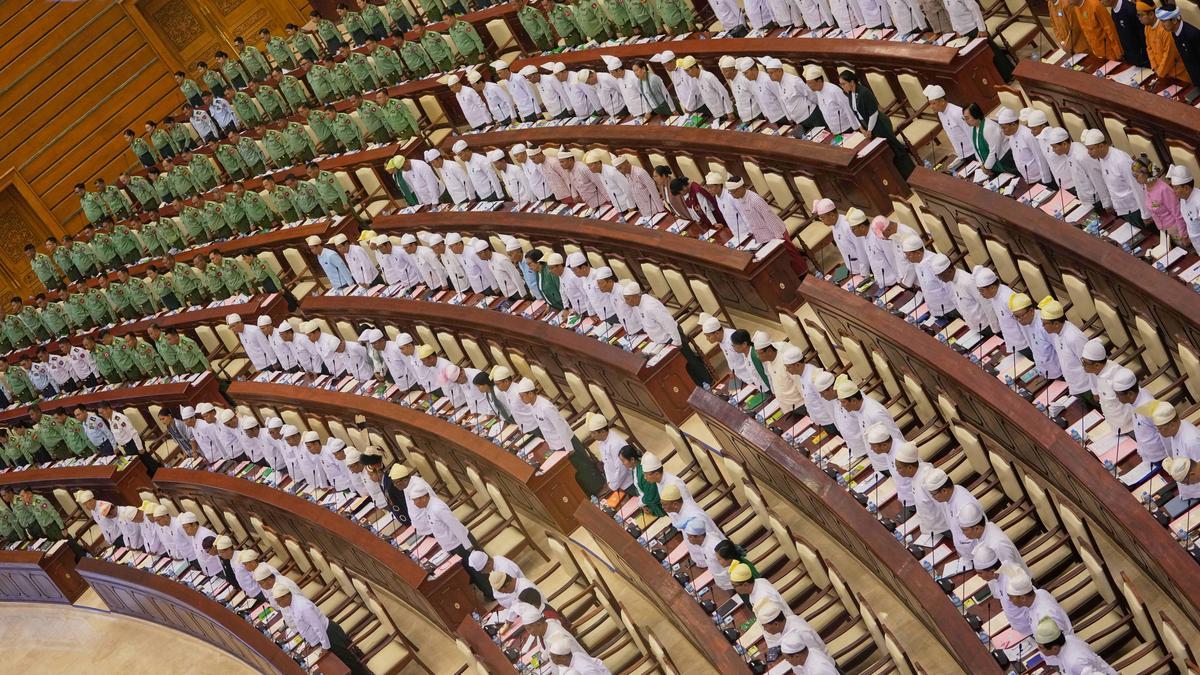
After more than five years without a sitting legislature, Myanmar’s national parliament convened on March 16, 2026, marking a key moment in the Southeast Asian nation’s fraught political trajectory since the 2021 military coup. However, the session has raised widespread concerns — domestically and internationally — about the state of democratic governance given the dominance of pro‑military forces and the exclusion of major opposition parties.
Return of the Legislature After a Long Hiatus
Parliament — consisting of the Pyidaungsu Hluttaw, the national legislature made up of two houses (the House of Representatives Pyithu Hluttaw and the House of Nationalities Amyotha Hluttaw) — had not met since early 2021, the year the Myanmar military ousted the elected government of Aung San Suu Kyi in a coup d’état.
The 2021 coup abruptly halted the normal legislative calendar. What would have been a regular transition of parliamentary power never took place, and the armed forces dissolved the functioning legislature in order to govern by decree. As a result, Myanmar went without a convened national parliament for half a decade until the recently concluded 2025‑26 general election.
Election Held Amid Controversy and Opposition Bans
The new parliament’s formation followed a three‑phase general election held between December 2025 and January 2026 under the administration of the State Administration Council (the post‑coup military junta). In those ballots, the Union Solidarity and Development Party (USDP) — a political party aligned closely with the military — secured the vast majority of contested seats in both houses.
The electoral process was widely criticised by rights groups, foreign governments, and pro‑democracy movements as lacking credibility. Major opposition parties, including the deposed National League for Democracy (NLD) led by Aung San Suu Kyi, were either barred from contesting or chose not to participate under restrictive new laws. The result was an election in which the military‑backed party claimed dominance while voter turnout remained low, particularly against the backdrop of sustained internal conflict and civil war across parts of the country.
Military and Allies Dominate the New Parliament
When the parliament finally met this week in Naypyidaw, the newly elected legislature was overwhelmingly composed of members from the USDP and the military, which under Myanmar’s 2008 constitution is also guaranteed 25 % of seats appointed directly by the armed forces. This combination gives the military and its proxy party total control of the legislature.
At the opening session:
- Khin Yi, the chairman of the USDP and a retired general, was elected speaker of the lower house (Pyithu Hluttaw).
- Maung Maung Ohn, also from the USDP, became deputy speaker.
Khin Yi’s selection — effectively without serious opposition — signals the consolidation of power by military allies within the legislative branch. Analysts say his position and these parliamentary alignments will be crucial in shaping how Myanmar’s political and governance structures operate in the coming months.
International Reaction and Domestic Criticism
Foreign governments and international organisations have responded with strong criticism of both the election and the newly convened parliament. Many have described the electoral process as a “sham”, arguing that it was engineered to produce outcomes favourable to the junta while shutting out legitimate democratic competition. There are widespread concerns that this latest chapter will entrench military rule under the guise of constitutional forms rather than genuinely restore democratic governance.
Domestically, pro‑democracy figures and groups that opposed the coup have rejected the legitimacy of the new parliament. Some opposition leaders and activists remain detained under politically motivated charges, while informal or shadow parliamentary bodies — which claim to represent the will of the 2020 election — continue to challenge the junta’s authority.
State of the Nation: Civil War and Fragile Security
While the new parliament convenes, Myanmar’s internal situation remains highly unstable. A prolonged civil war involving ethnic armed organisations and pro‑democracy militias continues to challenge the junta’s control, especially in border regions. These ongoing conflicts have further undermined the capacity for genuinely free and fair elections across large areas of the country, with many townships unable to participate in the electoral process at all.
This article may be prepared with the assistance of artificial intelligence (AI) and is reviewed before publication. While we aim for accuracy and timeliness, readers should verify important facts from official or primary sources. If you believe any information is inaccurate or that any content infringes your rights, please contact ainewsbreaking.com for review and appropriate action.