Oil Crisis Deepens: US Forced to Rely on Iranian-Controlled Boats as War Disrupts Global Supply
The escalating conflict between the United States and Iran has triggered a global energy shock, pushing oil prices sharply higher and disrupting one of the world’s most critical supply routes—the Strait of Hormuz.
In a striking twist, the same Iranian maritime forces challenging U.S. interests are now indirectly becoming essential to keeping global oil flowing, as Washington and its allies navigate a fragile and dangerous supply chain reality.
A War That Shook the Oil Market
Since the outbreak of the 2026 conflict, oil markets have been thrown into chaos:
- Prices surged past $100 per barrel amid supply fears
- Shipping routes through the Strait of Hormuz have been severely disrupted
- Insurance costs for tankers have skyrocketed
- Major exporters like Iraq have been forced to cut output
Roughly 20% of the world’s oil supply passes through this narrow waterway, making any disruption instantly global in impact .
Iran Tightens Grip on the Strait of Hormuz
Iran’s strategy has been clear: control the sea, control the market.
Following U.S.-Israeli strikes, Iranian forces—particularly the Islamic Revolutionary Guard Corps (IRGC)—have:
- Attacked or threatened commercial vessels
- Laid mines and deployed armed patrol boats
- Restricted access to the strait for certain countries
This has effectively created a controlled maritime chokepoint, where ships can pass—but often only with Iranian approval.
The Twist: U.S. Indirectly Relies on Iran
Despite being adversaries, the United States now faces a paradox.
With shipping lanes unsafe and escort operations not yet fully operational, global oil flows are increasingly dependent on:
- Negotiated safe passage with Iran
- Coordination with Iranian naval forces
- Use of routes and timings approved by Tehran
A recent example highlights this reality:
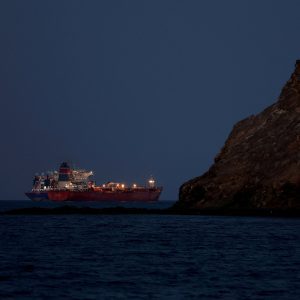
A Pakistan-bound oil tanker successfully passed through the Strait after coordination with Iranian authorities, signaling that even amid war, cooperation—however indirect—is unavoidable .
In essence, Iranian-controlled boats and maritime oversight are becoming a gatekeeping mechanism for global oil transport.
Why the U.S. Has Limited Options
The U.S. military remains dominant globally, but the geography of the region creates constraints:
1. Narrow Chokepoint
The Strait of Hormuz is only about 33 km wide at its narrowest point, making it highly vulnerable to:
- Mines
- Fast attack boats
- Missile strikes
2. Asymmetric Warfare
Iran doesn’t need full naval superiority. Small boats and drones can:
- Harass tankers
- Disrupt traffic
- Raise costs and risks dramatically
3. Time Lag in Response
While the U.S. is considering escort missions, full-scale protection operations could take weeks to deploy effectively.
Until then, reliance on informal arrangements continues.
Oil Markets Held Hostage
Energy markets are reacting to this fragile balance:
- Traders are pricing in a “war risk premium”
- Supply bottlenecks are tightening global availability
- Some forecasts warn of oil reaching $150–$200 per barrel in worst-case scenarios
Meanwhile, Iran itself is profiting—earning massive revenues from continued oil exports despite sanctions .
A Strategic Contradiction
This situation highlights a major geopolitical contradiction:
- The U.S. is militarily confronting Iran
- Yet global oil stability partially depends on Iran’s cooperation
Even U.S. policymakers have reportedly softened enforcement of sanctions temporarily to maintain supply and avoid further economic shocks .
Global Ripple Effects
The consequences are being felt worldwide:
Asia
Countries like India and Pakistan are negotiating directly with Iran to secure fuel supplies.
Europe
Facing higher energy costs and supply uncertainty.
Global Economy
Rising oil prices threaten inflation, trade, and economic recovery.
Could This Situation Change?
There are three possible paths forward:
1. Diplomatic De-escalation
Negotiations could stabilize shipping and reduce reliance on Iranian control.
2. Military Escalation
The U.S. could attempt to forcibly reopen the strait—risking a wider war.
3. Prolonged Standoff
The most likely scenario: controlled access continues, with Iran acting as gatekeeper.
This article may be prepared with the assistance of artificial intelligence (AI) and is reviewed before publication. While we aim for accuracy and timeliness, readers should verify important facts from official or primary sources. If you believe any information is inaccurate or that any content infringes your rights, please contact ainewsbreaking.com for review and appropriate action.