
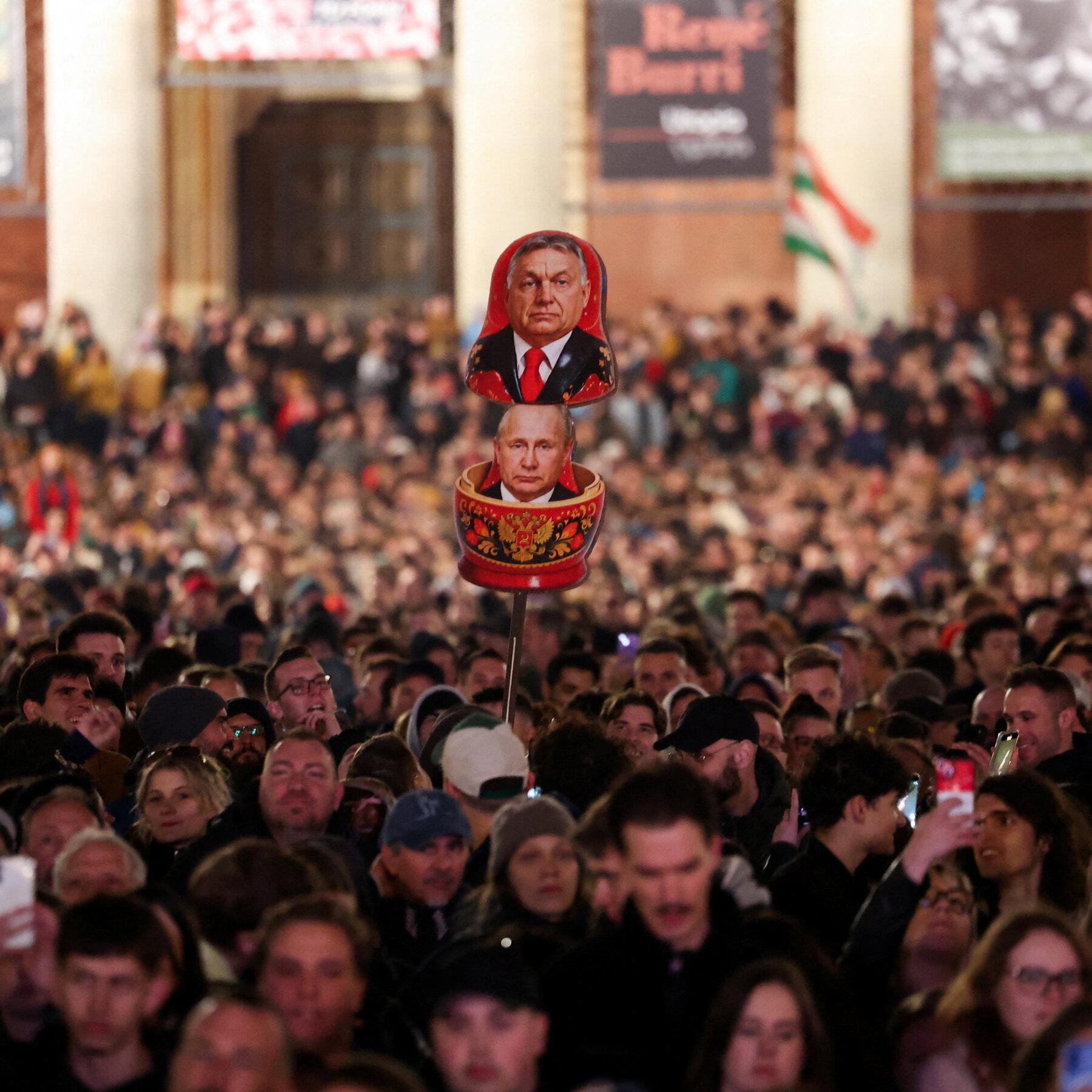
Orban’s Downfall May Limit Putin’s Influence, But Energy Dependence Remains a Strong Tie
In a significant shift in Eastern Europe, Hungary’s Prime Minister Viktor Orban’s defeat is set to limit the Kremlin’s ability to drive a wedge between European nations. Orban, a long-time ally of Russian President Vladimir Putin, has been a key player in Moscow’s efforts to undermine European unity. However, despite his defeat, Hungary’s reliance on Russian energy supplies will continue to provide the Kremlin with significant leverage.
Orban’s tenure was marked by his close relationship with Putin, and Hungary’s alignment with Russian interests had sparked concerns among European partners. However, with Orban’s departure, the dynamics of Hungary’s foreign policy are likely to change, making it harder for Moscow to exploit divisions within the EU.
The EU’s efforts to promote energy independence and reduce reliance on Russian gas have been ongoing, but Hungary’s dependence on Russian energy remains one of the key sticking points. The country’s energy infrastructure is heavily reliant on Russian supplies, which provides the Kremlin with significant leverage over Hungary’s economic and foreign policy decisions.
While Orban’s defeat may mark a shift in Hungary’s relationship with Russia, it does not necessarily mean a complete break. Hungary will still need to navigate its energy dependence on Russia, which will likely remain a key area of tension in the relationship.
The implications of Orban’s defeat for EU-Russia relations are significant, and the bloc will be watching closely to see how Hungary’s new leadership will navigate its relationship with Moscow. The dynamics of EU-Russia relations are complex, and Hungary’s energy dependence will continue to play a significant role in shaping the relationship.
For now, Hungary’s new leadership will face significant challenges in navigating its relationship with Russia, including the need to balance its energy needs with the need to promote EU values and interests. The outcome will be closely watched by EU partners and will have significant implications for the future of EU-Russia relations.
Energy independence remains a key goal for the EU, and Hungary’s dependence on Russian energy will continue to be a major area of focus for the bloc. The Kremlin will still have significant leverage over Hungary’s foreign and economic policy decisions, making it harder for the country to break free from Moscow’s influence.
This article may be prepared with the assistance of artificial intelligence (AI) and is reviewed before publication. While we aim for accuracy and timeliness, readers should verify important facts from official or primary sources. If you believe any information is inaccurate or that any content infringes your rights, please contact ainewsbreaking.com for review and appropriate action.