PM Narendra Modi Completes 8,931 Days in Office, Becomes India’s Longest-Serving Head of an Elected Government
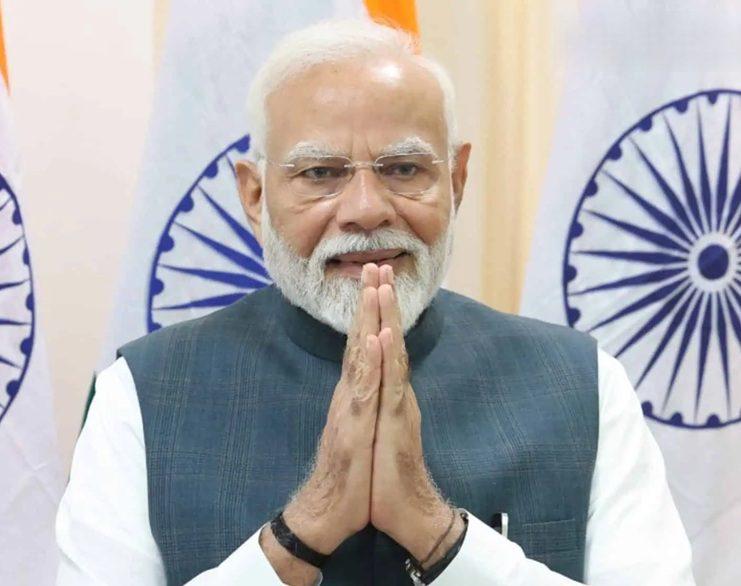
New Delhi, March 22 — Prime Minister Narendra Modi has etched his name into the annals of Indian political history by completing 8,931 days in office as the head of an elected government, marking an unprecedented milestone in the world’s largest democracy. This achievement places him at the pinnacle of longevity among leaders who have held executive power through electoral mandates in India.
This landmark not only reflects Modi’s enduring political relevance but also highlights a transformative period in India’s governance, policy direction, and global positioning. His tenure—spanning leadership roles at both the state and national levels—demonstrates a rare continuity of power built on electoral legitimacy and sustained public support.
Defining Era in Indian Democracy: The completion of 8,931 days in office by Narendra Modi is more than just a numerical milestone—it is a reflection of political endurance, electoral success, and a transformative era in India’s democratic journey.
Understanding the 8,931-Day Milestone
The figure of 8,931 days represents the cumulative time Narendra Modi has spent as the head of a democratically elected government, including:
- His tenure as Chief Minister of Gujarat (2001–2014)
- His ongoing tenure as Prime Minister of India (since May 26, 2014)
While many leaders have served long terms in Indian politics, Modi’s combined tenure across state and central governments sets him apart as the longest-serving elected executive leader in the country’s history.
At the national level alone, Modi has already crossed significant milestones:
- Over 11 years as Prime Minister since 2014
- Became the second-longest-serving PM in a single continuous term, surpassing Indira Gandhi in 2025 with 4,078 days
A Journey from Grassroots to Global Leadership
The rise of Narendra Modi is often described as one of the most compelling political journeys in modern India. Born into a modest family, Modi’s early years were marked by struggle and perseverance. His ascent through the ranks of the Rashtriya Swayamsevak Sangh and later the Bharatiya Janata Party reflects decades of organizational work and political strategy.
Chief Minister of Gujarat (2001–2014)
Modi’s administrative journey began in Gujarat, where he served as Chief Minister for over 12 years. During this period:
- He focused on industrial growth and infrastructure development
- Promoted the “Vibrant Gujarat” investment summits
- Built a reputation for decisive governance
Prime Minister of India (2014–Present)
In 2014, Modi led the BJP to a historic majority victory, becoming Prime Minister. He has since:
- Won three consecutive general elections (2014, 2019, 2024)
- Become the first non-Congress leader to achieve this feat, matching only Jawaharlal Nehru in consecutive mandates
Comparing India’s Longest-Serving Leaders
India has witnessed several long-serving Prime Ministers, but Modi’s combined tenure sets a unique benchmark.
Top Longest-Serving Prime Ministers (By Tenure)
- Jawaharlal Nehru – 16 years, 286 days (longest overall)
- Indira Gandhi – 15 years, 350 days (combined terms)
- Narendra Modi – Over 11 years (ongoing, second-longest continuous term)
While Modi has not yet surpassed Nehru’s total tenure as Prime Minister, his cumulative days as an elected head of government (including state leadership) have already broken all previous records.
The Significance of Electoral Legitimacy
One of the most defining aspects of Modi’s milestone is that it is rooted entirely in democratic elections. Unlike some global leaders who extend their rule through constitutional changes or authoritarian means, Modi’s tenure has been continuously reaffirmed through:
- Parliamentary elections
- State-level democratic processes
- Coalition-building in later years
In 2024, he secured a third consecutive term, though this time through a coalition under the National Democratic Alliance (NDA), reflecting a more complex political landscape.
Policy Transformations Under Modi
Over the course of 8,931 days, Modi’s governance has been marked by several transformative initiatives:
1. Economic Reforms
- Introduction of the Goods and Services Tax (GST)
- Push for digital payments and financial inclusion
- Focus on infrastructure development
2. Social Welfare Programs
- Swachh Bharat Mission (cleanliness drive)
- Ujjwala Yojana (LPG connections for poor households)
- Jan Dhan Yojana (financial inclusion)
3. Digital India Revolution
- Expansion of internet connectivity
- Promotion of digital governance
- Growth of India’s startup ecosystem
4. Foreign Policy and Global Standing
- Strengthening ties with major powers
- Active participation in global forums
- Positioning India as a key player in geopolitics
Political Dominance and Challenges
Despite his long tenure, Modi’s political journey has not been without challenges.
Strengths
- Strong personal leadership image
- Centralized decision-making
- High electoral appeal
Criticism
- Concerns over democratic institutions
- Allegations of centralization of power
- Economic challenges like unemployment
His third term, which began in 2024, has seen a shift toward coalition politics, requiring greater consensus-building.
A Shift in India’s Political Landscape
Modi’s rise also marks a broader shift in Indian politics:
- Decline of Congress dominance
- Rise of the BJP as a national powerhouse
- Increased focus on personality-driven politics
His tenure symbolizes a transition from coalition instability (1990s–early 2000s) to strong central leadership in the 2010s and beyond.
Global Perspective: A Rare Achievement
Globally, few democratic leaders have maintained power for such an extended period through elections alone. Modi’s 8,931-day milestone places him among:
- Long-serving democratic leaders
- Influential global political figures
- Leaders who have shaped national identity over decades
Public Perception and Political Legacy
Public opinion on Modi remains deeply polarized yet undeniably impactful.
Supporters Say:
- He has transformed India’s global image
- Delivered strong governance and infrastructure growth
- Empowered marginalized communities
Critics Argue:
- Democratic institutions face pressure
- Social divisions have widened
- Economic inequality persists
Regardless of perspective, Modi’s influence on Indian politics is profound and enduring.
What Lies Ahead?
Looking forward, several questions remain:
- Can Modi surpass Jawaharlal Nehru to become the longest-serving Prime Minister overall?
- How will coalition dynamics shape his third term?
- What legacy will he leave behind by the end of his tenure?
Analysts note that if he continues in office, he could potentially break Nehru’s record by 2031.
This article may be prepared with the assistance of artificial intelligence (AI) and is reviewed before publication. While we aim for accuracy and timeliness, readers should verify important facts from official or primary sources. If you believe any information is inaccurate or that any content infringes your rights, please contact ainewsbreaking.com for review and appropriate action.