
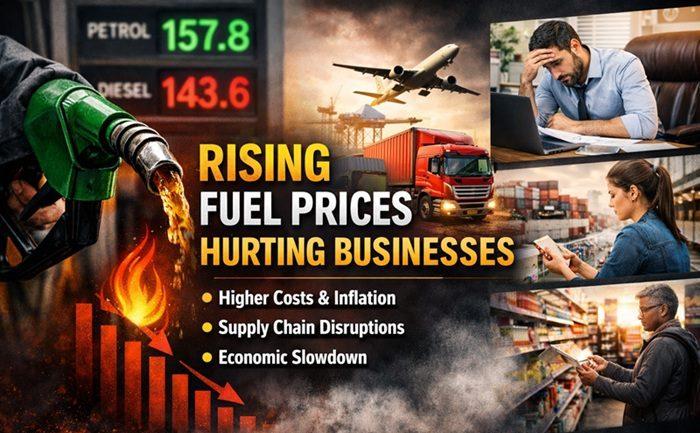
Rising Fuel Prices Trigger Business Concerns Across Sectors, Threatening Growth and Stability
As fuel prices continue their upward trajectory, businesses across multiple sectors are expressing growing concern over the long-term impact on operational costs, supply chains, and overall economic stability. From small enterprises to large corporations, the surge in petrol and diesel prices is creating a ripple effect that is being felt across industries, raising fears of reduced profitability, higher consumer prices, and potential slowdowns in economic activity.
Fuel Price Surge: A Mounting Challenge
Over the past few months, fuel prices have steadily climbed due to a combination of global and domestic factors. These include geopolitical tensions affecting crude oil supply, fluctuations in international oil markets, currency depreciation, and increased taxation in certain regions. For businesses that rely heavily on transportation and logistics, this price hike has translated into significantly higher operational expenses.
Transporters, logistics firms, and delivery-based businesses are among the hardest hit. Fuel costs constitute a major portion of their expenditures, and even a marginal increase can drastically affect their margins. As a result, many companies are now faced with the difficult decision of either absorbing the additional costs or passing them on to customers.
Impact on Small and Medium Enterprises (SMEs)
Small and medium enterprises (SMEs), often operating on thin margins, are particularly vulnerable. Unlike large corporations, SMEs typically lack the financial cushion to withstand prolonged periods of high input costs. For many small business owners, the rising cost of fuel is not just a temporary inconvenience but a serious threat to survival.
Manufacturers are also feeling the pressure, as transportation costs for raw materials and finished goods continue to rise. This has led to increased production costs, forcing many businesses to reconsider pricing strategies or scale back operations.
Retailers, especially those dependent on frequent inventory restocking, are witnessing shrinking margins. Many are already reporting a decline in profits, while others fear that sustained fuel price hikes could lead to closures if the situation does not stabilize.
Supply Chain Disruptions and Inflationary Pressures
The rise in fuel prices is not just affecting businesses directly—it is also contributing to broader economic challenges, including inflation. Higher transportation costs are driving up the prices of essential goods such as food, clothing, and consumer products.
Supply chains, which are already under strain due to global disruptions, are becoming even more fragile. Delays in delivery, increased freight charges, and logistical inefficiencies are becoming more common, further complicating business operations.
Economists warn that sustained fuel price increases could lead to a cycle of rising costs and reduced consumer spending. As businesses raise prices to offset higher expenses, consumers may cut back on discretionary spending, leading to a slowdown in demand and economic growth.
Sector-Wise Impact
Different sectors are experiencing the impact of rising fuel prices in varying degrees:
- Transportation and Logistics: Facing the most direct impact, with fuel accounting for a significant share of costs.
- Agriculture: Farmers are dealing with higher costs for operating machinery and transporting produce, which may lead to higher food prices.
- Manufacturing: Increased cost of raw material transportation and distribution is squeezing margins.
- E-commerce and Delivery Services: Rising last-mile delivery costs are affecting profitability and pricing models.
- Aviation and Travel: Airlines and travel companies are seeing increased fuel expenses, potentially leading to higher ticket prices.
Businesses Explore Cost-Cutting Measures
In response to rising fuel prices, businesses are actively seeking ways to mitigate the impact. Some of the strategies being adopted include:
- Optimizing Logistics: Companies are redesigning supply chains to reduce transportation distances and improve efficiency.
- Fuel Surcharges: Many logistics firms are introducing additional charges to offset rising fuel costs.
- Alternative Energy: Some businesses are exploring electric vehicles and alternative fuels as long-term solutions.
- Digital Transformation: Leveraging technology to streamline operations and reduce unnecessary costs.
However, these measures often require time and investment, making them less accessible for smaller enterprises.
Calls for Government Intervention
Industry leaders and business associations are increasingly calling on governments to step in and provide relief. Suggested measures include reducing fuel taxes, offering subsidies to critical sectors, and implementing policies to stabilize fuel prices.
Experts argue that timely intervention could help cushion the impact on businesses and prevent a broader economic slowdown. Without such measures, the burden of rising fuel costs may continue to weigh heavily on industries and consumers alike.
Consumer Impact and Market Sentiment
As businesses grapple with higher costs, consumers are also feeling the pinch. Increased prices for goods and services are affecting household budgets, leading to cautious spending behavior. This shift in consumer sentiment is further impacting businesses, particularly in sectors reliant on discretionary spending.
Market analysts note that prolonged fuel price hikes could dampen investor confidence and slow down economic momentum. The uncertainty surrounding global oil markets adds to the challenges, making it difficult for businesses to plan for the future.
The Road Ahead
While fuel prices are influenced by a complex interplay of global and domestic factors, their impact on businesses is immediate and far-reaching. As companies navigate this challenging environment, adaptability and resilience will be key to sustaining operations.
The coming months will be crucial in determining how businesses cope with rising costs and whether policy interventions can provide much-needed relief. For now, the surge in fuel prices remains a significant concern, casting a shadow over economic growth and business stability.
This article may be prepared with the assistance of artificial intelligence (AI) and is reviewed before publication. While we aim for accuracy and timeliness, readers should verify important facts from official or primary sources. If you believe any information is inaccurate or that any content infringes your rights, please contact ainewsbreaking.com for review and appropriate action.