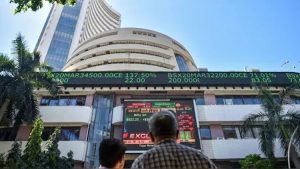

Stock Market LIVE Updates: Sensex Tanks Over 1,200 Points, Nifty Below 23,250 as Oil Shock Hits Dalal Street
The Indian stock market faced heavy selling pressure in Friday afternoon trade as benchmark indices BSE Sensex and Nifty 50 extended losses amid rising global crude oil prices, escalating geopolitical tensions, and a weakening rupee.
By around mid-day trading, the Sensex dropped more than 1,200 points, while the Nifty 50 slipped below the 23,250 mark, reflecting widespread risk aversion among investors. The sharp fall erased lakhs of crores in investor wealth and triggered broad-based selling across sectors.
Below is a complete Afternoon Analysis of the Indian Stock Market (LIVE Updates) covering key reasons behind the decline, sectoral performance, global triggers, and what investors should watch next.
Market Snapshot (Afternoon Trading)
- Sensex: around 74,700 – down over 1,200 points
- Nifty 50: around 23,220 – down nearly 420 points
- Market sentiment: Strongly negative
- Rupee: Weakens toward record lows against the US dollar
Selling pressure was seen across banking, IT, auto, and metal stocks, while oil and gas stocks showed relative resilience.
Why the Stock Market Is Falling Today
1. Surge in Global Oil Prices
A major trigger behind the market sell-off is the sharp spike in global crude oil prices following escalating tensions in the Middle East.
Fears of supply disruptions after attacks on oil infrastructure and shipping routes pushed energy prices higher, raising concerns about inflation and India’s import bill.
Since India imports more than 80% of its crude oil needs, rising prices can significantly impact the economy and corporate margins.
Higher oil prices typically hurt sectors such as:
- Aviation
- Paint companies
- Logistics
- Consumer goods
These sectors witnessed selling pressure during the session.
2. Escalating Geopolitical Tensions
Another major factor behind the market slump is rising geopolitical instability involving the United States, Israel, and Iran.
Investors fear that a prolonged conflict could disrupt global energy supplies and trade routes, especially around the Strait of Hormuz — one of the world’s most critical oil transit chokepoints.
These fears have triggered a risk-off sentiment across global markets, pushing investors toward safer assets.
3. Rupee Hits Record Low
The Indian Rupee weakened sharply and touched an intraday record low near ₹92.37 per US dollar, pressured by rising oil import costs and strong demand for the US currency.
A weaker rupee increases import costs and further weighs on market sentiment.
4. Global Market Weakness
Asian and global markets also traded lower amid the geopolitical crisis and rising energy prices.
When global risk sentiment deteriorates, foreign institutional investors often reduce exposure to emerging markets like India, leading to heavy selling in domestic equities.
Sector-Wise Performance
Banking and Financial Stocks
Banking stocks were among the biggest losers during the session as investors reduced exposure to risk assets.
Private banks and PSU banks both witnessed strong selling pressure.
IT Stocks
The IT sector remained weak as global uncertainty and recession fears continued to weigh on export-driven companies.
Auto and Consumption
Auto stocks fell due to concerns that rising fuel prices may reduce consumer spending.
Oil & Gas Stocks
Interestingly, some oil producers saw buying interest because higher crude prices can boost their revenues.
Companies such as Oil and Natural Gas Corporation and Oil India Limited have been among the outperformers in 2026 amid strong crude prices.
Market Breadth Remains Weak
Market breadth remained negative throughout the trading session.
On the Bombay Stock Exchange, a large majority of stocks traded in the red, indicating broad-based selling across sectors and market capitalizations.
Mid-cap and small-cap stocks also saw sharp declines as investors moved away from riskier assets.
Investor Wealth Takes a Hit
The sharp fall in benchmark indices wiped out over ₹6 lakh crore in market capitalization during the session as panic selling intensified on Dalal Street.
This marks one of the biggest intraday declines seen in recent weeks.
What Experts Are Saying
Market analysts believe volatility could remain high in the near term due to geopolitical risks and rising energy prices.
Key concerns include:
- Possible disruption in oil supply routes
- Inflation risks due to higher energy costs
- Global market volatility
However, some experts suggest that long-term investors may find opportunities if quality stocks correct further.
Key Levels to Watch
Technical analysts are closely monitoring key support levels.
For Nifty 50:
- Immediate support: 23,000
- Next major support: 22,800
For Sensex:
- Immediate support: 74,500
- Next support: 73,800
If these levels break, further downside cannot be ruled out.
Outlook for the Rest of the Session
Market direction in the second half of trading will likely depend on:
- Movement in crude oil prices
- Global market cues
- Institutional investor activity
- Updates on geopolitical developments
If global sentiment stabilizes, the market could attempt a late recovery. However, persistent geopolitical uncertainty may keep volatility elevated.
This article may be prepared with the assistance of artificial intelligence (AI) and is reviewed before publication. While we aim for accuracy and timeliness, readers should verify important facts from official or primary sources. If you believe any information is inaccurate or that any content infringes your rights, please contact ainewsbreaking.com for review and appropriate action.