“Stop Corporate Freebies First, Then End Subsidies for Poor”: Rahul Gandhi Sparks Debate Over ‘Revdi’ Politics
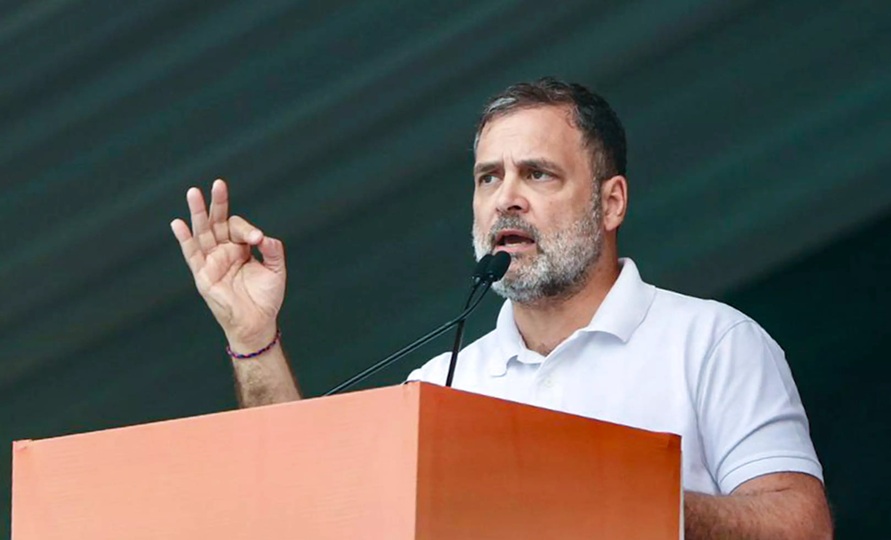
Congress leader and Leader of Opposition in the Lok Sabha, Rahul Gandhi, has reignited the national debate on welfare schemes and “freebie politics” by stating that he is willing to stop subsidies to poor people only if similar benefits given to large corporate houses are also withdrawn.
His remarks came during an interaction with members of the IT community at Technopark in Thiruvananthapuram, where he also spoke about data sovereignty, economic inequality, and government policies favouring big businesses.
The statement has quickly sparked political reactions and renewed discussions about whether welfare schemes for the poor and incentives for large corporations should be judged by the same standards.
Rahul Gandhi Questions “One-Sided” Debate on Freebies
During the event, Rahul Gandhi addressed a common criticism in Indian politics—that welfare schemes given to the poor are financially irresponsible “freebies.”
He argued that the debate is often one-sided, focusing only on benefits to poor citizens while ignoring the large incentives provided to big corporations.
Gandhi said that if the country is ready to stop subsidies or welfare schemes for poor people, then the government must also stop the “freebies” given to wealthy industrialists.
According to him, public discourse frequently labels assistance to the poor as “revdi” or handouts, but benefits provided to big business are often described as economic development or investment incentives.
He remarked that:
- When poor families receive subsidies for survival, it is called “freebies”.
- When major corporations receive land, tax exemptions, or loan write-offs, it is described as “development”.
Gandhi stressed that the same economic logic should be applied to both situations.
Mention of Corporate Giants in His Criticism
Rahul Gandhi specifically referred to industrialists such as:
- Gautam Adani
- Mukesh Ambani
He questioned why government concessions such as cheap land allocations, tax benefits, and loan restructuring for large corporations are rarely described as freebies in public debates.
According to Gandhi, if policymakers and critics are serious about ending the culture of subsidies, they must first address these large-scale benefits provided to corporate entities.
He also suggested that the total value of benefits extended to large corporations is many times higher than welfare spending for the poor.
Welfare Schemes and the ‘Revdi Culture’ Debate
The issue of freebies has become a major political debate in India over the past few years. Critics argue that excessive welfare promises can strain government finances and create long-term economic problems.
Supporters, however, say these schemes are essential to support vulnerable populations in a country where millions still struggle with poverty, unemployment, and rising prices.
Programs often labeled as freebies include:
- Free electricity or water schemes
- Cash assistance for women or farmers
- Free education or health services
- Subsidised food under government schemes
Many state governments across India run such welfare programs.
Rahul Gandhi argued that these measures often exist because large sections of the population remain economically vulnerable, and removing them without addressing structural inequality would hurt the poorest citizens.
Gandhi’s Larger Argument: Inequality in the Economy
Rahul Gandhi’s comments are consistent with a broader theme in his recent political messaging—economic inequality in India.
He has repeatedly argued that economic policies have disproportionately benefited a small number of wealthy corporations while ordinary citizens struggle with issues like:
- unemployment
- rising inflation
- declining real wages
He also claimed that large loan write-offs for corporate borrowers amount to indirect subsidies, which rarely face the same criticism as welfare schemes.
According to Gandhi, the debate around freebies should not ignore what he called “thousands of times larger benefits” given to powerful businesses.
Comments Came Alongside Criticism of Trade Deal
During the same interaction, Gandhi also criticised a recent India-US trade agreement, claiming that India may have failed to leverage the value of its data resources in negotiations.
He argued that data is one of India’s most valuable assets because of the country’s huge population and digital ecosystem.
Gandhi suggested that India could have used this leverage to negotiate better economic terms, including protections for agriculture and small businesses.
Political Reactions Likely to Follow
Rahul Gandhi’s remarks are expected to trigger strong reactions from political opponents, particularly from the ruling Bharatiya Janata Party (BJP), which has frequently criticised opposition parties for promoting what it calls “revdi culture”—a term used to describe populist giveaways before elections.
The BJP has argued that excessive welfare spending can weaken the economy and reduce fiscal discipline.
However, opposition parties including the Indian National Congress have countered that social welfare programs are necessary to reduce inequality and support the poor.
A Continuing Political Narrative
Rahul Gandhi’s statement reflects a larger ideological divide in Indian politics over state welfare versus market-driven development.
The debate often centers on questions such as:
- Should governments prioritize welfare spending for the poor?
- Are corporate incentives necessary to attract investment and create jobs?
- Where should the balance lie between economic growth and social support?
By linking corporate incentives with welfare schemes, Gandhi has attempted to reframe the political conversation from “freebies vs development” to “fairness in economic policy.”
This article may be prepared with the assistance of artificial intelligence (AI) and is reviewed before publication. While we aim for accuracy and timeliness, readers should verify important facts from official or primary sources. If you believe any information is inaccurate or that any content infringes your rights, please contact ainewsbreaking.com for review and appropriate action.