
Tensions Escalate on Korean Peninsula as North Korea Launches Barrage of Ballistic Missiles Amid US-South Korea Military Exercises
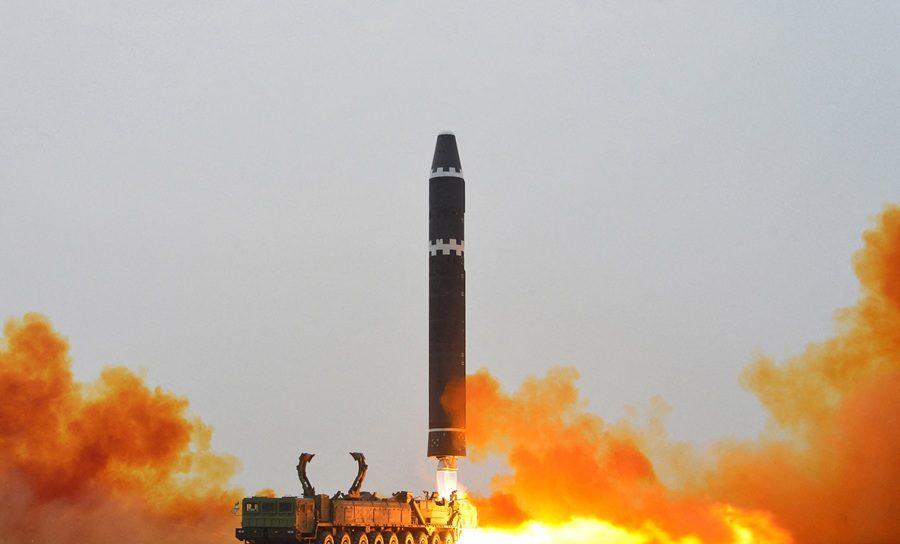
In a provocative display of military might, North Korea has fired a salvo of approximately 10 ballistic missiles, significantly escalating tensions on the Korean Peninsula. The launch, confirmed by Seoul’s Joint Chiefs of Staff, comes at a time when the United States and South Korea are engaged in large-scale military drills, an annual exercise aimed at bolstering their defensive capabilities and interoperability.
The missile launches, reportedly originating from North Korea, have sparked widespread concern and condemnation from the international community, with many viewing the move as a deliberate attempt by Pyongyang to undermine regional stability and challenge the military readiness of its southern neighbor and the United States. The timing of the launches, coinciding with the US-South Korea joint military exercises, is seen as a direct response to what North Korea perceives as a threat to its sovereignty and security.
The joint military drills, which involve thousands of troops and a wide array of military assets, including fighter jets, tanks, and naval vessels, are a routine but critical component of the alliance’s defense strategy. Designed to enhance the combat readiness and responsiveness of both nations’ militaries, these exercises have been a focal point of contention for North Korea, which regularly denounces them as a rehearsal for invasion.
North Korea’s decision to fire ballistic missiles in response to the joint exercises underscores the deep-seated animosity and mistrust that characterizes its relations with the United States and South Korea. The hermit state has long argued that the military drills are a precursor to a potential attack, a claim vehemently denied by both Washington and Seoul, who insist that the exercises are purely defensive in nature.
The international community has called for restraint and urged North Korea to refrain from actions that could further destabilize the region. The United Nations has repeatedly condemned North Korea’s missile tests, citing the significant threat they pose to regional and global security. The launches are also in contravention of multiple UN Security Council resolutions, which have imposed stringent sanctions on North Korea in an effort to curb its nuclear and missile programs.
As tensions on the Korean Peninsula continue to escalate, the world watches with bated breath, aware that the situation could rapidly deteriorate into a full-blown crisis. Diplomatic efforts to de-escalate tensions and persuade North Korea to abandon its nuclear and missile ambitions have thus far yielded limited results, leaving many to wonder if a return to dialogue and negotiation is feasible in the near term.
In the face of this evolving crisis, the United States, South Korea, and other key stakeholders must navigated a complex web of diplomatic, military, and economic considerations. The situation demands a calibrated response, one that balances the need to deter North Korean aggression with the imperative of avoiding actions that could inadvertently provoke a miscalculation by Pyongyang. As the standoff continues, one thing is clear: the path to resolving the North Korean conundrum will require patience, persistence, and a deep understanding of the intricate dynamics at play on the Korean Peninsula.
This article may be prepared with the assistance of artificial intelligence (AI) and is reviewed before publication. While we aim for accuracy and timeliness, readers should verify important facts from official or primary sources. If you believe any information is inaccurate or that any content infringes your rights, please contact ainewsbreaking.com for review and appropriate action.