Trump Pushes SAVE America Act as Critics Warn Voting Bill Could Make It Harder for Millions to Cast Ballots
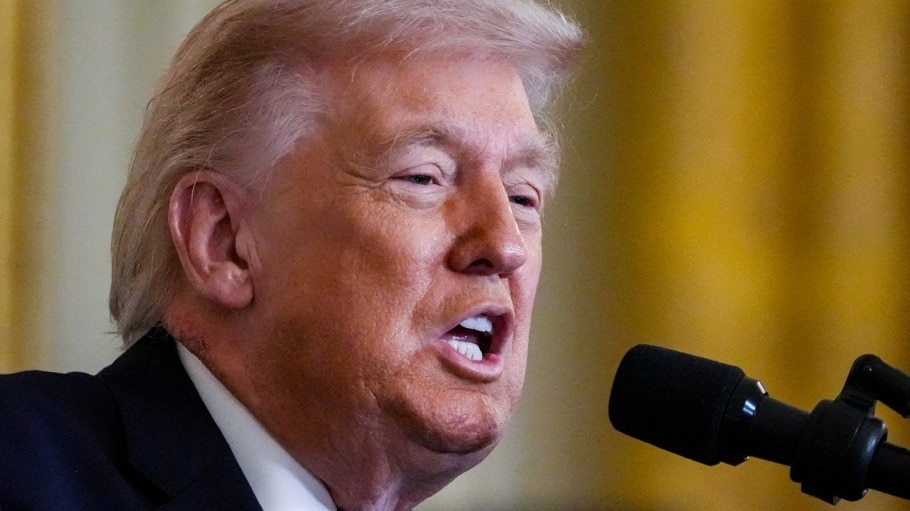
President Donald Trump is escalating pressure on Congress to pass the SAVE America Act, a Republican-backed voting bill that supporters describe as an election-integrity measure but critics say could make voting significantly harder for millions of eligible Americans ahead of the 2026 midterms. The legislation would require documentary proof of U.S. citizenship to register for federal elections and impose stricter identification rules for voting in person and by mail. It has become one of Trump’s top political priorities, even though it remains unlikely to clear the Senate.
The bill’s core change is a new federal requirement that voters show documents proving citizenship when registering, such as a passport or birth certificate. It would also require physical photo ID for in-person voting and copies of identification plus Social Security details for mail ballots, while exposing election officials to penalties if they fail to enforce the rules. Reuters reported that Trump has also pressed for additional restrictions on mail voting, turning the measure into a much broader election fight rather than a narrow citizenship-verification bill.
Republicans argue the legislation is needed to prevent non-citizens from voting and to restore confidence in elections. But major news outlets report that non-citizen voting in federal elections is already illegal and extremely rare, making the bill’s critics argue that it targets a problem that scarcely exists while risking large-scale disenfranchisement. Reuters said Democrats have labeled the measure “radical” and pledged to block it, while the Associated Press noted that the proof-of-citizenship requirement, not the more politically popular voter ID provision, could have the broadest real-world impact.
That concern centers on documentation. Many eligible voters do not have ready access to a passport, certified birth certificate or other papers that would satisfy the proposed federal standard. The Associated Press reported that more than 21 million U.S. citizens of voting age may lack easy access to the documents needed under the bill. The groups likely to face the greatest burden include married women whose current names may not match their birth certificates, rural residents who live far from records offices, lower-income voters, and younger or less frequent voters.
Critics also warn that the measure could affect Republican voters as well as Democrats. The Washington Post reported that although the burden may fall somewhat more heavily on Democratic-leaning constituencies, the legislation could also suppress turnout among rural, male and younger voters, including some in Republican-leaning areas. That means a bill Trump says would “guarantee the midterms” for the GOP could carry political risks for his own party if it makes registration and voting more cumbersome across the board.
Trump has made clear he wants Republicans fully aligned behind the measure. Reuters reported on March 8 that he said he would not sign other legislation until Congress passes the bill, and AP reported that Senate Republicans planned an extended floor debate to show support even though they lack the votes to overcome a Democratic filibuster. In the Senate, the bill is being used as both a policy push and a campaign issue, allowing Republicans to portray Democrats as weak on election security while forcing a high-profile public fight over voting rules before November.
The bill’s chances of becoming law remain slim for now. Reuters and The Washington Post both reported that while Republicans can bring the bill to the floor, they do not appear to have the 60 votes needed to break a filibuster. That has led many analysts to view the effort as politically strategic even if legislative success is doubtful. Reuters said Republicans hope to use the debate to paint Democrats as the party of election fraud, while opponents argue the actual effect would be to make registration and voting more difficult for eligible citizens.
In practical terms, the fight over the SAVE America Act is becoming one of the sharpest election-law battles of 2026. Supporters call it a necessary safeguard. Opponents call it voter suppression dressed up as election security. What is already clear is that Trump is treating the measure as central to his midterm strategy, and that the biggest controversy is not whether voters should show ID at the polls, but whether millions of Americans would struggle to meet the stricter citizenship-document rules required to get onto the rolls in the first place.
This article may be prepared with the assistance of artificial intelligence (AI) and is reviewed before publication. While we aim for accuracy and timeliness, readers should verify important facts from official or primary sources. If you believe any information is inaccurate or that any content infringes your rights, please contact ainewsbreaking.com for review and appropriate action.