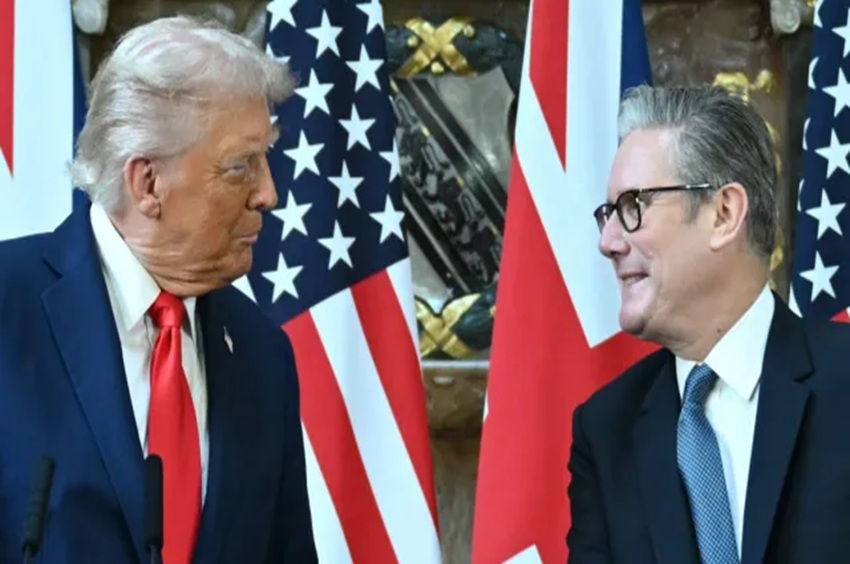
“We Don’t Need People That Join Wars After We’ve Won”: Donald Trump Slams UK PM Keir Starmer Over Late Support
Former US President Donald Trump has sharply criticized British Prime Minister Keir Starmer, saying the United States does not need countries that “join wars after we’ve already won.” The remark has triggered fresh debate about transatlantic relations and the role of allies during escalating global conflicts.
Trump’s Sharp Remark on Allied Support
During a recent political appearance, Trump took aim at the United Kingdom’s leadership, arguing that some allies only show up when the hardest part of a conflict is already over. Referring indirectly to the UK government led by Starmer, Trump said the US should rely primarily on its own strength and on partners who stand with America from the beginning of a conflict.
“We don’t need people that join wars after we’ve won,” Trump said, suggesting that some allies try to claim credit without sharing the early risks or costs.
His comments were widely interpreted as a jab at Britain’s current leadership and its approach to international security cooperation.
Context: Rising Global Tensions
Trump’s remarks come at a time when international tensions are rising, particularly due to the ongoing confrontation between Israel and Iran, which has already triggered a series of missile strikes, air attacks, and concerns about a broader regional war.
Western countries, including the United States and the United Kingdom, have been closely coordinating diplomatic and military responses to the crisis. However, differences occasionally emerge over strategy, timing, and the extent of involvement.
Trump’s criticism appears to reflect his long-standing belief that many US allies depend too heavily on American military power while contributing less during critical moments.
Trump’s History of Criticizing Allies
This is not the first time Trump has questioned the role of traditional US allies. During his presidency, he frequently criticized members of the North Atlantic Treaty Organization (NATO), arguing that several countries were not paying their fair share for defense.
Trump repeatedly demanded higher defense spending from European nations and warned that the United States should reconsider its commitments if allies failed to contribute more.
His latest comments about Starmer appear to echo those earlier criticisms, highlighting his broader view that America should prioritize its own interests over maintaining alliances that he believes are unequal.
Reaction in the United Kingdom
Political observers in Britain say Trump’s comments could spark diplomatic tension between Washington and London. The UK has historically been one of the closest allies of the United States, often referred to as part of the “special relationship.”
Under Prime Minister Keir Starmer, Britain has emphasized strong cooperation with Western partners on global security issues. Officials in London have not issued a formal response to Trump’s remarks yet, but analysts believe the statement could become a point of debate in both countries.
Strategic Importance of the US-UK Alliance
The alliance between the United States and the United Kingdom has played a crucial role in many major conflicts and international initiatives, from the World War II to modern operations in the Middle East and Europe.
Both countries cooperate closely in intelligence sharing, military planning, and counter-terrorism through alliances such as NATO and the Five Eyes intelligence alliance.
Because of this deep cooperation, political experts say public criticism between leaders of the two nations is relatively unusual and can quickly draw global attention.
Political Impact in the US
Trump’s remarks also play into domestic American politics. As a major figure in US politics and a potential presidential contender again, he continues to position himself as a leader who challenges traditional foreign policy norms.
By criticizing allies and emphasizing an “America First” approach, Trump appeals to supporters who believe the United States should reduce its global military commitments and focus more on domestic priorities.
What Happens Next
It remains unclear whether Trump’s criticism will lead to a formal diplomatic exchange between Washington and London. However, the comments highlight how sensitive international alliances can be during times of global conflict.
As tensions continue to rise in the Middle East and other regions, cooperation between Western allies will remain critical. Political rhetoric from influential leaders like Donald Trump could shape public debate about how those alliances should function in the future.
This article may be prepared with the assistance of artificial intelligence (AI) and is reviewed before publication. While we aim for accuracy and timeliness, readers should verify important facts from official or primary sources. If you believe any information is inaccurate or that any content infringes your rights, please contact ainewsbreaking.com for review and appropriate action.