Zelensky Warns Ukraine Faces Missile Shortage as Middle East War Diverts US Air Defences
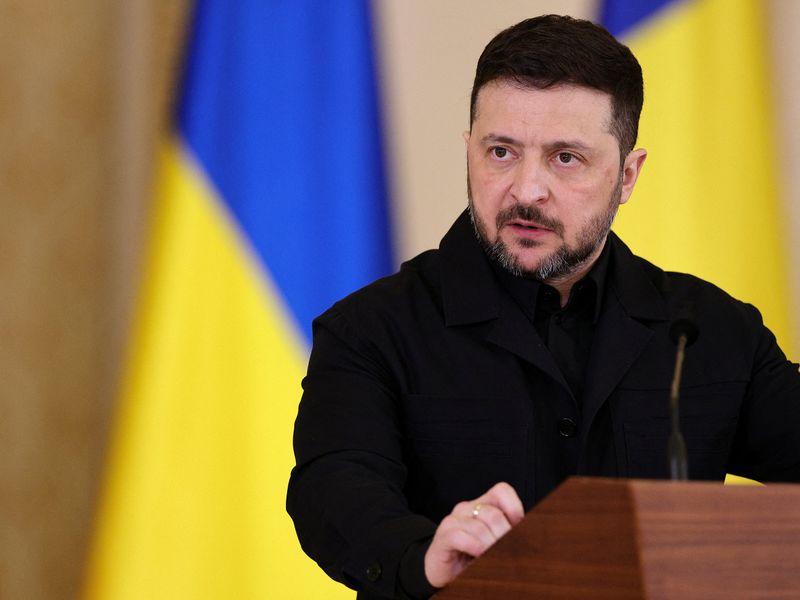
Ukrainian President Volodymyr Zelensky has warned that the widening war in the Middle East is beginning to hurt Ukraine directly, raising fears of a missile shortage as US and allied air-defence resources are increasingly drawn toward countering Iranian attacks and protecting Gulf partners. In an exclusive BBC interview, Zelensky argued that Russian President Vladimir Putin stands to benefit from a prolonged conflict involving the United States and Iran, because it would drain Western reserves and weaken support for Kyiv. Reuters also reported this week that Zelensky has been openly voicing concern over the impact of a protracted Middle East war on Ukraine’s access to critical air-defence missiles.
Zelensky’s remarks reflect a growing anxiety in Kyiv that Ukraine may once again become the secondary theatre in a larger global crisis. For much of the past two years, Ukrainian officials have repeatedly warned that every major international shock — whether in the Middle East, the Indo-Pacific or the global energy market — risks diluting Western attention, slowing aid deliveries and complicating battlefield planning. Now, with the US and several partners forced to devote air-defence systems and interceptors to new threats tied to Iran and the Gulf, Kyiv fears the consequences are no longer hypothetical. Reuters reported on March 15 that Zelensky specifically raised the prospect that the Middle East crisis could reduce the supply of air-defence missiles available to Ukraine.
The concern is especially acute because Ukraine’s defence against Russia depends heavily on a constant flow of sophisticated interceptors. Russian attacks increasingly combine ballistic missiles, cruise missiles and waves of drones, placing enormous pressure on Ukrainian air-defence networks. Even before the latest Middle East escalation, Kyiv had been urging allies to speed up both deliveries and production. Zelensky has now drawn a direct line between those shortages and the war around Iran, saying the same categories of Western systems are being consumed elsewhere at a pace Ukraine cannot ignore. Reuters reported that Gulf states have recently used more advanced air-defence missiles in days than Ukraine has received from the United States over several years, underlining Kyiv’s sense of vulnerability.
In Zelensky’s view, this strategic diversion plays directly into the Kremlin’s hands. According to follow-up reporting from outlets summarizing the BBC interview, he said Putin wants a “long war” between the US and Iran because extended instability would reduce American reserves and air-defence capacity while shifting political focus away from Ukraine. Reports published on March 18 similarly quoted Zelensky as saying that for Putin, a prolonged Iran conflict is an advantage because it stretches US resources and lowers the chances of sustained pressure on Moscow.
That warning comes at a difficult moment for Ukraine on multiple fronts. The war with Russia remains intense, with repeated strikes on cities, energy facilities and civilian infrastructure. The Associated Press reported four days ago that Russian attacks on the Kyiv region killed at least four people and injured 15, while Zelensky said Moscow launched around 430 drones and 68 missiles in a single wave. Such barrages make clear why Ukraine is so alarmed by any slowdown in interceptor supplies: without enough missiles, the country’s ability to shield cities, power grids and military targets could deteriorate rapidly.
At the same time, Zelensky is trying to turn Ukraine’s wartime experience into diplomatic leverage. During his recent visit to Britain, he urged European leaders not to let the Iran war eclipse Russia’s invasion and presented Ukraine as a valuable security partner rather than just a recipient of aid. AP reported on March 17 that Zelensky and British Prime Minister Keir Starmer both warned that growing turmoil in the Middle East could help Russia by drawing away attention and resources. Zelensky also promoted Ukraine’s anti-drone expertise, arguing that technologies developed on the battlefield could help protect Europe and even parts of the Middle East from emerging threats.
That message has become central to Kyiv’s broader diplomatic pitch. Rather than speaking only about what Ukraine lacks, Zelensky has tried to show what Ukraine can contribute. The Guardian reported on March 18 that Kyiv has already deployed 201 anti-drone experts to the Middle East, with dozens more ready to join, to help friendly states defend against Iranian-designed Shahed drones. The move serves two purposes: it demonstrates Ukraine’s battlefield-tested capabilities and reinforces Zelensky’s argument that the same war technologies now threatening the Gulf and Europe have already been confronted in Ukraine for years.
Still, expertise cannot replace interceptors. Ukraine’s strongest immediate need remains missiles for air-defence systems, and that is where the Middle East war creates the greatest danger. The Guardian reported on March 14 that Kyiv sees the regional conflict as particularly bad news because anti-aircraft missiles are being used in large quantities in the Gulf to counter Iranian missiles and drones. That means every escalation around Iran has the potential to intensify competition for a limited stock of weapons that Ukraine sees as essential to survival.
Zelensky’s comments also fit into a wider argument he has been making about the Russia-Iran relationship. He has described Moscow and Tehran as “brothers in hatred,” warning that their military cooperation has already changed the character of modern warfare. The Guardian reported on March 17 that Zelensky told European lawmakers to prepare not only for state attacks but also for a future in which drone technology spreads to terrorists, criminals and non-state actors. AP likewise noted that he has highlighted the global threat posed by Iranian-designed drones and the methods Russia has used in Ukraine.
From Kyiv’s perspective, that means the wars in Ukraine and the Middle East are no longer separate crises. They are linked by weapons supply chains, shared adversaries, overlapping military technologies and the allocation of Western resources. When air-defence missiles are fired in the Gulf, Ukraine feels the effect. When political attention shifts to Iran, Kyiv worries about delayed decisions in Washington and Europe. And when energy prices rise because of regional instability, Moscow can gain financially. Reuters reported on March 13 that Zelensky criticized a temporary easing of sanctions on Russian oil and warned that rising prices and policy shifts linked to the Middle East could end up strengthening Russia’s war economy.
That economic dimension matters almost as much as the military one. Russia benefits when oil markets tighten and prices climb, while Ukraine suffers if allies grow distracted or internally divided. The Middle East war therefore creates a dual pressure on Kyiv: fewer available defensive weapons on one side, and potentially greater Russian resilience on the other. This is why Zelensky is presenting the current moment not simply as an unfortunate distraction, but as a strategic opening for Putin.
There is another layer to his concern: diplomacy. AP reported that planned peace efforts involving Ukraine and Russia were affected as US attention shifted toward the Middle East. Even where formal negotiations remain stalled, Kyiv fears that any reduction in top-level Western engagement gives Russia more room to manoeuvre politically as well as militarily.
For now, Zelensky appears to be trying to do two things at once. First, he is warning allies that Ukraine’s defensive position could worsen if missile supplies are diverted for too long. Second, he is arguing that supporting Ukraine remains part of the same broader struggle against destabilising authoritarian powers and the spread of advanced drone and missile warfare. His appeal is not only for more aid, but for sustained strategic attention.
Whether that appeal succeeds may depend on how long the Middle East conflict lasts and how heavily it continues to consume US and allied military stockpiles. What is clear is that Kyiv sees the risk as immediate. Zelensky’s message is that Ukraine cannot afford to lose missiles, time or visibility while another war escalates elsewhere — especially when, in his reading, that is exactly the kind of geopolitical shift Putin wants.
This article may be prepared with the assistance of artificial intelligence (AI) and is reviewed before publication. While we aim for accuracy and timeliness, readers should verify important facts from official or primary sources. If you believe any information is inaccurate or that any content infringes your rights, please contact ainewsbreaking.com for review and appropriate action.