
 UK Imposes Sanctions on Israeli Settlements in West Bank, Accuses Settlers of Ethnic Cleansing
  Four arrested in connection with theft of earth movers in custody in Keralam’s Idukki
  Canadian Jet Maker Is Target in Trump’s Trade War
  Daughter, father arrested for religious conversion in U.P.; nine booked
 UK Imposes Sanctions on Israeli Settlements in West Bank, Accuses Settlers of Ethnic Cleansing
**
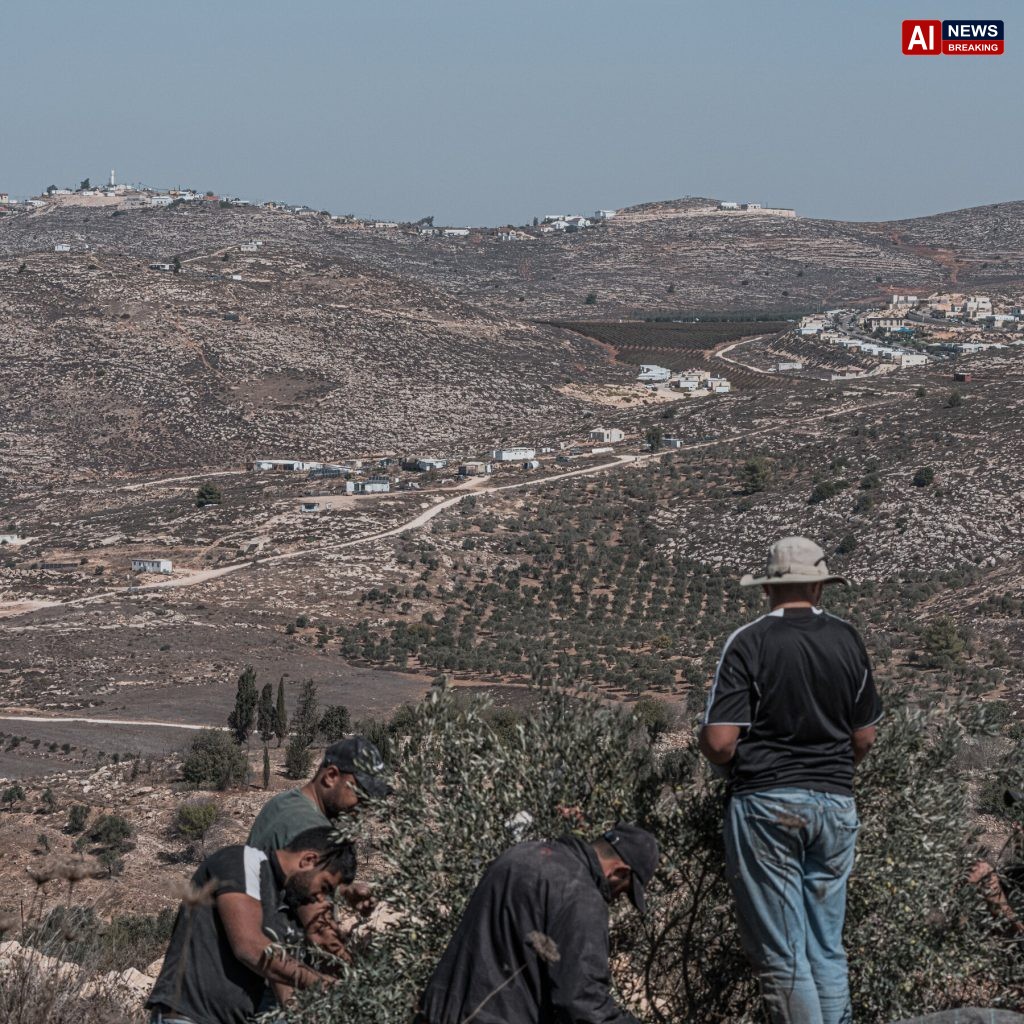
UK Imposes Sanctions on Israeli Settlements in West Bank, Accuses Settlers of Ethnic Cleansing - AI News Breaking
imposes sanctions israeli settlements:
The United Kingdom has announced sweeping new sanctions against entities operating in Israeli settlements within the occupied West Bank, marking a significant escalation in diplomatic pressure on Jerusalem. The move, coordinated with several European partners, includes a ban on the import of goods produced in these disputed territories into the U.K. This decision is underpinned by a stark assessment from British officials, who accused Israel of turning a blind eye to violence against Palestinians committed by extremist settlers..
The government stated that such inaction, coupled with the expansion of settlement infrastructure, amounts to ethnic cleansing, a charge that has sent shockwaves through diplomatic channels and intensified the already fraught relationship between London and Jerusalem.The sanctions target specific companies, land sales sites, and individuals involved in the administration and expansion of settlements considered illegal under international law. By imposing a trade embargo on products such as olive oil, wine, and limestone, which are widely consumed in Western markets, the U.K. aims to dismantle the economic incentives that drive settlement growth..
Government spokespeople emphasized that this measure is not merely a symbolic gesture but a concrete step to uphold international humanitarian law and protect Palestinian rights. The decision follows a rigorous review of the legal status of settlements, aligning the U.K.’s policy more closely with the positions of the European Union and other allies who have long viewed the settlements as a primary obstacle to peace and a violation of the Fourth Geneva Convention.In articulating the rationale behind the decision, senior ministers pointed to a disturbing rise in settler violence that has gone largely unpunished. Recent reports detailed incidents where settlers, often armed with slingshots and stones, have targeted Palestinian vehicles, homes, and olive groves..
Security footage released by rights groups shows settlers burning tires near Palestinian homes and uprooting crops, actions that British officials described as systematic and coordinated. The accusation that Israel has failed to protect Palestinian civilians from these attacks is central to the U.K.’s new stance. Critics argue that the Israeli military’s frequent non-intervention sends a message of impunity to settlers, encouraging further aggression and deepening the sense of insecurity among the Palestinian population in Area C of the West Bank.The term “ethnic cleansing” invoked by the British government refers to the alleged intent of settlement expansion to alter the demographic makeup of the West Bank..
By creating facts on the ground that make the establishment of a viable Palestinian state increasingly difficult, the U.K. argues that Israel is engaged in a process that displaces Palestinians and severs their connection to their land. This characterization is particularly incendiary, as it draws parallels to historical atrocities and implies a deliberate policy of removal rather than mere security-related military occupation..
While Israel vehemently rejects this framing, asserting its right to secure its borders and maintain safe communities, the international community’s use of this language signals a growing consensus that the status quo is unsustainable and morally indefensible.Israel’s reaction to the U.K.’s announcement was one of outrage and condemnation, with Foreign Minister Eli Cohen describing the sanctions as illegitimate and harmful to the peace process. The Israeli government argues that the settlements are lawful responses to security needs and historical ties to the land, which is referred to in Jewish tradition as Judea and Samaria. Jerusalem maintains that the U.K..
is being selective in its application of human rights standards, ignoring the daily threats faced by Israeli settlers from terrorist groups such as Hamas and Islamic Jihad. In a statement lodged at the Embassy of the United Kingdom in Tel Aviv, Israeli officials warned that the sanctions would only serve to radicalize public opinion and undermine moderate voices on both sides of the conflict.Beyond the diplomatic fallout, the practical implications of the trade ban are expected to be complex and challenging for businesses. Identifying the geographic origin of goods in a region where borders are porous and supply chains are intertwined is no simple task..
Companies importing Palestinian products face new bureaucratic hurdles, requiring them to verify that their goods do not originate from settlement zones. This verification process raises concerns about potential administrative burdens and the risk of inadvertently boycotting legitimate Palestinian farmers and producers. Industry leaders have expressed frustration with the lack of clear guidelines, fearing that the ambiguity may lead to the unintended exclusion of non-settlement produce, thereby harming the broader Palestinian economy rather than just the settlement enterprise.For Palestinian leaders, the U.K.’s move represents a long-awaited validation of their struggle for self-determination..
President Mahmoud Abbas welcomed the sanctions as a necessary step toward justice and a recognition of Palestinian sovereignty. However, there is caution within Palestinian circles regarding the actual impact of the measures. Many fear that the economic damage may outweigh the political gains, particularly if the sanctions are not accompanied by broader international pressure to halt settlement construction on the ground..
The Palestinian Authority has called for a comprehensive review of all trade relations with countries that continue to support the expansion of settlements, suggesting that the U.K.’s action is a starting point rather than an end goal.The international context of this decision is shaped by a broader shift in Western foreign policy toward the Israeli-Palestinian conflict. For years, Western nations have balanced their support for Israel’s security with calls for restraint regarding settlement activity. Recent events, including the war in Gaza and the surge in settler violence, have widened the gap between Western governments and Israel’s current right-wing administration..
The U.K.’s sanctions signal a willingness to take unilateral action even when consensus among NATO allies is fragile. This divergence highlights the growing difficulty of maintaining a unified Western front on the Middle East, as domestic political pressures and ethical considerations drive individual nations to adopt more assertive stances.Human rights organizations have generally supported the U.K.’s decision, hailing it as a crucial step in accountability. Groups such as Amnesty International and Human Rights Watch have documented years of abuses by settlers and failures by Israeli authorities to investigate or prosecute perpetrators..
These organizations argue that without such economic and diplomatic pressure, the cycle of violence and displacement will continue unabated. They caution, however, that sanctions alone are insufficient and must be part of a broader strategy that includes ending the occupation, restoring Palestinian civil rights, and paving the way for a two-state solution based on mutual recognition and international law.The humanitarian dimension of the crisis remains a critical concern. As tensions escalate, civilian casualties on both sides are likely to increase..
Palestinian communities in the West Bank face daily restrictions on movement, access to resources, and freedom of assembly, exacerbated by the proximity of settlement outposts. The economic strain caused by the sanctions, if not carefully managed, could further impoverish these communities. International aid agencies are urging all parties to exercise restraint and prioritize the protection of civilians..
They emphasize that diplomatic solutions, while necessary, must be complemented by immediate measures to alleviate the suffering of those caught in the crossfire.Looking ahead, the U.K.’s sanctions are expected to trigger a chain reaction of similar measures from other European nations. The precedent set by London may encourage countries like Germany, France,.
Updated: September 8, 2026
London has imposed a comprehensive ban on imports from Israeli settlements in the occupied West Bank, citing settler‑driven violence and breaches of international law, and aligning its stance with several European allies. Israel denounced the move as illegitimate, while Palestinian officials welcomed it as a long‑overdue step toward accountability, though both sides warn of wider diplomatic and economic repercussions.
Insight: Britain’s sanctions turn rhetoric into market leverage, signaling that future peace talks may be brokered not in diplomatic corridors but through economic carrots and sticks; the move could fragment Western unity, forcing allies to choose between legal principle and strategic partnership with Israel.
If the embargo stalls settlement‑linked profits without a coordinated international framework, it risks collateral damage to Palestinian livelihoods while emboldening hard‑liners on both sides, potentially accelerating a spiral of retaliation that undermines any immediate diplomatic thaw.