 Major UK air traffic control failure disrupts flights: Heathrow, Manchester hit; EasyJet, British Airways warn of delays
  UK Imposes Sanctions on Israeli Settlements in West Bank, Accuses Settlers of Ethnic Cleansing
  Four arrested in connection with theft of earth movers in custody in Keralam’s Idukki
  Canadian Jet Maker Is Target in Trump’s Trade War
 Major UK air traffic control failure disrupts flights: Heathrow, Manchester hit; EasyJet, British Airways warn of delays
**
Major UK air traffic control failure disrupts flights: Heathrow, Manchester hit; EasyJet, British Airways warn of delays - AI News Breaking
major traffic control failure:
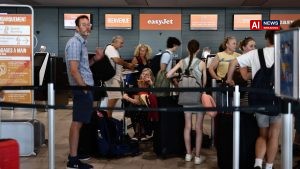
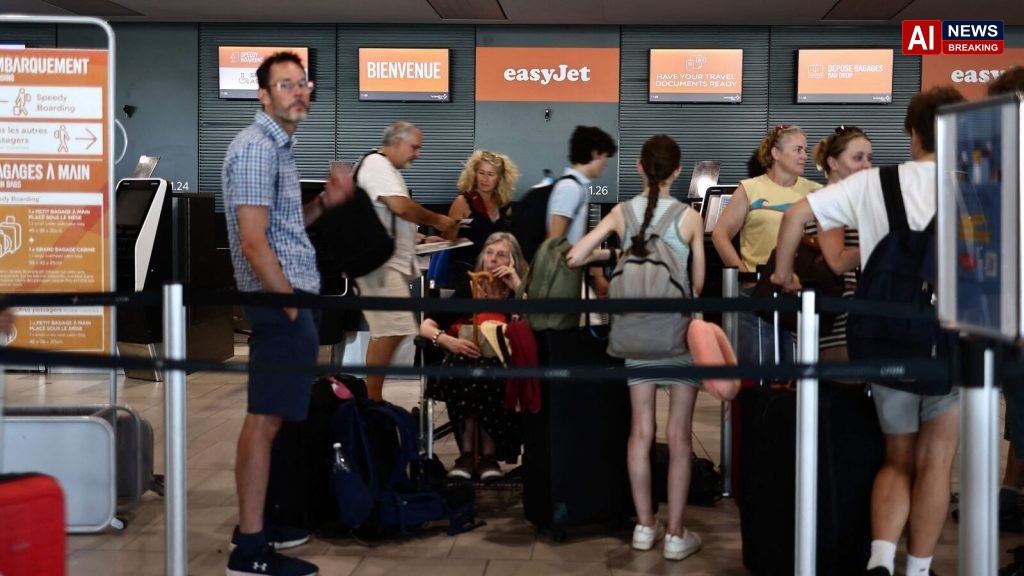
Travelers across the United Kingdom faced significant disruption on Tuesday as a major technical failure within the National Air Traffic Services system caused widespread delays and cancellations at some of the country’s busiest airports. The incident, which began in the early hours of the morning, severely impacted operations at Heathrow, Gatwick, Manchester, and Stansted, leaving thousands of passengers stranded and forcing airlines to scramble for contingency measures. The failure, described by industry experts as a rare but critical breakdown in the software managing flight paths and slot allocations, effectively brought parts of the national air traffic network to a standstill, highlighting the fragility of the infrastructure that supports one of the world’s most complex aviation systems.The disruption came as a sudden shock to the aviation sector, which had been operating under normal conditions just hours earlier..
Initial reports indicated that the issue stemmed from a malfunction in the Advanced Planning and Control System, a central computer network responsible for coordinating the movement of aircraft within controlled airspace. As the system faltered, controllers were forced to revert to manual processes, a task that is significantly slower and less efficient than algorithmic management. This bottleneck caused a cascade effect, with incoming flights delayed while waiting for landing slots and outgoing planes grounded as takeoff permissions could not be processed in a timely manner..
The sheer volume of traffic flowing through the UK’s air corridors, particularly before the summer travel peak, exacerbated the problem, turning a technical glitch into a full-scale operational crisis.Heathrow, Europe’s busiest international hub, bore the brunt of the disruption, with conditions deteriorating rapidly as the morning rush progressed. Passengers arriving at the vast six-terminal complex encountered long queues at check-in and security, only to be informed that their flights had been pushed back by several hours or, in many cases, cancelled entirely. Airlines operating out of the London hub, including British Airways andVirgin Atlantic, issued urgent warnings to travelers, advising them not to travel to the airport unless absolutely necessary..
The confusion was compounded by a lack of real-time information, as digital boards failed to update accurately, leaving families and business travelers alike in a state of uncertainty regarding their immediate prospects for departure.Manchester Airport also reported severe disruptions, with its status closely mirroring that of Heathrow. As a key gateway to the north of England and a significant tourist destination, the airport faced intense pressure as delayed flights from London began to feed into its terminals. Ryanair and easyJet, two of the airport’s largest carriers, faced particular challenges in managing their tight turnarounds, which were disrupted by the cascading delays..
Staff worked overtime to rebook passengers onto later flights or alternative routes, but the limited availability of seats meant that many individuals were left without viable options for the day. The scale of the problem was such that local authorities were contacted to assist with accommodation for stranded passengers, as hotels in the surrounding area quickly filled to capacity.Gatwick and Stansted were not spared from the wider network failure, experiencing substantial delays in both arrivals and departures. Gatwick, often regarded as a more streamlined alternative to Heathrow, found its operational efficiency compromised as the reduced capacity of the control system limited the number of aircraft it could safely handle..
Similarly, Stansted, a favorite base for low-cost carriers,, saw a sharp decline in throughput. The interconnectivity of the UK’s air traffic network meant that a failure in one node inevitably affected others, creating a domino effect that rippled across the country. Pilots were instructed to maintain holding patterns, some circling for extended periods to conserve fuel and wait for clearance to land, a scenario that added further stress to an already tense atmosphere in the skies above Britain.British Airways, the UK’s flag carrier and the largest operator at Heathrow, was among the first to issue formal statements regarding the incident..
The airline confirmed that the disruption was due to a “national air traffic services issue” and assured customers that they were working closely with authorities to mitigate the impact. However, the sheer number of affected flights meant that re-accommodation efforts were slow and fragmented. Many passengers reported difficulties in obtaining refunds or rebooking on alternative carriers, citing poor customer service and long hold times on support lines..
The airline’s inability to provide clear, consistent information added to the frustration of travelers who had planned international trips around these specific flight times.EasyJet, which operates a significant portion of its fleet from Gatwick, Manchester, and Stansted, faced similar headwinds. The low-cost carrier warned its customers of widespread delays and advised those with flexible itineraries to consider rebooking at a later date. EasyJet’s business model, which relies on high frequency and short turnaround times, is particularly vulnerable to such systemic disruptions, as a delay in one segment can quickly derail subsequent operations..
The airline’s social media channels were flooded with complaints from frustrated passengers, many of whom expressed anger at the lack of preparation for such foreseeable technical failures. Industry analysts noted that low-cost carriers often have fewer resources to absorb the financial impact of such disruptions, potentially affecting their short-term profitability.The National Air Traffic Services, a subsidiary of the Civil Aviation Authority, confirmed that engineers were working around the clock to resolve the issue. In a brief statement, the organization acknowledged the significant inconvenience caused to travelers and apologized for the disruption..
However, details regarding the specific cause of the failure remained scarce, fueling speculation and concern about the underlying causes. Critics pointed to years of underinvestment in air traffic control infrastructure, arguing that the aging systems used to manage Britain’s airspace are no longer fit for purpose in an era of increasing air travel demand. The incident has reignited calls for modernization and greater resilience in the nation’s aviation infrastructure, with experts warning that without significant upgrades, similar breaks could become more frequent in the future.Government officials were quick to respond to the crisis, with the Department for Transport issuing statements expressing sympathy for affected travelers and outlining the measures being taken to support airlines and passengers..
Ministers emphasized that the safety of flights remained the top priority, even as operational challenges mounted. The crisis has placed additional pressure on the government to expedite plans for the Next Generation Terminal Control System, a long-delayed project aimed at replacing the current outdated technology. While officials insisted that progress was being made, the scale of Tuesday’s disruption served as a stark reminder of the consequences of delaying such essential upgrades.For the passengers caught in the web of delays, the day was marked by exhaustion and frustration..
Families with young children found themselves stuck in airport terminals for hours, lacking adequate facilities or clear guidance. Business travelers missed crucial meetings and appointments, with little recourse for the financial losses incurred. The emotional toll of the disruption was evident in the crowded terminals, where tempers flared and certainty evaporated..
Many travelers took to social media to share their experiences, creating a global tableau of discontent that highlighted the human cost of systemic failure. The incident served as a poignant reminder of how deeply.
Updated: September 8, 2026
The glitch exposes a systemic over‑reliance on legacy software, turning a single point of failure into a nationwide paralysis that could erode public confidence in UK aviation.
If the promised Next Generation Terminal Control System is not fast‑tracked, airlines may face mounting financial strain and regulators could be forced into costly, reactive overhauls rather than strategic modernization.