 Keralam’s multiplex pricing debate: SC order in 2023 permits cinema hall owners to fix food prices
  DMK chief Stalin accuses Tamil Nadu CM Vijay of using ‘reels’ to cover up administrative failures
  High Court pauses data centre lease dispute.
  CSD urges govt to drop Gram Sabha consent rule for projects
  Misery at Heathrow: ‘Never Seen Chaos Like That’
 High Court pauses data centre lease dispute.
**
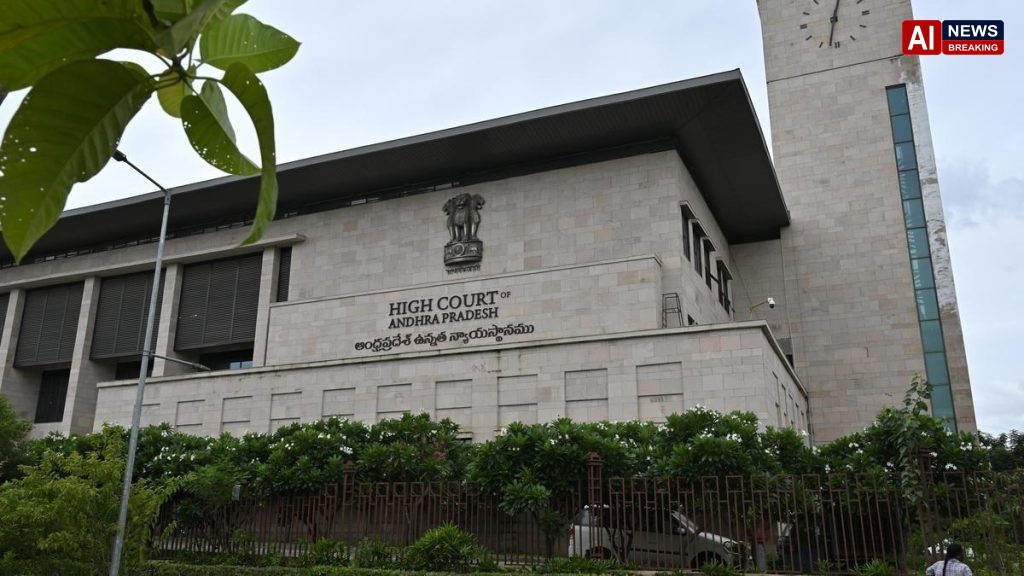
High Court pauses data centre lease dispute. - AI News Breaking
The Andhra Pradesh High Court has issued a significant directive regarding the operational status of a major data centre in the state, pausing proceedings until specific legal and environmental discrepancies are thoroughly examined. The bench, led by Chief Justice Prashant Kumar Mishra, emphasized that the dispute over land tenure represents a critical juncture that requires meticulous judicial scrutiny before any further administrative actions can be validated. This interim order underscores the gravity with which the judiciary is approaching allegations of irregularities in the allotment of state land to private technology firms, particularly those involving long-term leases that may bypass standard procedural safeguards.The core of the controversy revolves around conflicting claims regarding the duration and nature of the land lease granted to the data centre operator..
According to judicial records, the applicant contended that the impugned land was leased out for a period of thirty years, a term that would secure long-term stability and massive capital investment for the facility. However, opposing counsel presented counter claims asserting that the initial allotment was made on a lease basis for only eleven years, suggesting that any extension beyond this period lacked proper legal authorization or compliancy with state revenue laws. This stark discrepancy in the foundational terms of the agreement has cast a shadow over the legitimacy of the project’s continued operation.Chief Justice Prashant Kumar Mishra noted that such a fundamental contradiction could not be overlooked and required a close, detailed examination of all pertinent documents, including the original revenue records, board resolutions, and any subsequent amendments to the lease agreement..
The Chief Justice remarked that the difference between an eleven-year term and a thirty-year term is not merely a matter of contractual semantics but has profound implications for land use policy, revenue collection, and regulatory oversight. He directed the state counsel to produce all relevant records within a stipulated timeframe to clarify whether the extended tenure was granted through a transparent process or if it was an after-the-fact regularization of an unauthorized occupation.Beyond the legal technicalities of the lease duration, the High Court also took serious note of the environmental concerns raised in the petition. The applicants argued that the establishment of the data centre had proceeded without adequate environmental impact assessments, potentially violating the Environmental Protection Act and other statutory norms designed to safeguard local ecosystems..
The court acknowledged that data centres, while essential for digital infrastructure, are energy-intensive facilities that can significantly affect local power grids and water resources, particularly in regions where these utilities are already under strain.The judicial observation highlights a growing tension between rapid technological expansion and rigorous environmental compliance. In recent years, India has seen a surge in the construction of data centres, driven by the booming digital economy and cloud services industry. However, this rapid development has often outpaced regulatory frameworks, leading to situations where projects commence before all environmental clearances are fully secured..
The Andhra Pradesh High Court’s intervention serves as a reminder that economic progress cannot come at the expense of ecological sustainability or procedural legality.Legal experts suggest that the court’s decision to pause the case for further scrutiny sends a strong signal to both private investors and government authorities. It indicates that the judiciary is willing to intervene when there are credible allegations of procedural lapses, regardless of the economic significance of the project involved. This stance is particularly notable given the state government’s aggressive efforts to attract foreign direct investment and position Andhra Pradesh as a leading hub for information technology and digital infrastructure in southern India.The case also brings into focus the broader issue of land governance in the state..
Land allotments to private entities for commercial purposes have been a subject of public debate and political controversy in Andhra Pradesh. Historical precedents show that irregular land deals can lead to long-standing legal battles, loss of state revenue, and public distrust in government institutions. By ordering a close scrutiny of the lease terms, the High Court is effectively demanding transparency in how state assets are managed and allocated to private corporations.Furthermore, the environmental dimension of the case raises important questions about the capacity of local authorities to monitor and enforce compliance standards..
Data centres require substantial amounts of cooling water and electricity, often relying on backup diesel generators during power outages. If the environmental impact assessment was inadequate or ignored, the long-term consequences for the local environment could be severe, affecting groundwater levels and air quality. The court’s attention to these factors suggests that future approvals for similar projects will face stricter judicial and regulatory hurdles.The respondents in the case, representing the data centre company, have argued that the initial eleven-year lease was subsequently renewed or extended through valid government approvals, and that the thirty-year term reflects the total operational period secured through legitimate means..
They contend that the project has created significant employment opportunities and contributed to the state’s digital infrastructure, thereby serving the public interest. However, the burden of proof now rests on the respondents to demonstrate that every step of the lease extension process adhered strictly to the law.As the case proceeds, the outcome may have ripple effects beyond this specific data centre project. Other tech firms operating in the state may face similar scrutiny regarding their land leases and environmental compliance records..
The High Court’s precedent could lead to a wave of reviews across the sector, potentially delaying new projects or forcing existing ones to undergo comprehensive audits of their legal and environmental standing. This could slow down the pace of digital infrastructure development in the short term but may establish a more robust and compliant framework for the long term.The judicial process now enters a phase of detailed evidentiary examination, where documents will be cross-referenced to resolve the contradiction between the eleven-year and thirty-year lease claims. Lawyers for both sides are expected to present extensive archival records, government orders, and expert testimony to support their respective positions..
The court has urged all parties to cooperate fully in this process, emphasizing that justice must be served with both speed and accuracy, without compromising the integrity of the legal system.In the interim, the data centre is instructed to continue its operations under strict compliance with all existing environmental norms, while the legal dispute is resolved. The State Government has been advised to refrain from taking any administrative action that might prejudice the outcome of the case. This status quo ensures that while the legal questions are unanswered, the economic activity continues, albeit under a cloud of uncertainty that hangs over the validity of its foundational agreements.Looking forward, this case could serve as a bellwether for how Indian courts balance commercial interests with regulatory rigor..
The juxtaposition of a high-value tech investment against allegations of procedural and environmental lapses is a scenario likely to recur in other states. The Andhra Pradesh High Court’s handling of the matter sets a tone of cautious vigilance, warning stakeholders that economic benefit does not exempt enterprises from adhering to the rule of law and environmental protection duties.Ultimately, the resolution of this case will depend on the factual findings regarding the true nature of the land allotment. If the court finds that the thirty-year lease was indeed granted without proper authority, it could result in significant penalties, renegotiation of terms, or.
The court’s pause exposes a structural fault line: unchecked incentives to fast‑track tech hubs risk eroding land‑revenue discipline and sidestepping ecological safeguards, a gamble that could sour public trust and future investment.
If the lease is deemed illicit, it will force a recalibration of Andhra Pradesh’s growth model, compelling policymakers to embed transparent, environmentally vetted frameworks before courting the next wave of digital infrastructure.