 Bihar minister proposes renaming town to honour Nitish Kumar
  Keralam’s multiplex pricing debate: SC order in 2023 permits cinema hall owners to fix food prices
  DMK chief Stalin accuses Tamil Nadu CM Vijay of using ‘reels’ to cover up administrative failures
  High Court pauses data centre lease dispute.
  CSD urges govt to drop Gram Sabha consent rule for projects
 Keralam’s multiplex pricing debate: SC order in 2023 permits cinema hall owners to fix food prices
**
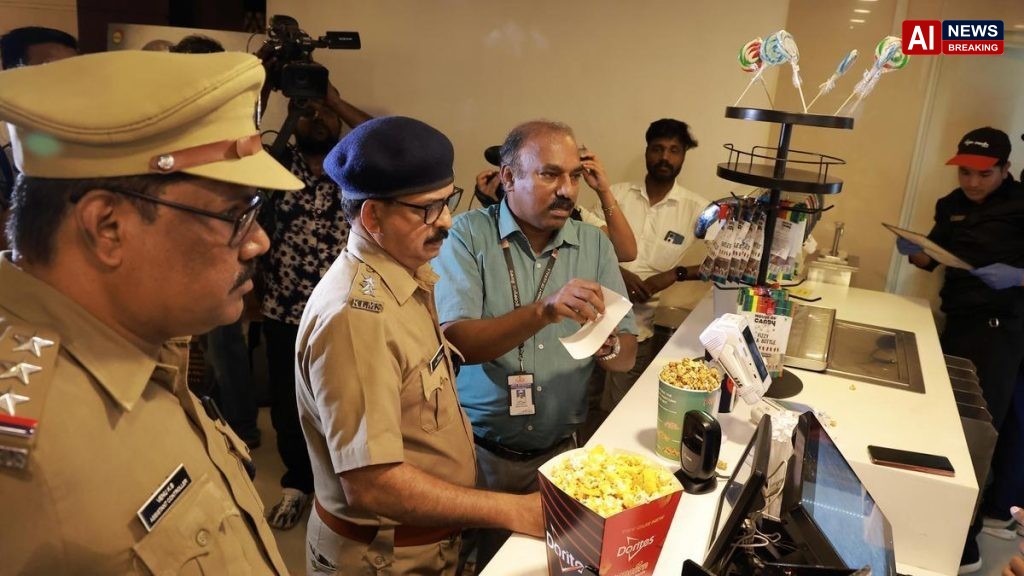
Keralam’s multiplex pricing debate: SC order in 2023 permits cinema hall owners to fix food prices - AI News Breaking
keralams multiplex pricing debate:
The ongoing contention regarding food pricing within Kerala’s modern multiplex cinema halls has entered a complex legal and social phase following a pivotal Supreme Court judgment from 2023. The apex court’s decision in the case of K.C. Cinema versus the State of Jammu and Kashmir has significantly altered the regulatory landscape for entertainment venues across India, including those in the southern state..
This ruling explicitly recognizes cinema halls as private properties owned by individuals or corporate entities. Consequently, owners are granted the autonomy to set their own operational policies, including the prohibition of outside food items. Under the provisions upheld by the highest judicial authority, cinema owners possess the legal right to fix prices for food and beverages sold within their premises..
The court reasoned that these establishments function as commercial enterprises operating under private ownership rather than public utilities. Therefore, any attempt by state regulations to cap prices or force the acceptance of external food could violate the property rights of the owners. This stance provides a robust legal shield for multiplex chains against local consumer protection norms..
In Kerala, where consumer activism is historically strong and vocal, this judicial stance has sparked intense public debate. Moviegoers argue that sky-high prices for popcorn, soft drinks, and other snacks constitute a form of predatory pricing in a captive market environment. Patrons feel compelled to purchase overpriced items because bringing their own consumables is strictly forbidden in these modern, air-conditioned complexes..
The disconnect between affordable ticket prices and expensive concessions has become a primary point of friction for residents. Local consumer groups in Kerala have expressed deep concern over the potential erosion of consumer rights in the entertainment sector. They argue that while cinema halls are privately owned, they serve a public function and should be subject to reasonable price controls..
The state government has occasionally hinted at revisiting its consumer protection rules to address these grievances. However, the Supreme Court’s precedent creates a significant hurdle for any legislative action that might interfere with the autonomous pricing decisions of private cinema operators. Cinema case originated in Jammu and Kashmir but has far-reaching implications for the entire Indian cinema industry..
The court dismissed petitions seeking to ban the restriction on outside food, stating that such rules do not violate public interest or safety standards. Commercial establishments have the inherent right to maintain hygiene and order within their premises. Allowing outside food could potentially lead to littering, pest infestations, or conflicts with specific health codes, according to the judiciary’s broader interpretation of private property rights..
Multiplex operators defend their pricing strategies by highlighting the high operational costs associated with running modern cinema halls. They point to expenses related to advanced sound systems, projection technologies, climate control, and security. Food concessions are often viewed as a secondary source of revenue that helps subsidize ticket prices, which might otherwise be prohibitively high for the average viewer..
This business model relies on the assumption that patrons will spend significantly on intermission snacks during their visit. Despite these justifications, the average moviegoer in Kerala continues to face burdensome costs for basic refreshments. A single packet of popcorn or a soft drink can cost several times more than its market rate in local grocery stores..
This price disparity is particularly stark in tier-two cities where disposable incomes are lower, yet entertainment expenses remain high. Consumers argue that the lack of competition within the enclosed environment of a multiplex allows owners to exploit their market dominance without fear of losing customers to alternative sellers. The state government is currently navigating a delicate balance between protecting consumer interests and respecting judicial precedents..
Officials hesitate to introduce strict price caps due to the clear legal landscape established by the Supreme Court. Any regulatory move that infringes upon the rights outlined in the K.C. Cinema verdict could face immediate legal challenges from cinema associations..
This regulatory paralysis leaves many frustrated patrons feeling unheard and vulnerable to potential exploitation by powerful commercial entities. Legal experts suggest that while the fundamental right to fix prices is protected, it is not absolute. Abuse of economic power or anti-competitive practices could still be scrutinized under separate competition laws..
However, proving such abuse requires substantial evidence and complex litigation that most individual consumers cannot afford. Consequently, the immediate recourse for angry moviegoers remains largely societal pressure rather than legal action, which often yields minimal practical results in changing corporate pricing structures. The debate extends beyond mere financial concerns to issues of autonomy and consumer dignity..
Many patrons feel that the prohibition of outside food is an infringement on their personal freedom. They argue that paying for a ticket grants them the right to enjoy their viewing experience without additional fiscal coercion. This sentiment is growing stronger on social media platforms, where users frequently share their frustrations and organize informal boycotts to protest against excessive concession prices in major cinema chains..
As the tension persists, there is a growing call for dialogue between cinema operators, consumer forums, and government bodies. Stakeholders are exploring potential middle grounds, such as designating specific zones where outside food might be permitted or encouraging operators to offer more competitive pricing. However, without a change in judicial interpretation or a new legislative framework, the status quo remains firmly in favor of the cinema owners..
The legal precedent set in 2023 continues to govern the industry. Ultimately, the situation in Kerala reflects a broader national struggle between private property rights and public consumer welfare. The Supreme Court’s stance ensures that cinema halls remain bastions of private enterprise with significant operational freedom..
For now, moviegoers must accept the prevailing pricing models or choose to abstain from purchasing concessions. The long-term resolution of this debate will likely depend on shifting consumer habits and potential future legal clarifications regarding anti-competitive practices in captive markets..
Updated: September 10, 2026
Kerala’s movie‑goers are up in arms over steep concession prices after a 2023 Supreme Court ruling affirmed cinema halls’ right to set their own food charges and bar outside snacks. Consumer groups demand price controls, but the court’s precedent shields multiplex owners, leaving the debate between private property rights and public welfare unresolved.