 BRICS adopts joint declaration calling for restraint in Gaza conflict
  Ryan Garcia knocks out Conor Benn
  Swedes vote in pivotal election; centre-left leads early counts
  Along Himalayan Floods’ Path, Wiped Out Towns and Mounting Grief
  MP arrests key suspect in hooch deaths case
 BRICS adopts joint declaration calling for restraint in Gaza conflict
**
BRICS issues New Delhi Declaration, as UAE and Iran back down from tough positions - AI News Breaking
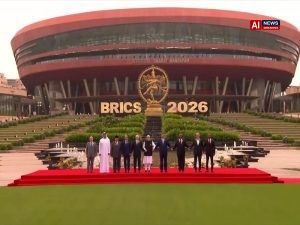
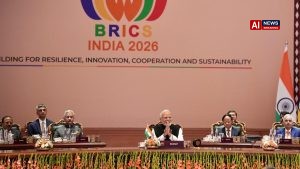
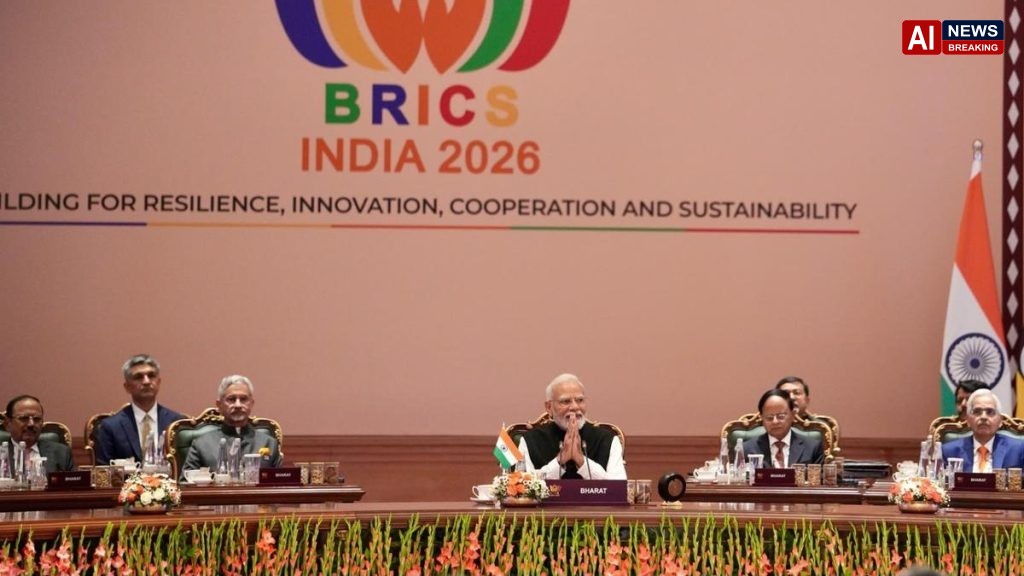
The BRICS leaders gathered in New Delhi this week to adopt a joint declaration that seeks to balance the bloc’s growing geopolitical ambition with a diplomatic tone that avoids overt confrontation. Indian Prime Minister Narendra Modi, who chaired the summit, stressed that the grouping is “not against anyone” and called for “maximum restraint” in the ongoing conflict in Gaza, a phrasing that sidesteps the more forceful language favoured by some members. The final document, issued after an hour‑long meeting between Modi and Chinese President Xi Jinping, represents a compromise that reflects the shifting positions of the United Arab Emirates and Iran, both of which have moderated their earlier, more hard‑line stances.The declaration’s most notable feature is its call for restraint without explicitly naming the parties responsible for the violence..
It urges all sides to “exercise the utmost caution and avoid any escalation that could lead to further civilian suffering,” a wording that deliberately omits a direct condemnation of Israel’s military operations in Gaza. This nuanced approach follows a pattern observed at previous BRICS gatherings, where consensus is prized over the articulation of divergent national policies. By avoiding explicit criticism, the statement aims to keep the focus on broader principles of peace and stability, while allowing member states to maintain their own diplomatic levers.For India, the summit presented an opportunity to reaffirm its role as a mediator in a region where it has traditionally cultivated ties with both Israel and the Arab world..
Modi’s remarks highlighted India’s “principled concern” for the humanitarian situation, yet he reiterated New Delhi’s commitment to “respecting the sovereignty and security of all nations.” The balancing act mirrors India’s broader foreign policy, which seeks to deepen engagement with the Gulf states and Israel alike, while also positioning itself as a bridge between East and West. By steering the BRICS declaration toward a more measured language, Modi reinforced his country’s image as a responsible power capable of influencing multilateral outcomes.China, for its part, continued to advocate for a ceasefire that would halt civilian casualties but stopped short of demanding an immediate end to Israeli operations. President Xi, in his meeting with Modi, emphasized the need for “political solutions” and called on the international community to “support any legitimate efforts to achieve a sustainable peace.” The Chinese foreign ministry’s later briefing echoed these points, noting that any resolution must respect the “legitimate security concerns” of all parties involved..
This stance aligns with Beijing’s long‑standing policy of supporting Palestinian self‑determination while maintaining a strategic partnership with Israel, particularly in defense and technology sectors.The United Arab Emirates, which had earlier signalled a willingness to back a stronger rebuke of Israel, softened its position in the final draft. In a statement released after the summit, the UAE’s foreign minister said the declaration reflects “a collective desire to de‑escalate tensions and protect innocent lives.” Analysts note that the Emirati shift may be driven by pragmatic concerns over energy market volatility and the need to preserve its burgeoning trade ties with both Israel and the United States. By aligning with the more moderate language, the UAE also signals its intent to remain a constructive player within BRICS, rather than a disruptive outlier.Iran’s role in the negotiations was similarly restrained..
Tehran, which has historically championed a harsher condemnation of Israel, opted for a softer tone, aligning with the broader consensus that seeks to avoid alienating other members. Iranian officials later described the declaration as “a step forward in the pursuit of justice and peace,” while refraining from calling for any specific punitive measures against Israel. This moderation can be read as a calculated move to keep Iran engaged with the BRICS framework, especially as it seeks greater economic cooperation to mitigate the impact of Western sanctions.The absence of a direct reference to the Israeli air strikes that have devastated Gaza marks a departure from the more pointed statements issued by individual BRICS members in the weeks preceding the summit..
Russia, for example, had issued a separate communiqué condemning “the indiscriminate use of force” and calling for an immediate ceasefire. By contrast, the New Delhi declaration’s more generic appeal to restraint reflects a desire to present a united front that does not fracture over divergent national interests. Observers suggest that this approach may be intended to preserve the bloc’s credibility as an alternative to Western-dominated institutions, even if it means watering down specific policy prescriptions.The diplomatic choreography of the summit also highlighted the growing interdependence of BRICS members in areas beyond geopolitics..
Economic cooperation discussions yielded agreements on a new development bank loan facility aimed at infrastructure projects in member countries, as well as a joint initiative to expand digital payment systems that bypass traditional Western clearinghouses. These moves underscore the strategic calculus behind the political language: a cohesive narrative on conflict resolution bolsters the bloc’s broader ambition to reshape global financial architecture.Critics, however, argue that the declaration’s vague phrasing amounts to little more than diplomatic window‑dressing. Human rights organisations have warned that the lack of explicit condemnation could embolden further attacks on civilians, while some Western governments view the BRICS stance as an attempt to legitimize Israel’s military campaign..
In response, BRICS officials maintain that the declaration is a “balanced and responsible” contribution to an already polarized international discourse, emphasizing that the emphasis on restraint is itself a powerful statement in the current climate.The New Delhi summit thus concludes with a document that mirrors the complex realities of a multipolar world. By securing a consensus that avoids direct finger‑pointing, the BRICS grouping demonstrates both its diplomatic flexibility and the constraints imposed by the divergent priorities of its members. As the situation in Gaza continues to evolve, the declaration’s call for “maximum restraint” will be tested, and the ability of the bloc to influence outcomes will hinge on how its members translate the language of the summit into concrete actions on the ground..
Updated: September 13, 2026
The summit’s diplomatic euphemism masks a strategic retreat, prioritizing institutional cohesion over moral clarity to stabilize a fracturing alliance. This calculated ambiguity signals BRICS’ transition from a protest movement into a pragmatic power broker willing to compromise principles for geopolitical leverage.