 Karnataka Minister Satish Jarkiholi says he was misquoted on ED searches; releases video message
  Times reporter discovers 1910s journalist letters in Irish castle
  Khap leaders set Oct 5 deadline for arrest in Ankit Balyan murder case
  BRICS adopts joint declaration calling for restraint in Gaza conflict
 Khap leaders set Oct 5 deadline for arrest in Ankit Balyan murder case
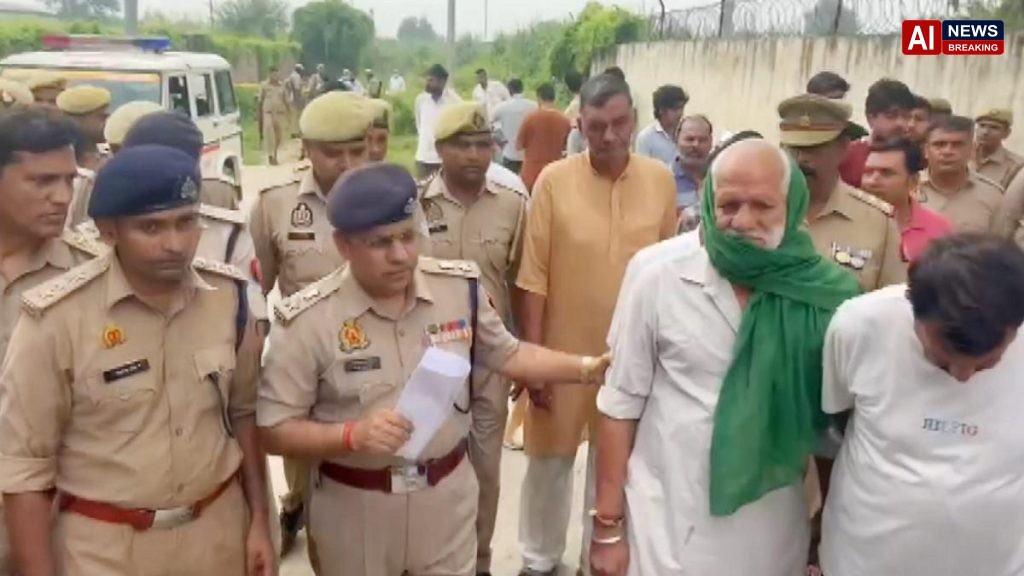
Ankit Balyan murder case: Khap heads give deadline of Oct 5 for arrest of remaining accused - AI News Breaking
khap leaders deadline arrest:
The murder of Ankit Balyan, a 27‑year‑old farmer from Shamli district in Uttar Pradesh, has re‑ignited debate over the role of traditional community organisations, known as khaps, in the administration of justice. On Thursday, senior khap leaders, including Naresh Tikait, head of the Balyan khap, convened a meeting with district officials to press for a series of demands aimed at protecting the victim’s family and securing the arrest of the remaining accused. The khap leaders set a deadline of 5 October for the police to apprehend the individuals still at large, signalling a heightened willingness to intervene in the legal process.The incident that sparked the controversy occurred on 12 May, when Ankit Balyan was shot dead outside his village home during an altercation with members of a rival clan..
Initial police reports indicated that the shooting was linked to a long‑standing dispute over land and alleged defamation. Six suspects were arrested in the immediate aftermath, but three were granted bail after the district court concluded that the evidence against them was insufficient. Since then, the case has languished, with the families of the deceased accusing law‑enforcement agencies of neglect and bias.In response, the Balyan khap convened an emergency meeting with the district magistrate (DM) and the senior superintendent of police (SP) on 30 September..
According to statements made by Tikait to reporters in Shamli, the khap heads demanded three specific measures. First, they sought enhanced security for the surviving members of the Balyan family, citing threats that have reportedly persisted since the murder. Second, they requested the provision of a stable source of employment for at least one member of the family, arguing that financial insecurity could render the family vulnerable to further intimidation..
Third, they called for a direct financial assistance package to help the family cover immediate expenses, including medical costs incurred during the investigation and funeral arrangements.The officials present at the meeting appeared to acknowledge the concerns raised. The DM, a senior officer of the Uttar Pradesh civil service, reportedly assured the khap leaders that the police would intensify their efforts to locate the remaining suspects. The SP, in turn, outlined a revised action plan that includes increased patrolling in the area, the deployment of additional investigative resources, and the formation of a special team to review the evidence collected to date..
Both officials indicated that the police would provide a security detail for the Balyan family within a week, subject to the allocation of personnel and logistical constraints.While the promises made by the administration have been welcomed by the Balyan family, the deadline set by the khap heads has added a layer of urgency to the proceedings. Tikait warned that failure to arrest the remaining accused by 5 October would compel the khap to consider alternative measures, a phrase that analysts interpret as an implicit reference to the extra‑judicial methods that some khaps have historically employed. The khap’s statement, delivered without explicitly mentioning any form of retaliation, underscores a broader trend in which community organisations seek to hold state institutions accountable for perceived inaction.Legal experts caution against conflating community pressure with due process..
“The rule of law must be upheld, and any attempt to coerce law‑enforcement agencies through deadlines can set a precarious precedent,” said Dr Rajat Sharma, a professor of criminal law at the University of Lucknow. He added that while community involvement can be constructive, it should not translate into extrajudicial intimidation or bypass established judicial mechanisms. The Supreme Court of India has, in several rulings, emphasised that khaps, despite their cultural significance, do not possess legal authority to enforce punitive measures.Human‑rights organisations have also weighed in on the case..
Amnesty International India released a statement urging the Uttar Pradesh government to ensure the safety of the Balyan family without resorting to coercive tactics, and to conduct a transparent investigation into the murder. The statement highlighted concerns that the involvement of khap leaders, who have faced criticism for endorsing regressive practices in matters ranging from marriage to property disputes, could further complicate the pursuit of justice. “Any interference that threatens the independence of the judiciary or law‑enforcement agencies must be firmly discouraged,” the statement read.The political ramifications of the case are evident..
The ruling Samajwadi Party, which currently governs Uttar Pradesh, has faced criticism from opposition parties for allegedly turning a blind eye to caste‑based violence in the state. In the lead‑up to the state elections scheduled for early next year, parties are likely to use the Balyan case as a barometer of the administration’s commitment to law and order. Senior leaders of the Bharatiya Janata Party have called for swift action, framing the issue as a test of the government’s resolve against criminality.Local residents, many of whom belong to agrarian communities, expressed a mixture of relief and apprehension following the meeting..
“We want justice for Ankit, but we also fear that if the khap takes matters into its own hands, more violence could erupt,” said Ramesh Singh, a farmer from a neighbouring village. Community elders reiterated the need for a peaceful resolution, urging both the police and the khap to cooperate within the bounds of the law. The district administration, for its part, has pledged to release periodic updates on the progress of the investigation, a move aimed at maintaining transparency and restoring public confidence.As the deadline approaches, the spotlight remains firmly on the Uttar Pradesh police to demonstrate their capacity to enforce the law without yielding to external pressure..
The outcome will not only determine the fate of the remaining accused in the Ankit Balyan murder case but also shape the broader discourse on the interface between traditional community bodies and modern state institutions. Whether the khap’s demand will translate into concrete action or become another footnote in a protracted legal saga will depend on the efficacy of the police response, the judiciary’s willingness to adjudicate impartially, and the broader political will to address caste‑linked violence in the region..
Updated: September 13, 2026
Balyan khap chiefs have warned that they will consider extra-judicial action if police fail to arrest remaining suspects in Ankit Balyan’s murder by October 5. Law enforcement has pledged enhanced security and a fresh investigation despite legal experts cautioning against such community-led intimidation.
Insight: The khap’s five-day ultimatum risks trading state neglect for extra-judicial haste, exposing the brittle trust in rural legal infrastructure. True justice relies on calm procedure, not the velocity of community pressure.