 Tech leaders to UN: For the sake of humanity, please control the AI technology we created
  Gulf nations have found ways to keep oil flowing
  France deploys patrol fleet to curb Channel migrant crossings
  From a Nepal in Pain, a Young Leader Makes a Case for Climate Reparations
  Ukraine transfers two North Korean POWs to South Korea.
 3,260 one-horned rhinos in Assam, 80% of global count: Himanta Biswa Sarma
**
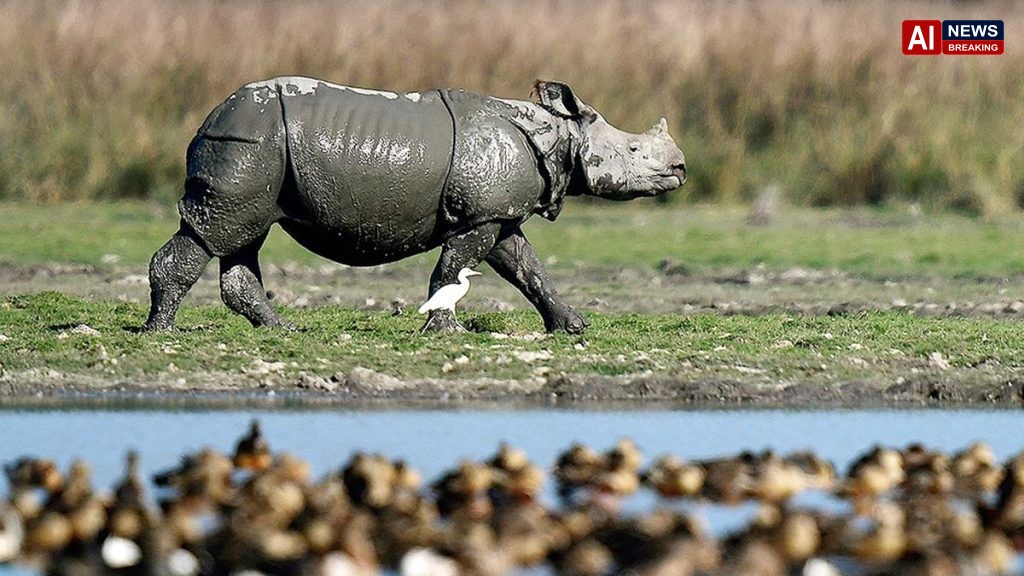
3,260 one-horned rhinos in Assam, 80% of global count: Himanta Biswa Sarma - AI News Breaking
3260 onehorned rhinos assam:
3,260 one‑horned rhinos in Assam, 80% of global count: Himanta Biswa Sarma Assam’s chief minister, Himanta Biswa Sarma, announced on Tuesday that the state now hosts 3,260 one‑horned rhinoceroses, a figure that represents roughly eighty percent of the species’ global population. The declaration comes after a series of conservation initiatives launched over the past decade, aimed at bolstering numbers that had once dwindled to the brink of extinction. Sarma’s statements were made at a press conference in Guwahati, where he also highlighted the successful implementation of anti‑poaching measures and community‑driven habitat management programmes..
The chief minister asserted that 2025 has been a landmark year for wildlife protection in Assam, noting that the state recorded zero incidents of rhino poaching for the first time since systematic monitoring began. He credited the result to a coordinated effort involving forest officials, local NGOs, and village patrols that have intensified surveillance across critical corridors such as Manas, Kaziranga and Nameri. According to Sarma, the absence of poaching incidents not only reflects improved enforcement but also signals a growing local stewardship of the species..
Globally, the total number of one‑horned rhinoceroses stands at approximately 4,075, according to data compiled by the International Union for Conservation of Nature (IUCN). With Assam accounting for 3,260 individuals, the state now shoulders the bulk of the species’ survival prospects. Conservationists warn that this concentration creates both an opportunity and a risk: while the large population offers a buffer against extinction, it also makes the region a potential target for illegal wildlife trade networks..
Experts from the Wildlife Institute of India (WII) underscored the importance of maintaining genetic diversity within the Assam rhino population. They explained that a healthy gene pool reduces susceptibility to disease and enhances adaptability to environmental changes. To this end, the state has been facilitating occasional translocations to other protected areas in India and Nepal, ensuring that isolated groups receive fresh genetic material without compromising the overall numbers..
The chief minister also detailed the financial commitment of the Assam government to rhino conservation. Over the past five years, the state has allocated more than ₹1,200 crore (approximately $16 million) to anti‑poaching units, habitat restoration, and community outreach programmes. These funds have supported the deployment of modern surveillance technologies such as drone patrols, infrared cameras, and satellite tracking collars, which together have increased the detection rate of illicit activities by nearly thirty percent..
Local communities, particularly those residing near the fringes of Kaziranga National Park, have been integral to the success story. Sarma highlighted the role of village conservation committees that receive stipends for reporting suspicious activity and participating in habitat clean‑up drives. In return, the government has promised alternative livelihood schemes, ranging from eco‑tourism initiatives to skill‑development workshops, aimed at reducing dependence on forest resources that could otherwise fuel human‑wildlife conflict..
Despite the positive trends, challenges remain. Climate‑induced flooding, a recurring problem in Assam’s riverine landscape, threatens to displace rhinos from their preferred grassland habitats and force them into human‑dominated areas. The chief minister warned that without proactive flood‑mitigation infrastructure, such as raised embankments and early‑warning systems, the risk of human‑rhino encounters could rise, potentially undermining years of conservation progress..
International observers have taken note of Assam’s achievements. Representatives from the World Wildlife Fund (WWF) and the United Nations Development Programme (UNDP) have praised the state’s integrated approach, which blends strict law enforcement with community empowerment. They have also offered technical assistance to expand the use of artificial intelligence in monitoring poaching patterns, a move that could further cement Assam’s position as a global model for rhino conservation..
Sarma’s remarks also touched upon the broader implications for India’s biodiversity agenda. He argued that the success in Assam could be replicated in other states grappling with endangered megafauna, provided there is political will, adequate funding, and grassroots participation. The chief minister called for a national framework that aligns state‑level initiatives with the goals set out in India’s 2030 Vision for Wildlife, a strategy that aims to double the numbers of key threatened species by the end of the decade..
The announcement has sparked a wave of optimism among conservation circles, yet scientists caution against complacency. Anjali Rao, a senior wildlife biologist at the Zoological Survey of India, emphasized that monitoring must remain rigorous, noting that poaching syndicates are constantly evolving their tactics. She urged continuous investment in intelligence‑gathering networks and cross‑border cooperation with neighboring countries, particularly Nepal and Bhutan, where illegal trade routes intersect..
Looking ahead, the Assam government plans to launch a new “Rhino Heritage Trail” that will allow controlled tourist access to peripheral zones of protected areas, generating revenue that can be reinvested in conservation. The initiative aims to balance ecological integrity with economic development, a delicate equilibrium that Sarma believes is essential for sustaining long‑term protection. He concluded that the zero‑poaching milestone of 2025 is not an endpoint but a stepping stone toward a future where the one‑horned rhinoceros thrives both in the wild and in the collective consciousness of the people who share its habitat..
Updated: September 15, 2026
Assam’s rhino boom shows that well‑funded, community‑centric policing can flip a near‑extinction story into a conservation cornerstone—yet the very concentration of 80 % of the world’s herd turns the region into a high‑value target that demands perpetual vigilance.
If