 Important to preserve independence, transparency of Election Commission: Keralam CM Satheesan
  Families Urge Trump to Press Xi to Free Americans Detained in China
  After Jamui, another minor girl molested in Bihar’s Samastipur
  Australia Investigates OpenAI Hack on Public Health Care Site
 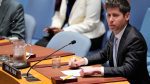 Tech leaders to UN: For the sake of humanity, please control the AI technology we created
 Russia holds elections to reinforce Kremlin legitimacy
**

Russia holds elections to reinforce Kremlin legitimacy - AI News Breaking
russia holds elections reinforce:
Why Russia Holds Elections, and How the Kremlin Gets the Results It Wants The Russian political system is dominated by a single party, a powerful president and a tightly‑controlled media landscape, yet the country still stages regular elections. To many observers these ballots are little more than a ritual, but for the Kremlin they fulfil a vital function: a veneer of popular consent that can be showcased at home and abroad. By presenting a façade of democratic practice, Moscow hopes to defuse internal dissent, placate an increasingly restless electorate and preserve a narrative of stability that underpins its foreign policy..
The ritual therefore becomes a strategic instrument, not a genuine contest. The roots of this electoral theatre lie in the post‑Soviet transition of the 1990s, when Boris Yeltsin’s chaotic reforms left a vacuum of legitimacy. When Vladimir Putin arrived on the scene, he inherited a state desperate for a unifying myth..
The early 2000s saw the introduction of a “managed democracy” model, where institutions existed but were steered by a central authority. Elections were retained, but the rules of the game were rewritten: party registration thresholds were raised, media licences were revoked from opposition outlets, and a complex web of patronage was woven to keep regional elites loyal. This architecture ensured that votes would translate into predictable outcomes..
A key component of the system is the dominance of United Russia, the party founded in 2001 to back the president’s agenda. By law it enjoys preferential treatment in campaign financing, access to state resources and a guaranteed presence on ballot papers across the federation. United Russia’s candidates are pre‑selected by a hierarchy that includes the Kremlin, regional governors and the security services..
In practice the party functions less as a platform for policy debate than as a brand that signals allegiance to the president, making it virtually impossible for genuine opposition to compete on an equal footing. The media environment amplifies this imbalance. State‑run television, which reaches over 80 % of households, devotes the majority of its political coverage to the incumbent and his allies, often framing elections as a patriotic duty..
Independent outlets that dare to question the process face regulatory fines, advertising bans or outright closure. Online platforms are monitored, and social‑media posts that criticize the vote can be flagged as “extremist.” The result is a public sphere where alternative narratives are muffled, and where the Kremlin’s preferred message – that the election reflects the will of the people – goes largely unchallenged. Electoral administration itself is another lever of control..
The Central Election Commission (CEC), headed by a Kremlin‑appointed official, oversees voter registration, ballot printing and the counting of votes. It routinely issues directives that restrict the presence of observers from foreign NGOs, limits the number of independent poll monitors and mandates the use of electronic voting machines in key urban centres. These machines, while touted as modernising tools, are opaque and lack independent verification, allowing the state to adjust tallies without attracting overt suspicion..
On the ground, the “administrative resource” is deployed to coerce or cajole voters. Public sector employees are reminded of their duty to vote for the ruling party, with non‑compliance sometimes resulting in reduced wages or denied promotions. In schools and hospitals, ballots are placed in break rooms and the counting of turnout is closely watched by local officials..
In many rural districts, a single polling station serves an entire settlement, making it easy for officials to pad the numbers or record votes for absent citizens, a practice known locally as “carousel voting”. Opposition candidates, when allowed to run, face a barrage of legal hurdles. They must gather thousands of signatures, many of which are forged or invalidated by the CEC on technicalities..
Once registered, they are denied access to major broadcasters, forced to campaign in remote regions, and often become targets of smear campaigns that allege foreign funding or extremism. High‑profile dissidents such as Alexei Navalny have been barred from running outright, and in recent years the law has been tightened to disqualify anyone who has ever been convicted of a crime, even if the conviction was politically motivated. Despite these obstacles, voter turnout figures remain high, typically reported at 60‑70 %..
Analysts attribute this to a combination of genuine apathy, fear of reprisals, and the state’s ability to inflate participation statistics. In many cases, turnout is bolstered by “mobile voting” units that travel to remote villages, a practice that has been criticised for lacking transparency. The numbers are then used by the Kremlin to claim a broad mandate, reinforcing the narrative that Russia’s political system enjoys popular support even as dissent is silenced..
International observers, when permitted, have consistently highlighted irregularities. The Organization for Security and Co‑operation in Europe (OSCE) was denied entry to monitor the 2021 State Duma election, and its predecessor’s reports from earlier contests described “significant shortcomings” that undermined the credibility of the vote. Nevertheless, the Kremlin dismisses such criticism as Western interference, framing the elections as an internal matter and positioning Russia as a victim of a hostile media agenda..
This deflection serves both to rally nationalist sentiment and to delegitimize external scrutiny. The Kremlin’s reliance on elections for legitimacy is not merely symbolic; it has practical implications for policy making. A parliament that is overwhelmingly pro‑Kremlin can pass legislation that consolidates power, such as constitutional amendments extending presidential terms or laws curbing civil society..
Updated: September 18, 2026
Russia stages regular elections as a controlled spectacle, using United Russia’s dominance, state‑run media, and administrative pressure to manufacture high turnout and a veneer of popular consent. The ritual bolsters domestic legitimacy, silences dissent and underpins Kremlin policy while offering little genuine competition for opposition forces.