 Australia probes AI‑driven breach of My Health Record portal
  Engineering student’s ‘suicide’ turns out to be murder; two arrested
 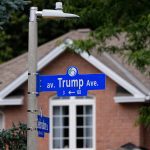 Canada’s Capital Bids Good Riddance to Trump Avenue as Tensions With U.S. Rise
  Pentagon investigates after China obtains parts from F-35 stealth fighter jet
 Once Home to Batman, This Faded Mansion Is Now Plagued by Real Bats
**

Once Home to Batman, This Faded Mansion Is Now Plagued by Real Bats - AI News Breaking
once home batman this:
Once Home to Batman, This Faded Mansion Is Now Plagued by Real Bats The grand façade of Mentmore Towers, a Grade I‑listed mansion in Buckinghamshire, has long attracted film‑goers and heritage lovers alike. In 2005 the estate doubled as the fictional Wayne Manor in Christopher Nolan’s Batman Begins, its opulent interiors and sweeping lawns providing a perfect backdrop for the Dark Knight’s origin story. Today, however, the same stone walls are under siege from an unexpected intruder – a colony of brown long‑eared bats that have taken up residence in the building’s attic and roof voids, prompting a flurry of conservation and public‑health concerns..
Local authorities first raised the alarm in early March when a maintenance crew discovered a dense cloud of bats emerging from the roof during routine plaster repairs. The discovery set off a chain reaction involving Buckinghamshire County Council, Historic England, and the Bat Conservation Trust, each keen to balance the preservation of a historic monument with the legal protection afforded to protected wildlife under the Wildlife and Countryside Act 1981. Officials warned that any uncoordinated removal could breach both heritage legislation and wildlife protection law, potentially resulting in hefty fines..
Mentmore Towers, built between 1852 and 1854 by the wealthy Rothschild family, boasts 250 rooms, a 30‑metre‑high dome, and an elaborate French‑style park designed by Joseph Paxton. The estate’s architectural significance earned it a place on the National Heritage List for England in 1950, and its interiors have been used for numerous film and television productions. Yet, the very features that make it a cinematic icon – its lofty ceilings, hidden chambers, and expansive roof space – also provide an ideal roost for bats, which favour cool, undisturbed environments for breeding and hibernation..
The species identified at Mentmore is the brown long‑eared bat (Plecotus auritus), a native of the British Isles that typically nests in roof spaces, attics and old buildings. While the bats are harmless to humans, they can cause structural damage over time through droppings, known as guano, which is acidic and can corrode timber and plaster. Moreover, the presence of a large colony raises public‑health questions, as bats can occasionally carry the fungus Pseudogymnoascus destructans, responsible for white‑nose syndrome, a disease that has devastated bat populations in North America..
Buckinghamshire Council’s environmental health officer, Sarah Whitaker, explained the dilemma: “We have a Grade I‑listed building that is a national treasure, and we also have a protected wildlife species that is legally entitled to its roost. The challenge is to find a solution that safeguards both heritage and biodiversity without contravening the law.” She added that any intervention would need to be overseen by a licensed bat ecologist and approved by Natural England, the body responsible for wildlife licensing in the UK. The Bat Conservation Trust has already dispatched a team of ecologists to conduct a comprehensive survey of the roost..
Their initial findings suggest that the colony numbers between 150 and 200 individuals, a figure that places the site among the larger urban bat populations in southern England. The Trust’s lead ecologist, Dr Emily Clarke, noted that “while the numbers are significant, the bats are thriving, which is a positive sign for the species. However, the proximity to public visitors and the deteriorating condition of the roof demand a carefully managed mitigation plan.” One proposed solution under consideration is the installation of a bat‑friendly roof clearance system that would allow the animals to relocate to a purpose‑built loft bat house, thereby preserving their roost while freeing the historic roof for essential repairs..
Such schemes have been successfully implemented at other heritage sites, including St Paul’s Cathedral and the historic town of Bath, where bat boxes are integrated into existing structures without compromising architectural integrity. Heritage experts caution that any modification to Mentmore’s roof must respect the original design. “We cannot simply rip out the roof and replace it with modern materials,” said Dr James Harrington, a senior architectural historian at the University of Oxford..
“Any intervention must be reversible, use like‑for‑like materials where possible, and be documented thoroughly for future generations. The goal is to preserve the building’s Victorian character while ensuring it remains safe for both visitors and the resident wildlife.” The public response to the news has been mixed. Fans of Batman Begins have taken to social media, joking that “the real Wayne family finally got their own bats.” Meanwhile, local residents expressed concern over potential health risks and the impact on property values..
A petition urging the council to prioritise the bats’ welfare has gathered over 3,000 signatures, reflecting a growing awareness of the ecological importance of urban bat colonies. Funding for the remedial work remains uncertain. The council has applied for a grant from the Heritage Lottery Fund, which supports projects that protect historic sites while promoting community engagement..
If successful, the grant could cover the cost of the specialised roof work, the construction of bat boxes, and educational outreach programmes designed to inform schoolchildren about the role bats play in pollination and insect control. As the summer months approach, the urgency of the situation intensifies. Bats typically emerge from hibernation in April and begin breeding by May, meaning that any disturbance during this critical period could have lasting repercussions for the colony’s reproductive success..
The council has therefore imposed a temporary ban on non‑.
Updated: September 19, 2026
Mentmore Towers, the Grade I‑listed mansion that stood in for Wayne Manor in Batman Begins, is now battling an infestation of brown long‑eared bats nesting in its roof, prompting a complex effort to protect both the historic structure and the legally protected wildlife. Officials are weighing bat‑friendly roof repairs and relocation boxes to safeguard the building’s fabric while complying with heritage and conservation laws.
Mentmore’s battle between preserving a cinematic heritage icon and protecting a thriving bat colony underscores how our cultural monuments are increasingly becoming ecosystems in their own right, forcing policymakers to treat history and biodiversity as co‑dependent assets. The solution will likely set a precedent: heritage conservation can no longer ignore wildlife, and thriving urban