 France deploys patrol fleet to curb Channel migrant crossings
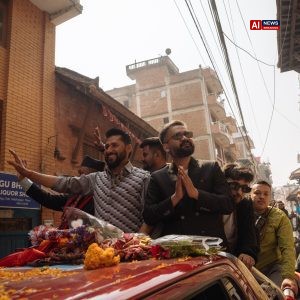
  From a Nepal in Pain, a Young Leader Makes a Case for Climate Reparations
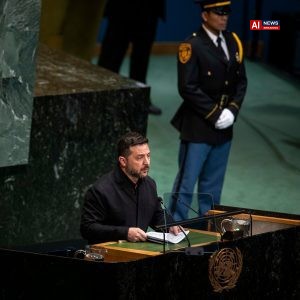
  Ukraine transfers two North Korean POWs to South Korea.
  Australia probes AI‑driven breach of My Health Record portal
  Engineering student’s ‘suicide’ turns out to be murder two arrested
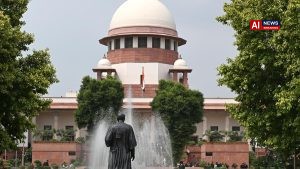
 Union I&B Ministry denies censor exemption to 31 films at IDSFFK in Keralam
**

Union I&B Ministry denies censor exemption to 31 films at IDSFFK in Keralam - AI News Breaking
union iampb ministry denies:
The Union Information and Broadcasting Ministry has rejected a request for a censor exemption that would have allowed thirty‑one films to be screened at the International Documentary and Short Film Festival of Kerala (IDSFFK). The decision, announced on Wednesday, means that the festival’s programme will be reshaped, with a number of works slated for removal from the official lineup. Festival organisers, filmmakers and cultural commentators have expressed disappointment, arguing that the move undermines artistic freedom and the festival’s reputation as a platform for independent cinema.The contested titles span a broad range of categories within the festival..
Eighteen of the films are part of the main competition, having been selected by the festival’s curatorial panel after a rigorous review process. In addition, nine documentaries slated for the International Non‑Fiction section, three films earmarked for the Festival Winners showcase and a single entry from the Nepal Package were also caught in the exemption denial. Organisers had hoped the exemption would bypass the standard certification requirements that normally apply to public screenings, but the Ministry’s refusal leaves the works subject to the existing certification regime.Festival director S..
Sreehari, speaking at a press conference in Thiruvananthapuram, said the exemption had been sought on the basis that the festival is a “closed, limited‑audience event” and therefore should not be bound by the same regulations that govern commercial theatrical releases. “Our intention was never to flout the law, but to ensure that filmmakers, especially those tackling sensitive or controversial subjects, can present their work without the risk of censorship that could dilute their vision,” he explained. Sreehari added that the Ministry’s decision forces the festival to either secure certificates for each of the affected films—a process that could take weeks—or withdraw them entirely.The Ministry’s statement, issued through a formal communication to the festival’s ariat, cited the need to uphold the standards of the Cinematograph Act, which mandates that all public exhibitions of film content receive certification from the Central Board of Film Certification (CBFC)..
While the Board does have provisions for “film festivals” that can grant a special certificate, the Ministry clarified that the request for a blanket exemption was “not in accordance with existing legal frameworks.” The communication further noted that the films in question would still be eligible for screening if they obtain the requisite certificates, albeit possibly after the festival’s scheduled dates.Legal experts suggest that the Ministry’s stance, while strict, is not unprecedented. Arvind Rao, a professor of media law at Jawaharlal Nehru University, pointed out that the CBFC has historically been cautious about granting exemptions, particularly when the content touches on political, religious or social issues that could incite public disorder. “The exemption mechanism is intended for very specific circumstances, such as private viewings for a limited audience of experts,” he said..
“Applying it to a festival that attracts a broader public, even if ticketed, raises concerns about consistency with the Act.” Rao added that filmmakers could still appeal the decision in the courts, though such litigation often results in delayed outcomes.Filmmakers whose works are now in limbo have voiced frustration, describing the decision as a “blow to creative expression.” Aishwarya Menon, director of the documentary “Threads of the River,” which was among the International Non‑Fiction selections, said the film explores the impact of dam construction on indigenous communities in the Western Ghats. “Our story is about people who are already voiceless,” she said. “Being denied a platform because of bureaucratic red tape feels like another form of silencing.” Menon and several other directors have indicated they will seek legal recourse, while also exploring alternative venues such as online streaming or private screenings to ensure their work reaches audiences.The broader cultural community has taken note of the controversy, with several veteran filmmakers and scholars commenting on the potential chilling effect on documentary and short‑form cinema in India..
Renowned director and former CBFC chairman P. Raghavan warned that “when regulatory bodies become gatekeepers of artistic content, the vibrancy of our film culture suffers.” Raghavan, who served on the board during a period of relative liberalisation, urged the Ministry to reconsider its approach, suggesting that a case‑by‑case assessment could balance regulatory concerns with artistic autonomy.In response to the criticism, a spokesperson for the Ministry reiterated that the primary responsibility of the Information and Broadcasting Ministry is to ensure that all content made publicly available complies with legal standards, including provisions related to national security, public order and decency. “The exemption request, as presented, did not adequately address how the festival would mitigate potential risks associated with uncertified content,” the spokesperson said..
“We remain open to working with festival organisers to find a workable solution, but any such solution must be anchored in the law.”The IDSFFK, now in its 23rd edition, has traditionally been a crucible for emerging talent from South Asia and beyond, showcasing works that often challenge dominant narratives. The festival’s programming committee has already begun the arduous task of re‑configuring the schedule, prioritising films that have secured certification while attempting to maintain thematic coherence. Organisers have promised to keep audiences informed of any changes and have assured that the overall spirit of the festival—celebrating independent storytelling—will remain intact.Industry observers note that the episode arrives at a time when the Indian film sector is navigating a complex landscape of digital distribution, streaming platforms and evolving audience expectations..
The tension between regulatory frameworks and the desire for creative freedom is unlikely to dissipate soon. As the festival approaches, the final outcome will serve as a barometer for how Indian cultural policy adapts to the growing prominence of short‑form and documentary cinema, and whether exemptions can be crafted in a manner that respects both legal mandates and artistic expression..
Updated: September 19, 2026
The ministry’s blanket denial signals a tightening of gatekeeping that could deter festivals from daring to push societal boundaries, risking a homogenised film culture.
In effect, it turns the IDSFFK into a litmus test for how far India will allow independent voices to navigate the increasingly rigid regulatory maze.