Europe warns of Russia’s hybrid attacks but struggles to counter them
  Former chief election commissioner calls SIR scheme illegal.
  A Corruption Scandal Is Reshaping Brazil’s Presidential Election
  US citizen injured in Illinois after ICE agents mistook him for fugitive, tried to arrest him
  At 10 years old, Smithsonian’s Black museum is undaunted amid pressure from Trump administration
 Sensex, Nifty Outlook for Monday: Can Indian Markets Extend the Recovery GIFT Nifty, Oil and Asian Cues in Focus
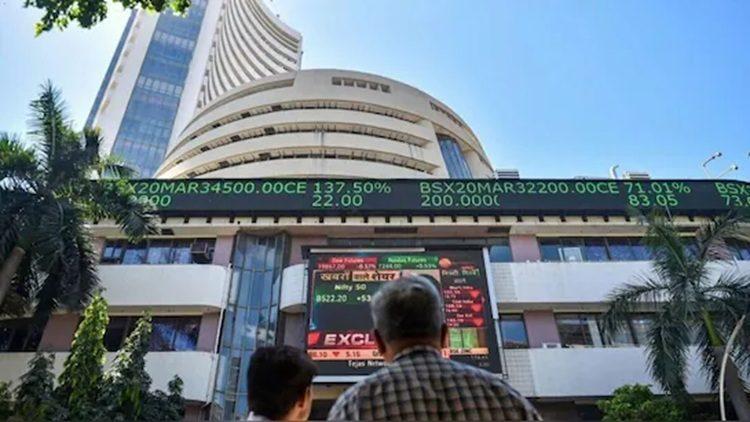
sensex nifty outlook monday:
New Delhi, September 20, 2026: Indian equity markets head into Monday’s trading session at a crucial juncture after a volatile week in which the Nifty 50 managed to recover some ground while the Sensex remained under pressure. Investors will closely track GIFT Nifty, Asian markets, crude oil prices, US bond yields, the rupee and geopolitical developments before deciding the direction of trade.
The Nifty 50 closed Friday at 23,346.40, gaining about 0.33%, while the Sensex ended almost flat at 74,294.96, down around 0.03%. Despite Friday’s recovery, both benchmarks recorded weekly losses, extending the Indian market’s losing streak to six consecutive weeks. The Nifty declined about 0.22% during the week, while the Sensex fell approximately 0.65%.
The immediate question for Dalal Street is whether Friday’s recovery represents the beginning of a more durable rebound or merely a pause in the recent correction. The answer could depend heavily on global risk sentiment, particularly movements in crude oil, US Treasury yields and Asian equities.
Key Points
- Nifty 50 ended Friday at 23,346.40 after gaining about 0.33%.
- Sensex closed at 74,294.96, marginally lower on the day.
- Both benchmarks recorded their sixth straight weekly decline.
- Crude oil above $100 a barrel remains a major risk for Indian equities.
- GIFT Nifty, Asian markets, the rupee, FII flows and global bond yields will be closely watched on Monday.
GIFT Nifty: What the Early Signal Means
GIFT Nifty is likely to remain one of the first indicators investors watch before Monday’s opening bell. Recent trading has suggested a cautious tone rather than a decisive shift in sentiment.
The key point for investors is that GIFT Nifty does not determine the final opening direction of the NSE. Overnight movements in US markets, Asian equities, crude oil, currencies and geopolitical developments can all change the picture before the Indian market opens.
Consequently, traders may be watching whether GIFT Nifty can establish itself above the previous Nifty close or whether early gains are pared before the opening.
Nifty 50: 23,300 Becomes an Important Zone
The Nifty closed at 23,346.40 on Friday, putting the index close to the 23,300 area that has emerged as an important near-term reference point.
Market commentary has identified the 23,300-23,400 region as an immediate technical zone, with a sustained move above 23,400 potentially opening room toward higher levels. On the downside, the 23,100-23,000 area is being watched as an important support zone.
For Monday, therefore, traders could focus less on a single-point prediction and more on how the index behaves around these levels.
A sustained move above the immediate resistance area could improve short-term sentiment, while renewed selling below the recent support zone would indicate that the recovery remains fragile.
Sensex Outlook: Global Cues Could Set the Tone
The Sensex has also been under pressure after recording another weekly decline.
Friday’s closing level of 74,294.96 leaves the index vulnerable to movements in global equities and domestic institutional flows. A stable opening followed by buying in large-cap banking, financial and energy stocks could help the benchmark regain momentum.
However, continued pressure from foreign investors, higher bond yields or another jump in crude prices could restrict gains.
The market’s internal breadth will also be important. A rise driven by only a handful of heavyweight stocks would carry a different signal from a broader recovery involving banks, automobiles, technology, industrials and consumer stocks.
Crude Oil Remains the Biggest Macro Trigger
Oil continues to be one of the most important variables for Indian markets.
Brent crude remained above $100 a barrel despite retreating from recent highs, while WTI also remained around the $100 level. Persistent geopolitical tensions in the Middle East have increased concerns about supply disruptions and the inflationary impact of expensive energy.
For India, sustained high crude prices can create pressure through several channels, including the import bill, inflation expectations, the rupee and corporate margins.
A further decline in crude could therefore provide some relief to Indian equities. Conversely, another sharp oil-price spike could revive concerns about inflation and interest rates.
Asian Markets: Nikkei, Kospi and Taiwan in Focus
Asian market performance will provide another important cue for Indian investors.
The Nikkei 225 gained about 1.52% in Friday’s session, while South Korea’s Kospi slipped around 0.23%. Taiwan’s TAIEX rose about 1.93%, according to market data reported ahead of the Monday session.
The mixed regional picture means investors will be looking at Monday’s opening performance in Japan, South Korea and Taiwan for confirmation of the broader global risk mood.
Technology-heavy markets are particularly relevant for Indian IT stocks. Any renewed weakness in global technology shares could put pressure on India’s information technology sector, while stronger Asian technology stocks could provide some support.
US Bond Yields and the Federal Reserve Factor
US Treasury yields remain another important variable.
Higher global bond yields tend to increase the relative attractiveness of fixed-income assets and can put pressure on emerging-market equities. Indian stocks have already faced pressure from concerns surrounding global monetary policy and higher borrowing costs.
The Federal Reserve’s policy outlook therefore remains relevant even when there is no immediate policy announcement. Investors will continue to assess whether elevated inflation and energy prices could keep global interest rates higher for longer.
Rupee Under Pressure
The Indian rupee also enters the new week as an important market indicator.
The rupee closed at around ₹95.875 per US dollar on Friday and recorded a weekly decline of roughly 0.3%. Reuters reported that traders were watching the ₹96-per-dollar level closely, while expectations of central-bank intervention were seen limiting further weakness around that level.
A weaker rupee can have mixed consequences for Indian equities. Export-oriented companies, particularly some IT businesses, can benefit from currency depreciation, while companies dependent on imported commodities or components may face higher costs.
For the broader market, however, sharp currency weakness can raise concerns about imported inflation and capital flows.
FII and DII Flows Could Influence Volatility
Foreign institutional investor activity remains another key factor.
Foreign investors have continued to reduce exposure to Indian equities during a period of elevated global yields, geopolitical uncertainty and high crude prices. Domestic institutional investors, meanwhile, have provided an important counterbalance.
This difference between foreign selling and domestic buying could continue to influence intraday volatility.
If domestic liquidity remains strong, it could cushion declines in large-cap Indian stocks. But sustained foreign outflows could make it harder for the benchmarks to establish a strong upward trend.
NSE IPO and Liquidity in Focus
The ongoing NSE initial public offering is another domestic market development investors are monitoring.
The $2.3 billion NSE IPO was fully subscribed by its second day of bidding, reflecting substantial demand from investors. Strong IPO participation can support capital-market sentiment, although it can also absorb liquidity that might otherwise flow into secondary-market equities.
Investors will therefore monitor subscription trends and institutional participation alongside the broader market.
What Could Move the Market on Monday?
Several triggers could influence trading:
1. GIFT Nifty: The overnight futures signal could provide the first indication of the opening mood.
2. Crude oil: Any sharp move in Brent or WTI could immediately affect inflation and risk sentiment.
3. Asian equities: The opening direction of Nikkei, Kospi and Taiwan markets could influence India’s technology and export-oriented stocks.
4. US Treasury yields: Higher yields could keep pressure on emerging-market equities.
5. Rupee-dollar movement: The ₹96-per-dollar area remains closely watched by currency traders.
6. FII activity: Continued foreign selling could restrict any recovery.
7. Geopolitical developments: Developments involving the Middle East and energy supply remain capable of producing sudden market swings.
Stocks and Sectors to Watch
Banking and financial stocks could remain important because of their high weight in the benchmark indices. Any continuation of buying in large private-sector banks could provide support to the Nifty and Sensex.
IT stocks will remain sensitive to global technology shares, the US economy and currency movements.
Energy companies will remain closely linked to crude-price developments, while automobile and consumer companies could react to changes in inflation and domestic demand expectations.
Investors may also continue tracking companies involved in the IPO ecosystem and capital-market infrastructure following strong activity in India’s primary market.
Market View: Recovery Attempt or New Rally?
Friday’s gain in the Nifty provides evidence of short-term buying interest, but it does not by itself establish a change in the broader trend.
The index has now entered the new week after six consecutive weekly declines, while global markets continue to deal with higher energy prices, monetary-policy uncertainty and geopolitical risks.
The immediate technical battle is likely to be around the 23,300-23,400 region. Holding above this area could strengthen the recovery attempt, while renewed selling toward the 23,100-23,000 zone would keep the market under pressure.
Rather than focusing on a single prediction for Monday, investors may want to watch the combination of price action, market breadth, crude oil, the rupee and institutional flows.
AI News Breaking Market Insight
The Indian stock market enters Monday with conflicting signals. Friday’s Nifty recovery and easing oil prices offer some relief, but the broader backdrop remains complicated by elevated crude prices, global bond yields, foreign outflows and geopolitical uncertainty.
The key question for the September 21 session is therefore not simply whether Sensex or Nifty opens higher or lower. The more important signal will be whether early gains can hold after the opening, whether market breadth improves and whether the Nifty can sustain trade above its immediate resistance zone.
A sustained improvement in global risk sentiment, softer crude prices and stronger domestic buying could help stabilise the market. On the other hand, renewed geopolitical stress, higher oil prices or a fresh rise in global yields could quickly bring selling pressure back.
For investors, Monday’s session could therefore be more about confirmation of direction than the opening tick itself.
Disclaimer: This article is for news and informational purposes only and does not constitute investment advice, a recommendation to buy or sell securities, or a prediction of guaranteed market outcomes. Investors should consider their own risk profile and conduct independent research before making financial decisions.