Europe warns of Russia’s hybrid attacks but struggles to counter them
  Former chief election commissioner calls SIR scheme illegal.
  A Corruption Scandal Is Reshaping Brazil’s Presidential Election
  US citizen injured in Illinois after ICE agents mistook him for fugitive, tried to arrest him
  At 10 years old, Smithsonian’s Black museum is undaunted amid pressure from Trump administration
 Spanish Government Pledges to Continue Audiovisual Hub Through Spain Crece Fund
**
Spanish Government Pledges to Continue Audiovisual Hub Through Spain Crece Fund - AI News Breaking
spanish government pledges continue:
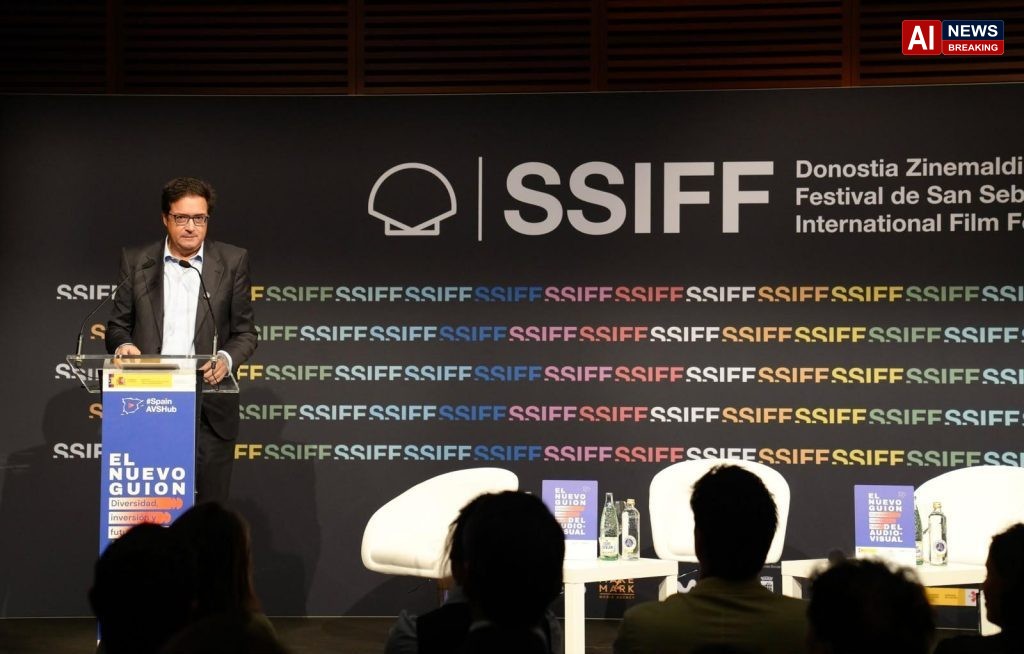
The Spanish government reaffirmed its commitment to bolstering the nation’s audiovisual sector on Sunday, with Minister for Digital Transformation and Public Administration Óscar López announcing that the state will maintain, and in some cases deepen, its support mechanisms through the Spain Crece fund. Speaking at the “New Script of the Audiovisual Industry” conference held as part of the San Sebastián International Film Festival, López highlighted the strategic importance of the sector both as a cultural engine and as a driver of economic growth, noting that recent policy adjustments aim to ensure that Spain remains competitive in an increasingly globalised market for film, television and digital content.The Spain Crece fund, launched in 2022, was designed as a flexible, multi‑year financing tool that channels public money into projects across the production chain – from script development and pre‑production to post‑production, distribution and international co‑production. Under the new guidelines outlined by the minister, the fund will continue to operate with an annual budget of approximately €250 million, but with a revised allocation framework that prioritises projects with a clear export potential, innovative technological components, and a demonstrable contribution to regional development..
López stressed that the revised criteria are intended to “align public investment with the sector’s evolving needs and the opportunities presented by digital transformation.”In the past twelve months, Spain’s audiovisual output has shown robust growth, with domestic box‑office receipts rising by 12 percent and streaming revenues increasing by nearly 20 percent, according to data from the Spanish Institute of Cinematography and Audiovisual Arts (ICAA). The sector now employs roughly 150,000 workers, a figure that includes a growing number of technicians, editors and visual‑effects artists whose skills are in high demand abroad. The minister pointed to these trends as evidence that a sustained public presence is essential to preserve jobs, nurture talent and prevent a brain‑drain to other European hubs such as France, the United Kingdom and the Netherlands.López also addressed the importance of regional participation, noting that the fund will continue to work closely with autonomous communities to ensure that investment is distributed equitably across the country..
“From the Basque Country to Andalusia, from Catalonia to Galicia, we want to see a vibrant ecosystem where local stories are told with world‑class production values,” he said. The minister cited recent successes such as the Basque thriller “La Hija del Mar,” which secured a €2 million grant and has since sold distribution rights to more than 30 territories, as a model of how regional projects can achieve international reach when supported by the fund.The announcement also came with a nod to emerging technologies, particularly the use of artificial intelligence and virtual production techniques that are reshaping the way content is created. The ministry will set aside a dedicated €30 million line within the Spain Crece budget to back projects that incorporate AI‑driven script analysis, virtual sets and real‑time rendering..
“We are not just funding traditional film; we are investing in the future of storytelling,” López remarked, adding that partnerships with universities and research centres will be fostered to develop a pipeline of skilled professionals adept in these new tools.International co‑production remains a cornerstone of the strategy. Spain has long benefited from bilateral agreements that facilitate access to funding, tax incentives and talent exchanges with countries such as France, Italy, Mexico and the United States. The minister announced that the government will negotiate an additional set of co‑production treaties over the next two years, focusing on markets in Asia and Africa where demand for high‑quality content is rising rapidly..
“Our goal is to make Spain not only a destination for foreign productions but also a launchpad for Spanish creators to reach new audiences,” he said.The funding model also seeks to address the challenges posed by the pandemic‑induced shift toward streaming platforms. While cinema attendance is recovering, the minister acknowledged that the sector must adapt to changing consumption habits. To this end, Spain Crece will provide targeted support for projects that secure distribution deals with major streaming services, ensuring that creators receive fair remuneration and that revenue streams are diversified..
A new clause will require recipients to disclose detailed reporting on audience metrics, a move intended to increase transparency and inform future policy adjustments.Industry representatives welcomed the minister’s remarks but urged caution regarding the speed of implementation. The Spanish Association of Producers (ASP) issued a statement saying that while the continued funding is “a vital lifeline,” the association hopes for clearer guidelines on eligibility timelines and a streamlined application process. “Producers need certainty to plan multi‑year productions, especially when they involve cross‑border collaborations,” the statement read..
In response, López promised to launch an online portal by the end of the year that will provide real‑time updates on fund availability, evaluation criteria and feedback for applicants.The broader economic implications of the audiovisual sector’s expansion were also highlighted during the conference. According to a recent report commissioned by the Ministry of Economic Affairs, every euro invested in film and television generates an estimated €5.30 in ancillary economic activity, ranging from hospitality and tourism to ancillary services such as catering and transport. López pointed out that the success of high‑profile productions like “The Ministry of Time” and “La Casa de Papel” has already translated into increased visitor numbers to filming locations, thereby stimulating local economies..
The minister argued that sustained public investment is therefore not merely a cultural exercise but a strategic economic policy.As the San Sebastián Festival concluded its opening days, López called on all stakeholders—public institutions, private investors, regional authorities and creative talent—to view the Spain Crece fund as a collaborative platform rather than a top‑down grant scheme. He emphasized that the government’s role is to “remove barriers, provide resources and create a fertile environment where stories can thrive.” The minister’s pledge signals that, despite fiscal pressures and competing priorities, Spain intends to keep its audiovisual industry at the forefront of European cultural production, leveraging both traditional craftsmanship and cutting‑edge technology to shape the narratives of tomorrow..
Updated: September 21, 2026
Spain’s government will keep its €250 million Spain Crece fund active, tightening criteria to favour export‑ready, tech‑driven projects and regional productions. Minister Óscar López also earmarked €30 million for AI and virtual‑production initiatives and vowed new co‑production deals to cement Spain’s role in the global audiovisual market.
Spain’s renewed financing mix—tying AI‑driven tech to export‑oriented scripts—signals a shift from cultural patronage to a strategic export engine, turning storytelling into a high‑value trade commodity.
If the fund’s “export‑first” criteria stick, Spain could rewire its