 France deploys patrol fleet to curb Channel migrant crossings
  From a Nepal in Pain, a Young Leader Makes a Case for Climate Reparations
  Ukraine transfers two North Korean POWs to South Korea.
  Australia probes AI‑driven breach of My Health Record portal
  Engineering student’s ‘suicide’ turns out to be murder two arrested
 SC mandates judicial oversight to check re-arrest abuse
**
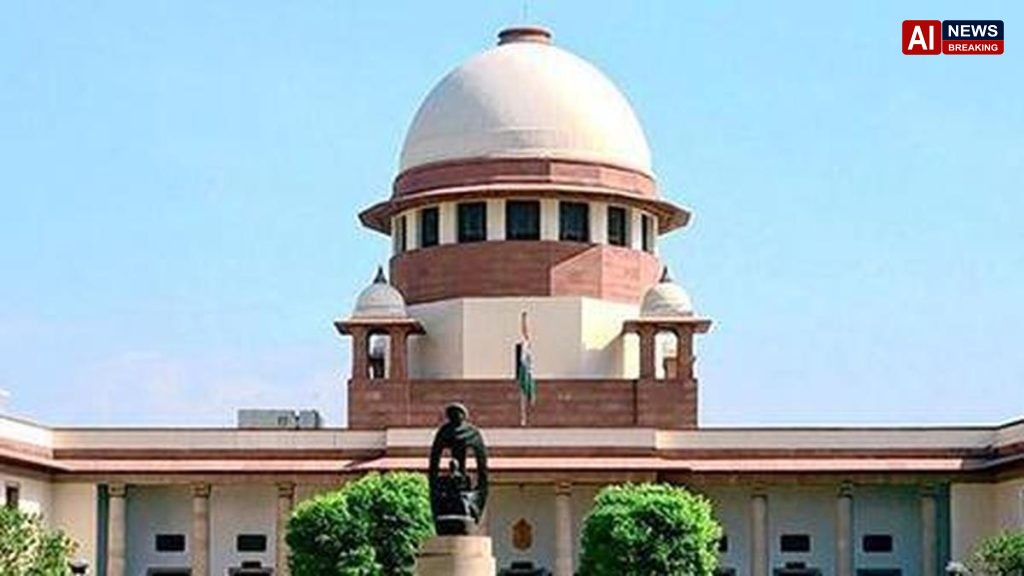
SC mandates judicial oversight to check re-arrest abuse - AI News Breaking
mandates judicial oversight check:
SC mandates judicial oversight to check re‑arrest abuse The Supreme Court’s recent ruling on police powers marks a pivotal shift in the balance between law‑enforcement authority and individual liberties. In a detailed judgment, the justices affirmed that any re‑arrest of a suspect must first obtain the permission of a magistrate, with police officers required to submit a written application outlining the specific grounds for the renewed detention. This procedural safeguard aims to curb the growing concern over arbitrary re‑arrests, which critics say have been used to pressure suspects into confessions or to prolong pre‑trial detention without sufficient cause..
The court’s decision emerged from a series of high‑profile cases where defendants alleged that police had repeatedly detained them after release, often on tenuous or undisclosed allegations. In those instances, the lack of transparent justification raised questions about potential abuse of power and the erosion of due‑process guarantees. By mandating magistrate approval, the Supreme Court seeks to introduce a check that forces law‑enforcement agencies to articulate and substantiate the necessity of each re‑arrest, thereby fostering accountability..
Under the new directive, police officers must file an application with the magistrate within 24 hours of the intended re‑arrest, providing a concise statement of the factual basis for the action. The magistrate is then required to review the material, assess whether the grounds satisfy legal thresholds, and either grant or deny the request. The ruling further stipulates that the magistrate’s decision, along with the police’s reasons, must be recorded in a formal report that becomes part of the case file, ensuring a clear audit trail..
Legal scholars have welcomed the ruling as a reinforcement of constitutional safeguards, noting that it aligns domestic practice with international human‑rights standards. The United Nations’ guidelines on arrest and detention stress the importance of judicial oversight to prevent arbitrary deprivation of liberty. By embedding this principle into national law, the Supreme Court has signalled its commitment to upholding both the rule of law and the rights of the accused, even as it acknowledges the operational challenges faced by police forces..
Police representatives, however, have expressed concerns about the potential impact on investigative efficiency. In statements to the press, senior officers argued that the requirement could delay timely action in cases where suspects pose an ongoing threat or where evidence is at risk of being tampered with. They warned that the added procedural step might hinder rapid response capabilities, especially in complex investigations involving organized crime or terrorism..
The police union has called for clear guidelines to streamline the application process and avoid unnecessary bureaucratic bottlenecks. The government’s justice ministry has indicated its intention to draft implementing regulations within the next three months. These regulations will detail the format of the police application, the evidentiary standards required for magistrate approval, and the timelines for each stage of the process..
Officials stress that the aim is not to cripple police work but to embed a transparent mechanism that respects both public safety and civil liberties. A draft will be circulated for public consultation, allowing civil‑society groups, legal experts, and law‑enforcement agencies to contribute their perspectives. Human‑rights organisations have praised the court’s approach, calling it a “landmark step” toward curbing a pattern of re‑arrest practices that have, in the past, been described as intimidation tactics..
They argue that recorded reasons will enable better monitoring by oversight bodies and provide concrete evidence for any future challenges in court. Advocacy groups also plan to use the new reporting requirements to compile data on re‑arrest frequency, seeking to identify any systemic biases that may persist across different regions or demographic groups. In the immediate aftermath of the judgment, several lower courts have begun to apply the new protocol in ongoing cases..
One magistrate in a coastal district reported that a police request for a re‑arrest was denied due to insufficient justification, prompting the officers to reassess their evidence and ultimately release the suspect. Such early instances illustrate how the oversight mechanism can function in practice, potentially averting unnecessary detention while still allowing legitimate police action when warranted. The ruling also carries implications for the broader criminal‑justice reform agenda that the current administration has pledged to advance..
By tightening procedural safeguards, the Supreme Court reinforces the government’s stated goal of enhancing fairness and transparency in the judicial system. Critics of the administration’s reform efforts had previously accused it of favoring law‑enforcement expansion without adequate checks. This judicial intervention may therefore serve as a catalyst for further legislative initiatives aimed at balancing security imperatives with fundamental rights..
Academics note that the decision could set a precedent for other procedural reforms, such as the introduction of video recording for interrogations or stricter standards for bail. The principle of requiring judicial endorsement before depriving liberty is a cornerstone of many democratic legal systems, and its reinforcement in this context may encourage a ripple effect across related areas of criminal procedure. Comparative studies suggest that jurisdictions with robust oversight experience lower rates of wrongful detention, a trend that could become evident in domestic statistics over the coming years..
Public reaction to the news has been mixed, reflecting divergent priorities among citizens. While many urban dwellers expressed relief that their freedoms are being better protected, some rural communities voiced anxiety that the new requirement might impede the police’s ability to respond swiftly to local crimes. Social media commentary has highlighted personal stories of individuals who felt victimised by repeated arrests, bolstering support for the court’s safeguard..
Meanwhile, law‑enforcement forums have mobilised to discuss best practices for complying with the magistrate‑approval system without compromising investigative integrity..
The Supreme Court ruled that police must obtain magistrate approval before re‑arresting a suspect, requiring a written application and a 24‑hour review to curb arbitrary detentions. While human‑rights groups hail the move as a major safeguard for liberty, police warn it could slow investigations and seek clearer guidelines.
By forcing magistrates to weigh each re‑arrest, the court has turned an old “check‑the‑law” loophole into a real accountability tool that may finally curb the fear‑based tactics that once turned suspects into “soft” evidence. Yet, if the new paperwork dr