A Corruption Scandal Is Reshaping Brazil’s Presidential Election
  US citizen injured in Illinois after ICE agents mistook him for fugitive, tried to arrest him
  At 10 years old, Smithsonian’s Black museum is undaunted amid pressure from Trump administration
  Beleaguered at Home, a Bellicose Netanyahu Heads to the U.N.
  Family to release cellphone report in Nolan Wells case
 US Sets September 23 Deadline to Ground Iranian Airlines Worldwide Bessent Warns Supporters Face Dollar-System Exclusion
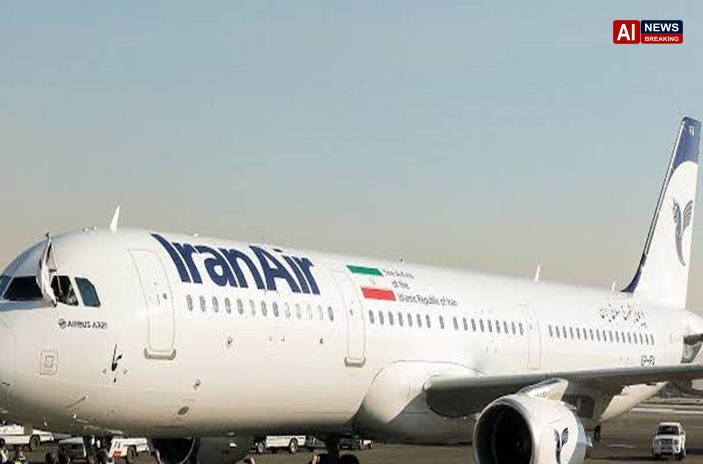
The United States is set to intensify pressure on Iran’s aviation sector, with Treasury Secretary Scott Bessent warning that Iranian airlines could be shut down worldwide from September 23. Foreign airports, fuel suppliers and ticketing companies that continue supporting sanctioned carriers could face secondary sanctions, including exclusion from the US dollar financial system.
sets september deadline ground:
The United States is moving to effectively isolate Iran’s commercial aviation sector from international operations from September 23, Treasury Secretary Scott Bessent said. Foreign airports, fuel suppliers, ticketing companies and other service providers that continue supporting sanctioned Iranian carriers could face secondary sanctions and loss of access to the US dollar financial system.
The announcement follows a September 8 US Treasury action targeting the remaining Iranian airlines and foreign entities involved in supporting Iran’s aviation network.
US sets September 23 deadline for Iranian airlines
The United States has announced a major escalation of its sanctions campaign against Iran, with Treasury Secretary Scott Bessent saying all Iranian airlines are expected to be effectively shut out of international operations from September 23.
Speaking to CNBC on September 21, Bessent said, “On September 23rd, all the Iranian airlines will be shut down around the world.” His comments indicate that Washington’s strategy is not limited to blocking Iranian airlines directly. Instead, the United States is seeking to make international aviation companies and airports reluctant to provide the services required for Iranian carriers to operate abroad.
The measure could affect a wide network of businesses, including airports, fuel suppliers, ground-service companies, ticketing agencies and other aviation-service providers. The threat of secondary sanctions means that foreign companies could face consequences even when they are not based in the United States.
The central pressure point is access to the US financial system.
Bessent warned that companies providing services to Iranian aircraft could risk being excluded from the dollar-based financial system. “If they land, you cannot provide them with fuel, you cannot provide them with landing services, you cannot sell them tickets, or you will be knocked out of the dollar system,” he said, according to reports of his CNBC interview.
What the US sanctions actually mean
The September 23 deadline should be understood primarily as an enforcement deadline rather than the physical disappearance of Iranian aircraft from every airport worldwide.
Iranian airlines can continue to possess aircraft and conduct domestic operations inside Iran, but international operations depend on access to foreign airports and a large network of supporting services.
An international flight requires considerably more than permission to land. Airlines need fuel, ground handling, maintenance support, airport services, passenger processing, ticket sales and financial transactions.
Washington’s strategy is to pressure the companies providing those services.
If foreign operators conclude that supporting an Iranian carrier could jeopardize their access to US financial markets, they may decide that continuing those relationships is commercially too risky.
That could make international operations increasingly difficult even where a particular country has not independently banned Iranian airlines.
This is the significance of Bessent’s warning about the “dollar system.”
The US dollar remains deeply embedded in global trade and international finance. A threat to restrict a company from the US financial system can therefore have implications well beyond transactions directly involving the United States.
Treasury had already targeted 27 Iranian airlines
The September 23 warning comes shortly after a sweeping Treasury Department action announced on September 8.
The US Treasury’s Office of Foreign Assets Control, or OFAC, said it had sanctioned 36 targets connected to Iran’s aviation sector. The action included 27 Iranian airlines, along with foreign intermediaries and companies accused by Washington of supporting Iran’s aviation network.
Among the airlines listed by Treasury were Iran Air Tour, Iran Aseman Airlines, Qeshm Air, Kish Airlines, Sepehran Airlines, Varesh Airlines, Zagros Airlines and several other Iranian carriers.
The Treasury said the measures were intended to target networks involved in aircraft transfers, cargo services, sales-agent support and procurement of US-origin aircraft and aviation technology.
Washington has also focused on Mahan Air, one of Iran’s most prominent private airlines.
According to the Treasury, Mahan Air has previously been designated under US counterterrorism authorities. The department alleges that the airline has provided material and logistical support to Iran’s Islamic Revolutionary Guard Corps-Quds Force.
Iran has long faced restrictions on obtaining modern commercial aircraft and aviation technology because of US sanctions.
The latest measures extend that pressure from individual airlines toward the broader ecosystem required to keep Iranian aviation connected to international markets.
Why secondary sanctions matter
Secondary sanctions are particularly significant because they extend the reach of US sanctions beyond American companies.
A US company generally has to comply with US sanctions rules. But secondary sanctions can create a separate risk for foreign businesses that continue certain transactions with sanctioned entities.
In the case of Iranian aviation, the threat is aimed at companies that might otherwise continue servicing Iranian carriers because they are operating outside US jurisdiction.
The message from Washington is effectively that companies may have to choose between continuing business with sanctioned Iranian airlines and maintaining access to the US financial system.
That creates a powerful commercial incentive for foreign companies to reduce or terminate their relationships with Iranian carriers.
Bessent’s warning specifically identified three areas: fuel, landing services and ticket sales.
The implications could extend further because airlines depend on interconnected suppliers and financial institutions.
Airports become a key pressure point
Airports could become one of the most important battlegrounds in the new sanctions campaign.
An Iranian aircraft arriving at a foreign airport needs access to airport infrastructure and services. If an airport or service provider believes that supporting the flight could expose it to US sanctions, it may refuse to provide those services.
Fuel is particularly important.
Without aviation fuel, an international carrier cannot maintain normal flight operations. Similarly, landing and ground-handling services are fundamental to commercial aviation.
Ticket sales also matter because airlines depend on travel agencies, reservation systems and payment networks to generate international passenger revenue.
By targeting these supporting functions, Washington is attempting to create an indirect blockade of Iranian commercial aviation.
This approach could be more consequential than simply adding individual Iranian airlines to an existing sanctions list.
The dollar system is Washington’s strongest financial lever
The most significant part of Bessent’s warning is arguably the reference to the US dollar system.
International banks and corporations routinely use dollar-denominated transactions even when neither party is American.
Access to dollar clearing and the wider US financial system is therefore an important component of global commerce.
Treasury’s September 8 announcement warned that entities supporting Iran’s aviation sector could face consequences and said the broader sanctions campaign was intended to isolate Iran from the global financial system.
For an international company, losing access to the US financial system could create substantial operational difficulties.
That is why secondary sanctions can influence corporate behavior even in countries that do not share Washington’s broader foreign-policy objectives.
China enters the picture
Bessent’s comments also highlighted the importance of China.
According to Reuters reporting, Bessent said Chinese financial authorities had been engaged in discussions concerning compliance with US sanctions against Iran. He specifically referred to discussions involving People’s Bank of China Governor Pan Gongsheng.
China is particularly important because it maintains substantial economic relations with Iran and has historically been a major destination for Iranian energy exports.
The US Treasury secretary said Washington had been conducting what he described as quiet discussions with other countries about enforcement.
The degree to which foreign governments and businesses comply with Washington’s latest measures will therefore be critical to determining their practical impact.
The United States can impose sanctions on entities that fall within its jurisdiction, but international implementation ultimately depends on the decisions of foreign governments, banks, airports, airlines and commercial companies.
Iran’s aviation sector has operated under sanctions for years
Iran’s aviation industry has already spent years operating under severe restrictions.
US sanctions have limited Iranian airlines’ access to aircraft, spare parts, maintenance services and aviation technology.
The latest measures therefore do not represent the beginning of restrictions on Iranian aviation. Rather, they represent an attempt to intensify and broaden existing restrictions.
The September 8 Treasury action specifically suspended several aviation-related authorizations, including authorizations concerning overflights and certain operations involving US-origin or US-controlled commercial aircraft. Treasury said aviation-safety-related requests would be considered individually.
This distinction is important because sanctions regimes frequently contain specific exemptions, licenses or case-by-case authorizations.
Consequently, the phrase “shutdown” does not necessarily mean that every Iranian aircraft will physically be prohibited from entering every foreign airspace immediately after September 23.
Instead, the immediate objective is to make normal international commercial operations increasingly difficult by cutting off the services and financial relationships on which those operations depend.
Mahan Air and international connections
Mahan Air has been one of the most visible Iranian carriers affected by the sanctions environment.
Recent developments demonstrate how sanctions pressure can affect individual international routes.
According to reports, Mahan Air suspended flights to Turkey from September 21 after Turkish aviation authorities ordered the carrier to halt services amid concerns about exposure to US sanctions.
Such developments illustrate the mechanism behind Washington’s strategy.
A route does not necessarily have to be directly prohibited by the US government for it to become commercially unsustainable.
If airports, regulators, banks, fuel companies or other suppliers withdraw cooperation because of sanctions risk, an airline can lose the ability to operate the route.
What could happen after September 23?
Several outcomes are possible.
First, Iranian airlines could lose or reduce international routes as foreign airports and service providers reassess their exposure to US sanctions.
Second, airlines could face increasing difficulties obtaining fuel and ground services outside Iran.
Third, ticket sales and financial transactions involving Iranian carriers could become more complicated.
Fourth, foreign aviation companies and intermediaries could become more cautious about entering into new relationships with Iranian airlines.
Finally, Iran could become increasingly dependent on a smaller group of countries and companies willing to continue aviation-related cooperation despite US pressure.
The scale of the impact will depend heavily on how broadly foreign governments and private-sector companies implement the US warnings.
Potential impact on Iranian passengers
The consequences could extend beyond airlines themselves.
Iranian citizens who depend on international air travel could face fewer routes, higher costs and more complicated connections.
Students, business travelers, medical patients, tourists and families traveling internationally could all be affected if airlines reduce services.
Iran could also face difficulties maintaining connections with countries that previously served as regional aviation hubs.
However, the precise passenger impact will depend on how individual governments respond and whether alternative carriers continue providing connections to and from Iran.
Broader economic consequences
Aviation is closely connected to the wider economy.
International air links facilitate tourism, business travel, cargo transportation and trade.
If Iranian carriers lose international connectivity, the effects could therefore extend beyond passenger aviation.
Cargo operators, logistics companies and businesses dependent on rapid international transportation could face additional costs or delays.
At the same time, the impact may be uneven because alternative foreign airlines could potentially continue operating routes involving Iran where legally and commercially feasible.
The latest US policy is therefore likely to produce a restructuring of Iran’s international aviation connections rather than necessarily an immediate halt to every form of air transportation.
Washington’s broader pressure campaign against Tehran
The aviation measures are part of a much larger US sanctions campaign.
The Treasury Department has described its broader initiative as Operation Economic Outcast, saying the objective is to target financial networks and economic channels that support the Iranian government.
Treasury has said the campaign is designed to target sources of Iranian revenue, sanctions-evasion networks and foreign facilitators.
Aviation is one component of that strategy.
Other parts of the campaign have focused on areas such as energy, shipping, financial transactions and procurement networks.
The September 23 deadline therefore represents another stage in Washington’s effort to increase the economic cost of maintaining international relationships with Iran.
Why the announcement matters globally
The significance of the announcement goes beyond Iran’s aviation industry.
The United States is demonstrating how access to its financial infrastructure can be used as a tool of foreign-policy enforcement.
The dollar system gives Washington considerable leverage because companies around the world rely on dollar transactions and US-linked financial institutions.
For governments and corporations, the question becomes one of risk management: whether maintaining commercial ties with sanctioned Iranian entities is worth the potential consequences of losing access to the US financial system.
That calculation can influence behavior even when a company has no direct connection to US foreign policy.
What to watch next
Several developments will determine how the September 23 deadline unfolds.
First, international airports will reveal whether they continue accepting Iranian carriers.
Second, fuel and ground-service companies will determine whether they are willing to support Iranian aircraft.
Third, foreign governments will clarify whether they intend to comply with or challenge Washington’s secondary-sanctions pressure.
Fourth, Iranian airlines may announce route suspensions or changes.
Fifth, the United States could announce additional designations against companies accused of facilitating Iranian aviation operations.
Sixth, China’s response will be particularly significant given its financial and economic relationship with Iran.
The next several days could therefore provide an early indication of how effectively the US can extend its sanctions regime through foreign commercial networks.
A financial squeeze with aviation at its center
The September 23 deadline illustrates a broader evolution in sanctions policy.
Rather than focusing exclusively on the sanctioned country, Washington is increasingly targeting the networks that allow sanctioned entities to continue operating internationally.
In the aviation sector, those networks include airports, fuel suppliers, maintenance providers, ticketing companies, financial institutions and intermediaries.
The threat of losing access to the US dollar system is designed to make participation in those networks significantly more costly.
For Iran, the immediate challenge is maintaining international air connectivity.
For foreign companies, the challenge is balancing commercial relationships with Iran against the potential consequences of US sanctions.
For governments, the issue is more strategic: whether to follow Washington’s sanctions regime, seek exemptions, or maintain economic links with Tehran despite the risk.
AI Insight
The latest US move against Iranian airlines represents more than another addition to an already extensive sanctions regime. Its importance lies in the way Washington is attempting to use financial connectivity as leverage over physical connectivity. By threatening airports, fuel suppliers and other foreign service providers with exclusion from the dollar system, the United States can potentially influence the behavior of companies far beyond its borders. The practical effectiveness of the policy will depend on how extensively foreign governments and businesses comply, particularly major economic partners of Iran. For Iran, the immediate risk is greater isolation of its civil aviation network, while for international companies the issue becomes one of sanctions exposure, financial access and operational risk. The September 23 deadline should therefore be watched not simply as an aviation restriction, but as another test of the reach of the US dollar-centered global financial system.