 Families Urge Trump to Press Xi to Free Americans Detained in China
  After Jamui, another minor girl molested in Bihar’s Samastipur
  Australia Investigates OpenAI Hack on Public Health Care Site
  Tech leaders to UN: For the sake of humanity, please control the AI technology we created
  Gulf nations have found ways to keep oil flowing
 Gulf nations have found ways to keep oil flowing
**
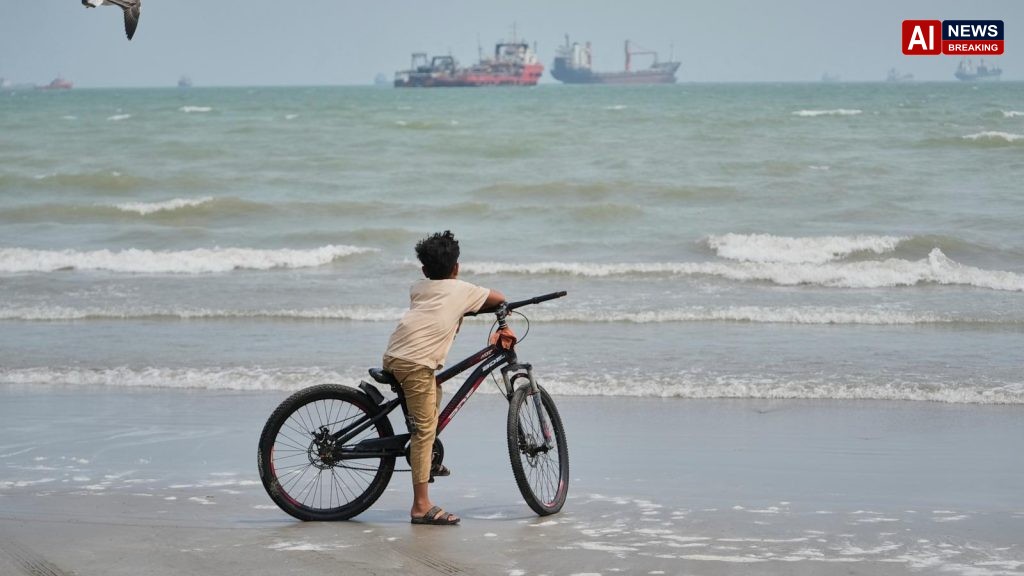
Gulf nations have found ways to keep oil flowing - AI News Breaking
The prospect of a shutdown of the Strait of Hormuz at the outset of the Iran‑Israel conflict sparked a wave of anxiety across global markets, with analysts warning that a choke‑point that handles roughly a fifth of the world’s petroleum shipments could trigger a dramatic surge in oil prices and threaten the stability of the global economy. In the weeks that followed, however, the oil‑producing states of the Gulf Cooperation Council (GCC) moved swiftly to mitigate the risk, deploying a combination of diplomatic outreach, logistical rerouting and strategic stock‑piling that has, so far, kept crude flowing despite the heightened geopolitical tension.Initial reactions to Iran’s threats to block the narrow waterway were swift and severe. Futures contracts for Brent crude spiked to over $120 a barrel in early June, while the International Energy Agency warned of a “potentially unprecedented supply shock”..
Governments and shipping firms scrambled to chart alternative routes, most notably around the Cape of Good Hope, a detour that adds roughly 10,000 kilometres to a voyage and inflates costs by up to 30 percent. Yet the longer journey also raises concerns about increased emissions and the capacity of larger vessels to navigate the South Atlantic and Indian Ocean corridors without further bottlenecks.In response, the United Arab Emirates, Saudi Arabia and Qatar each announced a series of measures designed to reassure markets and preserve the flow of oil. Saudi Aramco, the state‑run oil champion, pledged to increase its output by 500,000 barrels per day (bpd) over the next six months, drawing on spare capacity built up after the pandemic‑induced demand slump..
The commitment was underpinned by a rapid acceleration of maintenance programmes at key offshore fields, allowing the kingdom to bring additional wells online without compromising safety standards.Concurrently, the United Arab Emirates leveraged its strategic location and advanced port infrastructure to act as a transshipment hub. The Jebel Ali port in Dubai, already one of the world’s busiest for oil products, expanded its berth capacity by 15 percent and introduced a streamlined customs clearance process for tankers rerouted from the Gulf. This move not only reduced turnaround times but also provided an alternative loading point for crude destined for Europe and Asia, easing the pressure on vessels that might otherwise have been forced to linger in the Arabian Sea awaiting clearance.Qatar, traditionally a natural‑gas‑focused economy, also contributed by augmenting its crude oil exports..
The state‑owned Qatar Petroleum announced a temporary lift of export quotas on its North Field, allowing an additional 200,000 bpd to be shipped through the Persian Gulf. While Qatar’s oil production accounts for a modest share of total GCC output, the incremental supply helped to offset the anticipated shortfall from any potential Hormuz disruption and reinforced the narrative that the region remained committed to market stability.Beyond sheer volume, the GCC nations have employed diplomatic channels to deter a full‑scale closure. Saudi Arabia and the United Arab Emirates hosted a series of high‑level meetings with key stakeholders, including representatives from the United Nations, the United States and the European Union, emphasizing the collective economic fallout that would ensue from a prolonged blockage..
These talks, conducted in both Doha and Abu Dhabi, culminated in a joint statement urging all parties to respect the principle of freedom of navigation and warning that any interference with maritime traffic would be met with coordinated international response.The United States, for its part, increased naval patrols in the Gulf, deploying additional carrier strike groups and destroyers to monitor traffic and provide a visible deterrent against any hostile action. While the presence of US warships is not a new feature of the region, the intensity and visibility of the deployment this time have been amplified, signaling a clear message to Tehran and its allies. Moreover, the International Maritime Organization (IMO) issued an advisory reminding ship operators of the legal obligations under the United Nations Convention on the Law of the Sea (UNCLOS) to ensure safe passage through straits used for international navigation.On the commercial side, major oil companies have adapted their logistical strategies to the evolving risk landscape..
Several multinational firms have entered into short‑term agreements with GCC ports to secure dedicated berthing slots, while others have contracted secondary tankers to act as floating storage units, effectively creating a buffer of oil that can be released into the market should a disruption occur. These arrangements have been facilitated by the GCC’s relatively flexible regulatory environment, which allows for rapid approvals and adjustments to shipping schedules.The combined effect of these measures has been a gradual stabilization of oil prices. By mid‑July, Brent crude had retreated to around $85 a barrel, a level that, while still above pre‑conflict norms, reflected market confidence that alternative supply routes and increased output were sufficient to absorb any short‑term shock..
Analysts now point to the resilience of the GCC’s oil infrastructure as a key factor in preventing a price runaway that could have reverberated through everything from airline tickets to grocery bills worldwide.Nevertheless, uncertainties remain. The Strait of Hormuz is still a geopolitical flashpoint, and any escalation could quickly overwhelm the contingency plans now in place. Experts caution that while the current response demonstrates the GCC’s capacity to adapt, the long‑term solution will require a broader diplomatic settlement that addresses the underlying tensions between Iran and its regional rivals..
In the meantime, the world’s eyes will continue to follow the narrow waterway, while the Gulf nations keep their oil flowing through a combination of increased production, strategic rerouting and concerted diplomatic effort..
Updated: September 24, 2026
Global markets steadied after GCC nations rapidly boosted production, expanded port capacity and secured alternative routes to offset the threat of a Strait of Hormuz closure, pulling Brent crude back toward $85 a barrel. Analysts credit the coordinated diplomatic, logistical and strategic stock‑piling effort for averting a wider oil shock, though the underlying geopolitical risk remains.
The swift GCC counter‑offensive reveals how oil‑rich autocracies can translate geopolitical leverage into market stability, turning a potential supply shock into a bargaining chip that forces diplomatic concessions on Tehran. Yet the episode underscores a precarious reliance on ad‑hoc militarised logistics, hinting that any future chokepoint disruption could push the global economy into a supply‑risk loop far more volatile than price spikes alone.