 Giggle for God: America’s witty church signs aim to inspire, attract passersby
  Tennessee is set to execute a woman for the first time in 200 years
  Trump transports Venezuelan gold to U.S., refiners refuse to process it.
  Congress stages protest in Kalaburagi demanding CEC Gyanesh Kumar’s resignation
  Camp Mystic seeks to sell the property in bankruptcy as legal problems grow
 Kerala HC grants pre-arrest bail to YouTuber
**
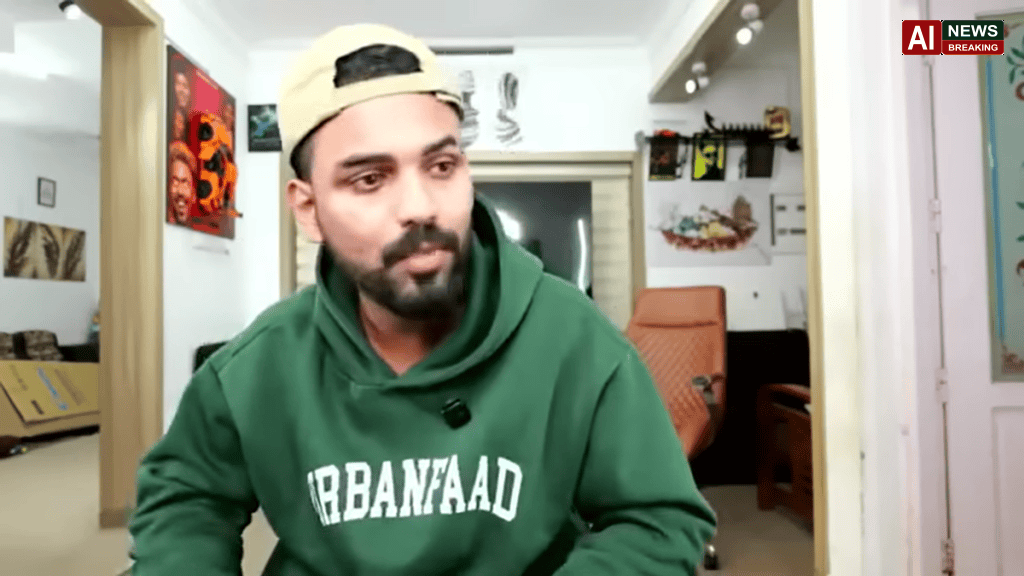
Kerala HC grants pre-arrest bail to YouTuber - AI News Breaking
kerala grants prearrest bail:
The Kerala High Court on Thursday granted pre‑arrest bail to a well‑known YouTube content creator, ruling that custodial interrogation was unnecessary in the case and that the accused could be released on a set of conditions designed to safeguard the investigation. The decision, delivered by a bench headed by Justice P. Shyam Prasad, has sparked a debate about the balance between freedom of expression on digital platforms and the state’s power to intervene when alleged offences are alleged to have been committed online..
The ruling also underscores the judiciary’s willingness to scrutinise the procedural propriety of police actions in the rapidly evolving sphere of internet‑based content creation.The petitioner, identified only as “Mr. K”, is a 29‑year‑old resident of Kochi who runs a YouTube channel with over two million subscribers. His videos, which blend social commentary with satirical takes on current affairs, have attracted a substantial following as well as occasional controversy..
In late March, the Kochi Police filed a case under sections of the Indian Penal Code and the Information Technology Act, alleging that certain videos posted between January and February contained defamatory statements and incited communal disharmony. The complaint was lodged by a local political activist who claimed that the YouTuber’s remarks had led to “unrest” in his constituency.Following the filing of the FIR, the police sought to arrest Mr. K, invoking the standard provisions that allow for preventive detention in cases where there is a perceived risk of tampering with evidence or influencing witnesses..
The police submitted a request for custody, arguing that the nature of the alleged offences required immediate interrogation to prevent the dissemination of further “harmful” content. The petitioner, however, challenged the move, contending that his statements were protected under the Constitution’s guarantee of free speech and that the police had failed to demonstrate a concrete likelihood of obstruction.In its order, the High Court observed that while the state has a legitimate interest in preventing the spread of incendiary material, the mere possibility of further online posting does not, in itself, justify the deprivation of liberty. Justice Prasad noted that the investigative agencies had not provided any substantive evidence indicating that the YouTuber possessed additional unpublished material or that he was in a position to influence witnesses..
Consequently, the court concluded that the requirement of custodial interrogation was “not demonstrably necessary” and that the petitioner’s rights could be adequately protected through alternative measures.The bail order, however, is not unconditional. The court imposed a series of stipulations aimed at ensuring cooperation with the ongoing probe. K is required to appear before the investigating officer every week, submit a written report of any new content he intends to publish during that period, and refrain from posting material that directly references the complainant or the alleged incidents..
In addition, he must surrender his passport for the duration of the investigation and refrain from leaving the state without prior permission. Failure to comply with any of these conditions would result in the immediate revocation of bail and could expose the petitioner to arrest.Legal analysts have pointed out that the court’s approach reflects a growing trend in Indian jurisprudence to calibrate bail decisions with the specific technological context of the alleged offence. “The judiciary is increasingly recognising that the internet changes the dynamics of both crime and investigation,” said Advocate Meera Nair, who specialises in cyber‑law..
“In the past, the default was to detain suspects to prevent them from destroying evidence. Today, digital footprints are often more resilient, and the focus is shifting to monitoring and regulating content rather than imposing physical custody.”Civil liberties groups have welcomed the decision, viewing it as a reinforcement of the principle that freedom of expression should not be unduly curtailed by law enforcement agencies. The People’s Union for Democratic Rights (PUDR) issued a statement praising the High Court for “affirming that the presumption of innocence extends beyond the courtroom and that digital creators cannot be silenced without compelling justification.” The organisation, however, cautioned that the conditions attached to the bail could still amount to a form of indirect censorship, urging the authorities to ensure that the monitoring mechanisms do not become tools for selective suppression.The state government, for its part, has expressed disappointment with the ruling, arguing that the police’s request for custodial interrogation was rooted in legitimate concerns about public order..
A senior official from the Home Department told reporters that the investigation is ongoing and that the authorities will comply with the court’s conditions while continuing to pursue the case. “We respect the court’s decision,” he added, “but we will not compromise on the need to maintain communal harmony and protect citizens from hate speech.”The case also raises broader questions about how Indian law addresses content that straddles the line between satire and incitement. The Information Technology Act, as amended in 2008, criminalises the transmission of “grossly offensive” material online, but the threshold for what constitutes such material remains contested..
Courts have repeatedly grappled with the tension between safeguarding public sentiment and upholding the democratic right to criticize authority. The Kerala High Court’s nuanced stance—allowing the creator to continue his work under supervision rather than imposing blanket detention—may set a precedent for future disputes involving social media influencers and online journalists.As the legal proceedings move forward, both the petitioner and the complainant are expected to present further evidence before the investigative officer and, eventually, before a trial court. Observers note that the outcome will likely hinge on a detailed forensic analysis of the videos in question, the context in which they were released, and the extent to which they may have contributed to any real‑world disturbances..
Until then, the high‑profile bail order remains a focal point in the ongoing dialogue about the limits of free speech in the digital age, the responsibilities of content creators, and the role of the judiciary in mediating these complex issues..
Updated: September 28, 2026
The High Court’s conditional bail signals a judiciary willing to let digital voices resound—yet it also lays a bureaucratic net that could throttle satire under the guise of public order. Whether this balance will tilt toward protecting free expression or tightening state oversight remains the true test.