 ₹70.17 crore released to 322 farmers who gave land for Guntur Channel extension, says Pemmasani
  Police arrest a California couple in the public shooting death of their son-in-law
  Keralam local body bypolls: UDF retains Ayyappankkavu in Kochi Corporation
  Officials looking into possible new ransom note related to Nancy Guthrie
  Police investigate after toddler pulls out loaded gun at Michigan daycare
 Keralam local body bypolls: UDF retains Ayyappankkavu in Kochi Corporation
**
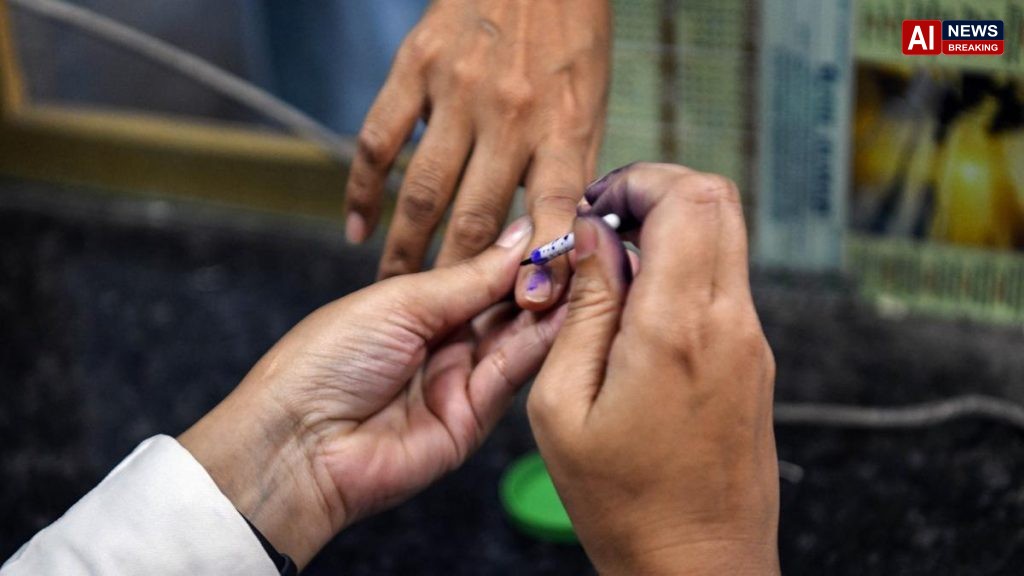
Keralam local body bypolls: UDF retains Ayyappankkavu in Kochi Corporation - AI News Breaking
The Kerala local‑body by‑elections held on 28 March saw the United Democratic Front (UDF) hold onto the Ayyappankavu ward of the Kochi Municipal Corporation, a result that underscores the nuanced political currents shaping the state’s urban governance. Ajith Kumar A.K., the UDF candidate, secured his first electoral triumph by defeating the Communist Party of India (Marxist) contender, P. K. Usman, by a margin of 549 votes..
The relatively narrow victory, in a ward that has historically oscillated between the two major coalitions, reflects both the resilience of the UDF’s grassroots network and the lingering appeal of the Left in the region.Ayyappankavu, situated in the heart of Kochi’s bustling commercial district, comprises a mix of middle‑class families, small‑scale traders, and a growing population of young professionals. The ward’s demographic composition has made it a barometer for urban voter sentiment, with issues such as waste management, road infrastructure, and public transport taking centre stage in recent campaigns. Both parties framed their manifestos around these concerns, promising upgrades to the drainage system, the introduction of additional bus routes, and stricter enforcement of sanitation norms.Ajith Kumar A.K., a 34‑year‑old software engineer turned community activist, entered the race with limited political experience but a strong presence in local civil‑society groups..
He capitalised on his involvement in neighbourhood clean‑up drives and youth mentorship programmes, positioning himself as a pragmatic candidate focused on service delivery rather than partisan rhetoric. In his post‑election remarks, he highlighted the need for “efficient, transparent administration that puts citizens’ daily lives at the forefront,” and pledged to work closely with the corporation’s standing committees to accelerate ongoing projects.P. K. Usman, a veteran CPI(M) functionary and former municipal councillor, relied on the Left’s traditional strongholds within the ward’s older residential pockets..
His campaign stressed the achievements of the previous Left‑led administration, particularly the expansion of public health clinics and the implementation of a waste‑to‑energy pilot scheme. However, analysts note that the Left’s messaging struggled to resonate with newer voters who are increasingly concerned with digital connectivity and modern infrastructure, areas where the UDF’s promise of tech‑enabled civic services found a receptive audience.The voter turnout, recorded at 68.5 per cent, was marginally higher than the average for Kerala’s municipal by‑elections, indicating heightened public interest in the contest. Election officials reported a smooth voting process, with electronic voting machines functioning without significant glitches..
The counting, conducted at the Kochi District Election Office, confirmed Ajith Kumar’s win after a brief interval of scrutiny, as the margin of 549 votes fell well within the acceptable range of variation for such close contests.Political scientists observing the result suggest that the UDF’s hold on Ayyappankavu may signal a subtle shift in urban Kerala, where the electorate is gradually moving beyond traditional ideological alignments towards issue‑based voting. Meera Nair of the Centre for South‑Asian Studies remarked that “the narrowness of the victory underscores a competitive landscape where performance and local relevance are beginning to outweigh historic party loyalties.” She added that the Left’s continued relevance in the ward hinges on its ability to adapt its policy narrative to the aspirations of a younger, more digitally oriented populace.The outcome also carries implications for the upcoming state assembly elections slated for next year. While the UDF’s success in Ayyappankavu is a morale booster, party strategists caution against over‑interpretation..
Senior UDF leader Ramesh Chandran, addressing a press conference in Kochi, described the win as “a testament to diligent ground‑level work” but warned that “the broader contest will be decided by a constellation of factors, including agrarian distress, unemployment, and the state’s response to national policy shifts.” He emphasised that the party must sustain its outreach efforts across both urban and rural constituencies to translate local gains into statewide momentum.Conversely, the CPI(M) has signalled an intention to regroup and refine its approach. In a statement released after the results, party spokesperson S. Vijayakumar acknowledged the defeat, noting that “the margin reflects both the challenges we face and the opportunities to reconnect with the electorate.” He outlined plans for a series of grassroots meetings aimed at reassessing local grievances and strengthening the party’s organizational structure ahead of the next electoral cycle.The by‑election was also marked by a notable presence of independent candidates, though none secured a significant share of the vote. Their participation highlighted a growing appetite among certain voter segments for alternatives outside the entrenched UDF‑LDF dichotomy..
Political commentator Anil Kumar observed that while independents currently lack the organisational capacity to win seats, their emergence could pressure major parties to address niche issues, such as environmental sustainability and gender‑inclusive governance, more robustly.In the aftermath of the poll, the Kochi Corporation’s mayor, Mrs. Leena George, extended congratulations to both candidates, urging them to collaborate for the ward’s development. She reiterated the corporation’s commitment to a “non‑partisan, results‑driven administration” and announced the formation of a joint monitoring committee to oversee the implementation of promised projects in Ayyappankavu..
This gesture of cooperation aligns with Kerala’s broader tradition of coalition governance at the local level, where cross‑party coordination is often essential for delivering public services.As Ajith Kumar A.K. prepares to assume office, the eyes of political observers will be on how effectively he translates his campaign pledges into tangible improvements for residents. The 549‑vote margin, though modest, grants him a mandate that, if fulfilled, could reinforce the UDF’s credibility in urban constituencies..
At the same time, the CPI(M)’s response to this setback will likely influence its strategic positioning in the lead‑up to the state elections, where both alliances will vie to shape Kerala’s political trajectory amid evolving socio‑economic challenges..
UDF’s Ajith Kumar A.K. clinched the Ayyappankavu ward of Kochi Municipal Corporation, edging CPI(M) by 549 votes in a close contest that highlights shifting urban voter priorities. The result, with 68.5% turnout, signals a growing emphasis on service delivery and tech‑enabled governance over traditional party loyalties, while the Left vows to regroup ahead of next year’s assembly elections.
A narrow UDF win in Ayyappankavu signals a shift toward performance‑driven politics, where young voters reward tech‑savvy, service‑oriented promises over party legacy.
If Ajith Kumar delivers on his pledges, the UDF could cement a new urban coalition model that the