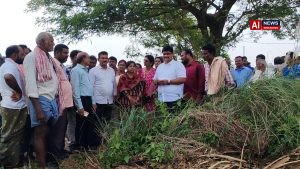
 Government to assess crop damage at mandal level, cover losses outside drought list: Fadnavis
  Israeli settlers block
  LDF wins key wards in Kerala local bypolls.
  Questions surround counterterror probe into US air base after suspects were freed on bail
 Government to assess crop damage at mandal level, cover losses outside drought list: Fadnavis
**
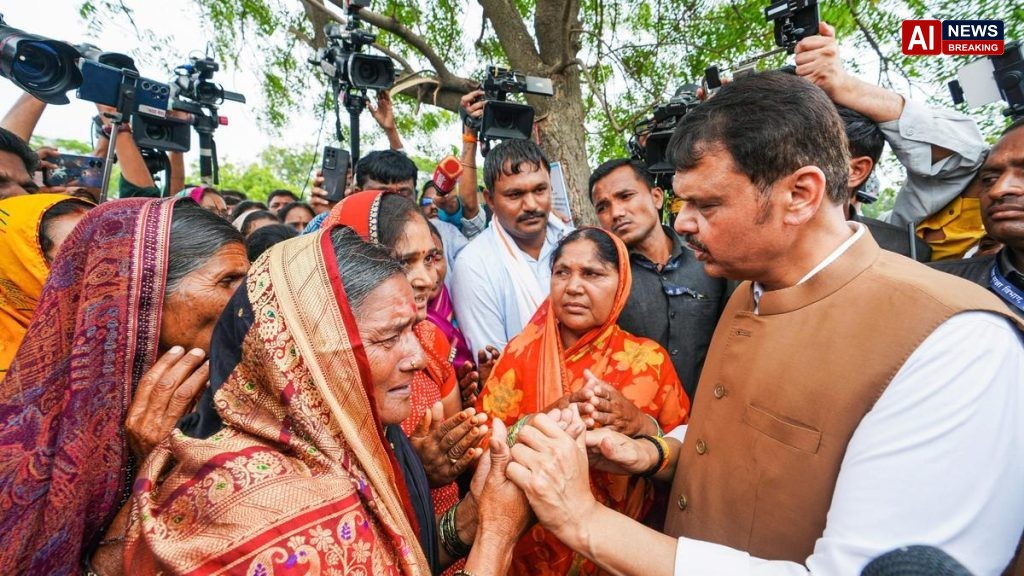
Government to assess crop damage at mandal level, cover losses outside drought list: Fadnavis - AI News Breaking
government assess crop damage:
The Maharashtra government has announced that it will carry out a detailed assessment of crop damage at the mandal level, a move that seeks to broaden the scope of relief beyond the districts already listed as drought‑affected. Chief Minister Devendra Fadnavis, speaking at a press briefing in Mumbai, said the new approach would allow the state to identify losses in areas that have not been formally recognised as drought zones but where farmers are nevertheless suffering significant yield reductions. “Our aim is to ensure that assistance reaches every farmer who needs it, irrespective of whether their taluka appears on the official drought list,” he stated.The decision follows a recent declaration that 265 of the state’s 358 talukas – roughly 74 per cent of Maharashtra – are officially drought‑affected..
The declaration was based on an analysis of rainfall data, groundwater levels and satellite imagery, which indicated that large swathes of the state had received far less precipitation than the historical norm. While the drought designation triggers a range of emergency measures, including free electricity for irrigation and subsidies for water‑saving technologies, the government has faced criticism that the criteria for inclusion are too rigid, leaving many marginal farmers without access to relief.In response, the administration has prepared a two‑stage verification process. The first stage will involve local agricultural officers conducting field surveys at the mandal level – a sub‑district administrative unit – to record the extent of crop loss, the types of crops affected, and the stage of growth at which damage occurred..
These surveys will be supplemented by remote sensing data and reports from farmer cooperatives. Once the data are compiled, a second stage will see a panel of experts from the state’s agriculture department, the University of Agricultural Sciences and the National Bank for Agriculture and Rural Development review the findings and recommend the quantum of financial assistance.Financial assistance under the new scheme will be disbursed through the existing Kisan Credit Card (KCC) system, with the amount varying according to the type of crop and the severity of loss recorded. The government has earmarked an additional ₹2,500 crore for the programme, on top of the ₹13,000 crore already allocated for drought relief this year..
Officials say the funds will be released in tranches, contingent on the completion of the assessment and verification process, to ensure that resources are allocated efficiently and that there is minimal scope for duplication or fraud.Farmers’ organisations have welcomed the initiative but have also urged the authorities to expedite the assessment timeline. The All India Kisan Sabha (AIKS) Maharashtra chapter warned that delays in recognising loss could exacerbate indebtedness among smallholders, many of whom are already struggling with rising input costs and volatile market prices. “We appreciate the intent, but the bureaucracy must move swiftly; otherwise, the relief will arrive too late for those whose crops have already withered,” said AIKS spokesperson Rajesh Patil at a rally in Nagpur.The state’s agriculture department has indicated that the mandal‑level assessment will be coordinated with the district collectors, who will provide logistical support and ensure that survey teams have access to remote villages..
To address concerns about data accuracy, the department plans to use a mobile application that allows field officers to upload geotagged photographs and real‑time crop condition reports, creating a transparent audit trail that can be reviewed by civil society groups and independent auditors.Analysts suggest that the shift to a more granular assessment could set a precedent for other drought‑prone states in India, where the binary classification of districts as either drought‑affected or not often fails to capture the nuanced realities on the ground. Meera Sharma, a senior fellow at the Centre for Rural Development, noted that “by focusing on mandals, Maharashtra is recognising that agricultural distress is not a monolithic phenomenon. It allows for a more targeted response that could improve the efficacy of public spending.”However, the approach also poses challenges..
Conducting comprehensive field surveys across 265 talukas, each containing multiple mandals, will require substantial manpower and coordination. Critics point out that the state’s existing cadre of agricultural officers is already overstretched, and there is a risk that the quality of data could suffer if surveys are rushed. To mitigate this, the government has proposed hiring temporary field staff and engaging NGOs that have a foothold in rural communities to assist with data collection.The move comes at a time when the state is grappling with a broader climate crisis..
Maharashtra has experienced a series of erratic monsoons over the past decade, with both prolonged droughts and intense flooding events disrupting agricultural cycles. The government’s climate adaptation strategy, unveiled last year, emphasises the development of drought‑resistant seed varieties, expansion of micro‑irrigation schemes, and the promotion of crop diversification. The mandal‑level assessment is presented as a complementary tool that will feed into these longer‑term initiatives by providing a clearer picture of which areas need immediate intervention.In concluding the press conference, Chief Minister Fadnavis reiterated the administration’s commitment to safeguarding the livelihoods of Maharashtra’s farming community..
He urged farmers to cooperate with survey teams and assured that the state would “leave no stone unturned” in delivering timely assistance. The government has set a target to complete the first round of assessments within the next six weeks, after which the revised relief package will be announced. The announcement has been met with cautious optimism, as stakeholders await concrete results that could reshape the state’s disaster response framework and potentially serve as a model for other regions facing similar agricultural challenges..
Updated: September 29, 2026
By zooming into mandals, Maharashtra turns a blunt “drought or not” policy into a surgical tool—potentially slashing misallocated aid and speeding relief for those already teetering on the edge of ruin. Yet this finer granularity risks overloading a stretched bureaucracy, turning a noble recal