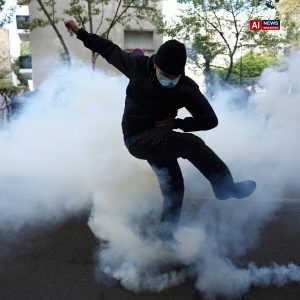
 Air‑traffic controller flies to work at Wellington Airport.
  Flydubai co-pilot ‘attacked pilot with axe in suspected terrorist attack’, UAE says
  Student Protests Rattle France as Police Clashes Bring Blockades and Tear Gas
  Al-Qaida leader’s pic, Syrian mother: What we know on flydubai Omani co-pilot
  FACT FOCUS: What people are alleging in a Cornell University fraternity gang rape case
 Student Protests Rattle France as Police Clashes Bring Blockades and Tear Gas
**
Student Protests Rattle France as Police Clashes Bring Blockades and Tear Gas - AI News Breaking
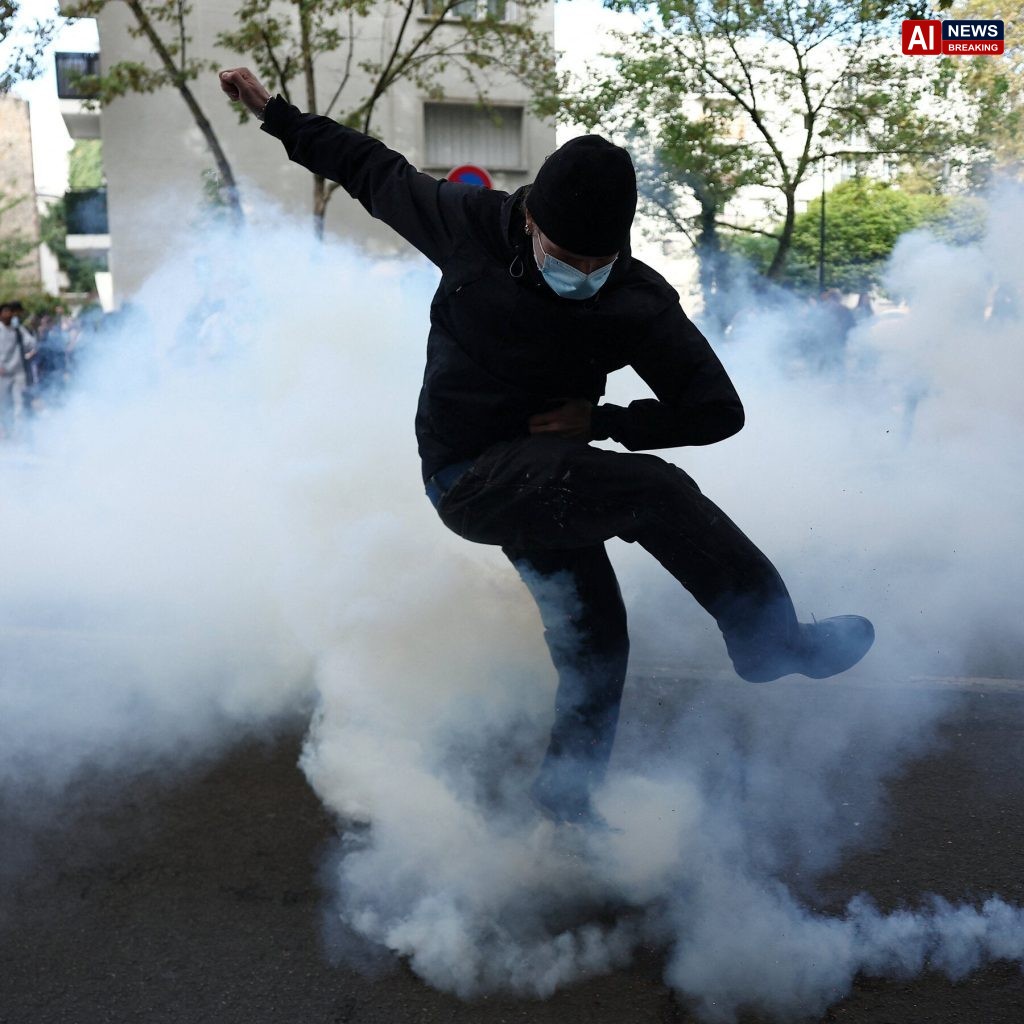
More than a thousand schools across France have been shut down in the latest wave of student‑led demonstrations, as high‑school pupils demand higher educational standards, better resources and a reassessment of the policies that they say have eroded the quality of teaching. The protests, which began in early October, have spread from a handful of local actions in the south to coordinated blockades in major cities such as Paris, Lyon, Marseille and Toulouse. Police interventions have escalated, with officers deploying tear‑gas canisters and making several arrests, prompting criticism from teachers’ unions and civil‑rights groups.The movement originated in the suburbs of Montpellier, where a group of students from several lycées staged a sit‑in to protest the recent cuts to school funding and the growing number of large class sizes..
Within days the demonstration was amplified by social‑media calls for solidarity, and by mid‑week the National Union of Secondary Education (UNEF) announced its support, urging pupils nationwide to “defend the right to a quality education.” By the weekend, more than 200 schools had reported disruptions, with classes either cancelled or forced to run in makeshift settings.In Paris, the protest took a more confrontational turn when a march organized by the high‑school student federation (FSE) was met with a heavy police presence at the Place de la République. Demonstrators erected temporary barricades using overturned trash bins and wooden pallets, blocking the main thoroughfare for several hours. Police responded with water cannons and, after negotiations stalled, deployed tear‑gas grenades to disperse the crowd..
Video footage shared on social platforms showed dozens of students fleeing the scene, some with visible injuries, while officers in riot gear pursued those who remained. The incident sparked a wave of solidarity protests at other university campuses, where students set up their own blockades and staged sit‑ins inside lecture halls.Authorities have justified the use of force by citing concerns over public safety and the need to maintain order. Interior Minister Gérald Darmanin, speaking at a press conference on Tuesday, said the police actions were “proportionate” and “targeted at a minority of individuals who attempted to turn a peaceful demonstration into a violent confrontation.” He added that the ministry was “monitoring the situation closely” and would consider “reasonable measures” to address the underlying grievances, without specifying any concrete policy changes.Teachers’ unions, however, have accused the government of failing to engage constructively with the protesters..
The General Confederation of Labour (CGT) issued a statement condemning the police response as “excessive” and “counter‑productive,” arguing that the heavy-handed tactics only deepened mistrust between young people and the state. “The students are not asking for the overthrow of the Republic; they simply want classrooms that are properly equipped and teachers who are not overburdened,” the statement read. The union called for an immediate cessation of police action at schools and for dialogue to be opened with student representatives and educational authorities.The unrest has also affected transport and commerce..
In Lyon, a convoy of school buses was forced to turn around after a group of students blocked a key access road to the city centre, prompting commuters to seek alternative routes. Retailers in the affected districts reported a dip in foot traffic, with some shop owners posting signs apologising for the inconvenience. The Chamber of Commerce in Marseille warned that prolonged disruptions could have a “significant economic impact” if schools remain closed for more than a few weeks.Public opinion appears divided..
A poll conducted by the Institut Français d’Opinion Publique (IFOP) on Saturday found that 48 % of respondents sympathised with the students’ demands for better educational resources, while 39 % expressed concern over the methods used, particularly the blockades and confrontations with police. The remaining 13 % were undecided. Analysts note that the issue taps into broader discontent among French youth regarding employment prospects and a perceived lack of upward mobility, suggesting that the protests may be a symptom of deeper societal frustrations.Legal experts point out that the French Penal Code allows authorities to impose temporary school closures and to sanction individuals who obstruct public thoroughfares..
However, they caution that the use of force must be proportionate and that any excessive deployment of tear‑gas or other crowd‑control measures could be subject to judicial review. “If the evidence shows that the police response was disproportionate to the threat posed, affected individuals could seek redress through administrative courts,” said Marie‑Claire Legrand, a professor of public law at the University of Strasbourg.In the meantime, student leaders have called for a national day of action next week, urging pupils to return to classrooms en masse while simultaneously organising peaceful demonstrations outside ministry buildings. They have also appealed to parents, asking them to support the cause by refusing to send their children to school if the demands are not met..
The Ministry of Education has responded by issuing a directive urging schools to maintain normal operations and warning that repeated disruptions could lead to disciplinary measures against students and staff alike.As the standoff continues, the balance between maintaining public order and addressing the legitimate concerns of France’s youth remains precarious. The coming days will likely determine whether dialogue can replace confrontation, and whether the government will adjust its educational policies in response to a movement that has already rattled the nation’s schools and sparked a national debate on the future of French education..
Updated: October 3, 2026
Summary: French high‑school pupils have shut down more than a thousand schools nationwide, demanding better resources and smaller class sizes, while police confrontations in cities such as Paris have escalated into tear‑gas attacks and arrests. Teachers’ unions and civil‑rights groups condemn the force used, urging dialogue as public opinion remains split over the students’ tactics.
The wave of school closures shows French youth turning education into a bargaining chip, forcing the state to confront a legitimacy crisis that goes beyond budgets to the very promise of social mobility.
If the government continues to prioritize order over dialogue, the protests could evolve from isolated blockades into a broader youth revolt against a system