 Chief Minister directs officials to make Mysuru flex-free during Dasara
  The Nvidia Shield TV Is 7 Years Old. It Just Got a $100 Price Hike
  MLA sits in driver seat during bus launch ceremony.
  Airlines oppose Mumbai airport slot cut.
 Airlines oppose Mumbai airport slot cut.
**
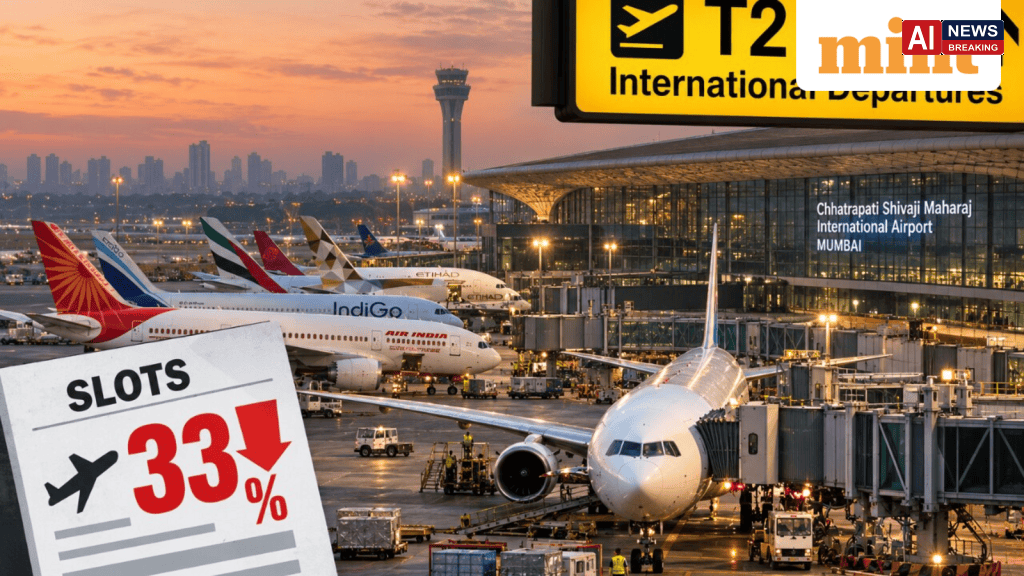
Airlines reject 33% cut in international slots at Mumbai airport T2 from Oct 25: Report - AI News Breaking
Airlines have pushed back against a proposal to slash international departure slots at Mumbai’s Terminal 2 by a third, a move that the Mumbai International Airport Limited (MIAL) says is necessary to facilitate the redevelopment of the adjoining Terminal 1. The plan, which would see 265 of the 770 weekly slots at T2 temporarily withdrawn from 25 October, has triggered a coordinated response from carriers ranging from legacy full‑service airlines to low‑cost operators, all of whom have appealed to the Ministry of Civil Aviation for a reconsideration of the schedule changes. The dispute highlights the fragile balance between airport expansion projects and the commercial interests of airlines that rely on Mumbai’s status as India’s busiest gateway for international traffic.MIAL’s proposal is rooted in a broader infrastructure programme that seeks to modernise the ageing Terminal 1 complex, which currently handles a mix of domestic and regional flights..
According to the airport operator, the redevelopment will involve extensive construction work, including the erection of new passenger handling facilities, baggage systems and access roads, all of which will encroach on airside movement corridors adjacent to the active runways. By withdrawing a portion of the T2 slots, MIAL argues that it can free up airspace and ground handling capacity, thereby minimising the risk of delays and safety incidents during the construction phase.The airlines’ opposition centres on the economic impact of the proposed cut. International carriers such as Air India, British Airways, Emirates and Qatar Airways have warned that the loss of roughly 33 percent of their allotted take‑off windows could force them to reduce frequencies on lucrative routes to Europe, the Middle East and North America, potentially ceding market share to competitors operating from other Indian hubs such as Delhi or Bengaluru..
Low‑cost carriers, including IndiGo and SpiceJet, have also flagged the risk of overcrowding in the remaining slots, which could lead to longer turnaround times, increased fuel burn and a deterioration in on‑time performance metrics that are closely watched by both passengers and regulators.In a joint statement released on 22 October, a coalition of airlines submitted a detailed memorandum to the Ministry of Civil Aviation, urging the government to intervene and seek an alternative solution that would preserve the full complement of international slots while still allowing construction to proceed. The memorandum cited data from the International Air Transport Association (IATA) indicating that Mumbai accounts for over 60 percent of India’s international passenger traffic and that any sustained reduction in capacity could have a ripple effect on the nation’s tourism and trade sectors. The airlines also requested a transparent timetable for the redevelopment works, arguing that a clearer picture of the construction phases would enable better coordination of flight schedules.The Ministry, which has traditionally played a mediating role in slot allocations, has so far refrained from taking a definitive stance..
A senior official, speaking on condition of anonymity, acknowledged the complexity of the issue, noting that “the airport’s infrastructural upgrades are essential for long‑term growth, but we also recognise the immediate operational concerns raised by the carriers.” The official added that the ministry would convene a meeting with MIAL and the airline representatives within the next week to explore possible mitigation measures, such as staggered slot reductions, temporary use of alternative airports, or the introduction of night‑time operations to spread demand more evenly across the day.Industry analysts suggest that the outcome of the talks could set a precedent for how Indian airports manage capacity constraints during major redevelopment projects. “Mumbai is a case study in the clash between rapid infrastructure development and the need to maintain uninterrupted service on a global route network,” said Ramesh Gupta, an aviation consultant based in New Delhi. “If the authorities can find a compromise that protects airlines’ commercial interests while still allowing the construction to move forward, it will provide a template for future projects at other congested airports in the country.”While the negotiations continue, the immediate effect on passengers appears limited, as the current slot reduction plan is slated to take effect only after 25 October..
However, travel agents have reported an uptick in bookings for alternative dates and routes, indicating that passengers are already adjusting their itineraries in anticipation of reduced availability. Some airlines have begun re‑optimising their schedules, consolidating flights on certain days and increasing the use of larger aircraft to maintain overall seat capacity despite the slot cut. These adjustments are expected to raise the average load factor on the remaining flights, potentially putting pressure on cabin crews and ground staff.The construction timeline for Terminal 1 remains a point of contention..
MIAL has projected a two‑year window for the redevelopment, with a phased approach that will first focus on the terminal’s north wing before moving to the central concourse and, finally, the south wing. The airport operator maintains that the work will be carried out in compliance with international safety standards and that the temporary slot reduction is the least disruptive option compared to a full shutdown of the terminal’s airside operations. Nevertheless, airlines argue that the projected timeline is optimistic, citing past delays in similar infrastructure projects across the region.In parallel with the slot dispute, the government has been urging airlines to adopt more sustainable practices, including the use of newer, fuel‑efficient aircraft and the implementation of carbon offset schemes..
Critics fear that the slot reduction could inadvertently delay the introduction of such measures, as carriers may be less inclined to deploy newer fleets on a constrained schedule. “When you have fewer slots, you tend to keep the aircraft that are already in service, rather than bringing in newer models that might require additional handling resources,” explained Ananya Desai, a sustainability analyst at a Mumbai‑based think tank.The broader economic implications of the slot cut also extend to ancillary services such as ground handling, catering and retail. A reduction in flight movements translates into lower demand for these services, potentially affecting employment levels at the airport..
MIAL, however, has suggested that the redevelopment itself will create a substantial number of jobs, both during the construction phase and in the longer term once the upgraded facilities are operational. The airport operator estimates that the project could generate up to 5,000 direct jobs and an additional 12,000 indirect jobs in related sectors.As the deadline for the proposed slot reduction approaches, the aviation community awaits the outcome of the upcoming ministerial meeting. Stakeholders on both sides have signalled a willingness to negotiate, with MIAL indicating that it could explore alternative slot management strategies, such as temporary reallocation of slots to less congested periods or the use of satellite terminals to absorb excess traffic..
Airlines, for their part, have emphasised the need for a solution that does not compromise their ability to maintain market presence on key international routes.The resolution of this dispute will be closely watched by other Indian airports that are grappling with similar capacity challenges, including Delhi’s Indira Gandhi International.
Updated: October 3, 2026
Mumbai’s slot‑cut saga illustrates how rapid infrastructure pushes can backfire: airlines fear losing market foothold, while MIAL bets that a temporary bottleneck will smooth long‑term expansion. The outcome could dictate whether India’s crowded hubs sacrifice short‑term traffic for future capacity gains.